Jen Balkcom is a strong US House candidate. So why is NC-11 so close? | Opinion
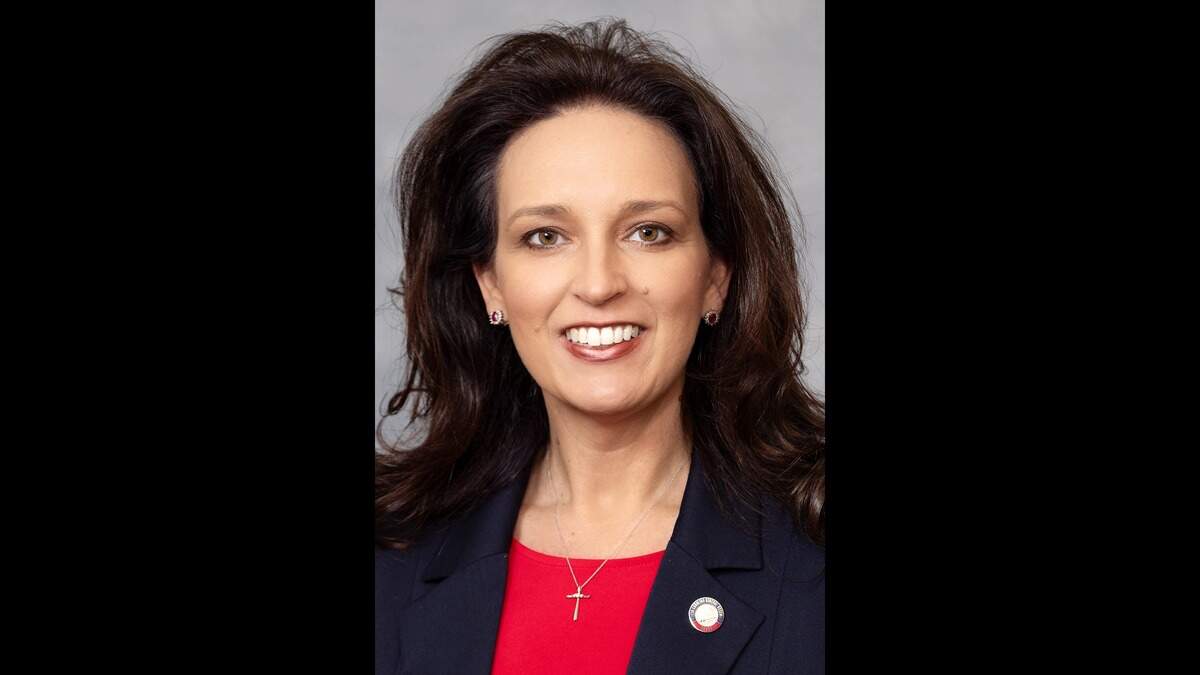
Republicans could hardly have chosen a better candidate for western North Carolina than Jen Balkcom.
Read more Woman fatally shot at ‘large late‑night car meet’ in industrial park, CMPD says
She grew up on a family farm in Henderson County, where her roots go back generations. She chose to raise her own family there and, for two terms in Raleigh, has been a steady conservative voice for the mountain region.
On Monday evening, the Republicans charged with replacing U.S. Rep. Chuck Edwards on the November ballot chose Balkcom on the first vote. It was a striking show of unity after a chaotic week, and her nomination immediately generated a level of energy that Edwards never did.
So why is the race still so competitive?
The trendy answer is that changing demographics around Asheville have made the 11th Congressional District less safely Republican. That is true, but only up to a point.
The deeper answer is that mountain voters have always been politically ornery, and Democratic challenger Jamie Ager has built his campaign to tap into that.
The question now is whether Balkcom has enough time to make her own claim to it.
Western North Carolina’s leftward tilt drew attention in 2024 because it contradicted what happened almost everywhere else. Most of the state and country moved toward Donald Trump; the Asheville area moved the other way. The shift is real, but it is easy to overstate.
Most counties west of Asheville remain overwhelmingly Republican. The movement is concentrated in Buncombe and neighboring Henderson County, where the Democratic presidential share has risen about seven points since 2016. Helene may have affected the 2024 margins, but the trend predated the storm.
Suburban sprawl is a familiar North Carolina story, usually associated with Charlotte and Raleigh. Asheville is producing its own version.
Housing pressure has spilled down I-26 from Buncombe into Henderson County, with new developments gobbling up former farmland. A prime example is the former Tap Root dairy farm near Fletcher, which is now becoming a subdivision with nearly 700 homes. Hendersonville’s “Gen H” plan describes the city as facing “unprecedented growth” and warns that low-density development could consume even more farmland and open space.
But growth does not have a partisan destiny. Fast-growing Brunswick County, shaped heavily by coastal retirees, has moved sharply right. Self-sorting could be part of the difference, but I don’t think migration gets to the heart of what’s happening in western North Carolina politics.
More likely, it isn’t that mountain voters have changed so much as they have continued doing what they have always done: resisting national norms and making politicians prove they understand the region.
That obstinacy dates at least to the Civil War, when opposition to secession helped create a durable Republican tradition.
Read more 1-year-old twin dies when ‘impaired’ mom crashes car at 4 am, NC police say
The last Democrat to represent the district, Swain County’s Heath Shuler, was one of the last Blue Dogs in Congress. He carried every county in 2008 and even survived the 2010 Republican wave.
Ager understands that tradition far better than Edwards ever did. He has built his campaign around the idea that western North Carolina is a forgotten region, overlooked by Raleigh and Washington. Some of it is campaign shtick, but it is working. Plenty of mountain voters already feel ignored, and Helene made the argument even more potent.
The real problem for Republicans was Edwards himself. He never inspired an enthusiastic following and had essentially failed to campaign this cycle. Then his scandal swallowed the race entirely.
Balkcom changes the terms of the election. In the General Assembly, she led the Fairness in Women’s Sports law and a law barring adversarial foreign governments from buying North Carolina farmland. She also enters the race as vice chair of the House committee overseeing Hurricane Helene recovery.
You’d be hard-pressed to say that Ager’s not the favorite at this point, but it’s not by much. After more than a year of campaigning, he ended June with $2.1 million and national Democratic support. Balkcom has less than three months, but she has the backing of a newly unified party.
Now that Edwards is off the ballot, two candidates with deep roots in the region can finally compete over real issues. That should favor Balkcom.
The obstacle is whether voters hear any of that. Ager has a year-long head start, and NC-11 takes hours to drive across. That leaves Balkcom dependent on substantial national support.
If national Republicans provide it, I think she will win. Not because money will change the mountains, but because Balkcom has a credible claim on the same ornery, independent streak that Ager has tapped so effectively.
Western North Carolina may be trending Democratic. But it has not surrendered its oldest political habit: making politicians earn its vote.
Contributing columnist Andrew Dunn is the publisher of the Longleaf Politics newsletter, which offers thoughtful analysis of North Carolina politics and policy from a conservative perspective. He can be reached at [email protected].
Read more The Observer’s 2026 Lincoln County high school football preview
This story was originally published August 12, 2026 at 5:00 AM.