Will NC get snow this winter? Here’s the Old Farmer’s Almanac forecast
AI-generated summary reviewed by our newsroom.
For some, they’re simply fun to read.
Others swear by the weather forecasts in the straw-colored cover of the Old Farmer’s Almanac, published annually since 1792, and won’t make travel plans without it.
Read more A curfew on late night bites + new restaurants coming to a space near you
“I’m not going to throw too much dirt on the Old Farmer’s Almanac because I think they are fun to read, they’re fun to follow, and it’s fun to see how their projects pan out,” said Corey Davis, meteorologist with the North Carolina State Climate Office. “I would also say that we have good scientific ways of telling what our weather may do as well. For the next few months, we think El Niño will probably be the number one factor that will affect our weather.”
North Carolina is in two forecast regions in the almanac: Most of the state, including the Triangle and Charlotte areas, is in the southeast region which also includes South Carolina and Georgia, and a small sliver of mountains is in the Appalachians’ region, which stretches along the mountains in North Carolina to New York.
The Old Farmer’s Almanac is forecasting a normal snowfall amount for most the state, with the snowiest periods in early January and late February.
Snow is specifically mentioned Jan. 7-11 and Feb. 20-23 for most of the state.
Decades ago, Raleigh used to average about 8 inches of snow across three or four “solid” snow events,” Davis said.
“When we look at just the last 30 years, dating back to the mid-1990s, Raleigh’s only averaging 4-5 inches of snow per year now,” Davis said. “So we’ve essentially seen those wintertime snowfall totals cut in half just over the last 30 to 40 years, and we do see climate change as a big factor there.”
Temperatures and precipitation are forecasted to be above normal in North Carolina, according to the Almanac.
The coldest periods for the state, according to the Almanac, will be:
The National Weather Service’s Climate Prediction Center releases forecasts with a maximum three-month outlook, with the latest forecast going through October.
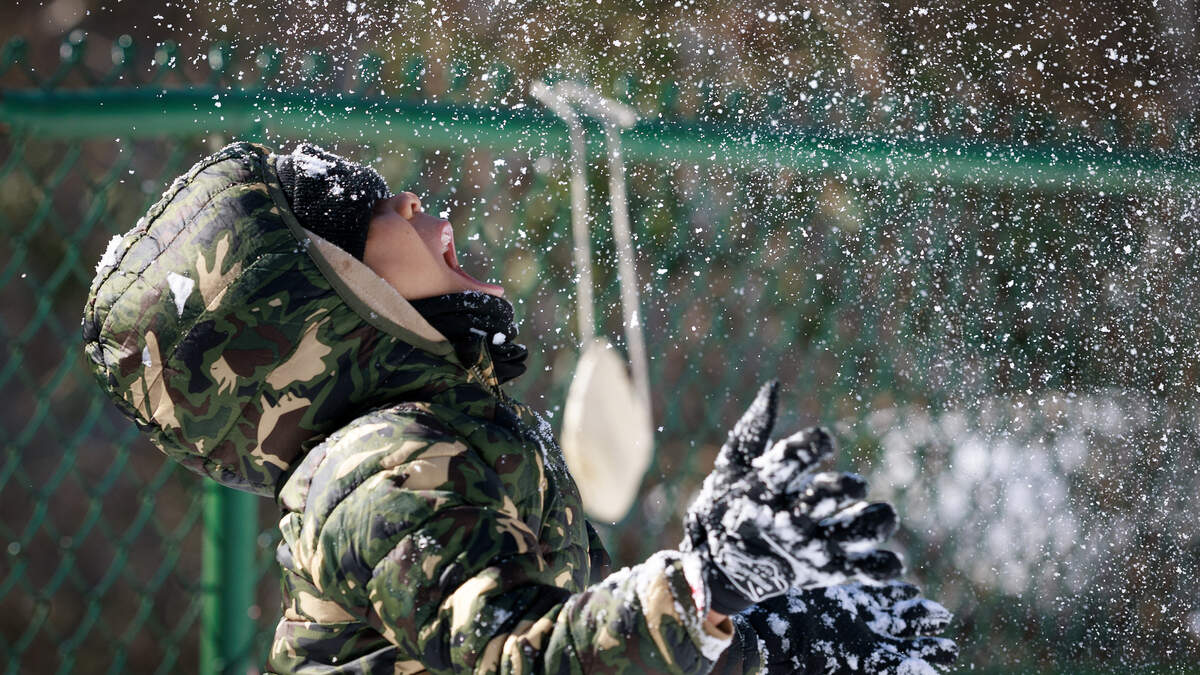
North Carolina got back-to-back snow storms in late January, the first covering most of the state from Jan. 24-26, and a statewide snow storm from Jan. 30-Feb. 1.
That second storm was one of the “most widespread wintry events in more than a dozen years, and the biggest snow for some areas in several decades,” according to the North Carolina State Climate Office.
Read more Charlotte renters need nearly 4 times minimum wage, new report finds
“The result was our first event with measurable snow in all 100 counties since January 2014, and more than a foot falling in parts of the state,” according to Climate Office.
However, parts of the Triangle got the smallest snow totals across the state, with Durham and Wake counties missing out on larger snow amounts while in a “dry slot,” The News & Observer reported.
The 2026 Almanac forecasted below normal winter temperatures and precipitation, but with above normal snowfall with late January being the snowiest periods for North Carolina.
It starts with a secret formula.
Or at least that’s what the editor of the Almanac say.
The founder of the Almanac, Robert B. Thomas, believed that weather is influenced by sunspots — magnetic storms on the surface of the sun — and it is still one of the things factored into the Almanac’s weather forecast. Now, the Almanac uses solar science, climatology and meteorology in creating its forecast.
“We believe that nothing in the universe happens haphazardly and that there is a cause-and-effect pattern to all phenomena,” according to the Almanac’s section on how it predicts the weather. “However, although neither we nor any other forecasts have as yet gained sufficient insight into the mysteries of the universe to predict the weather with total accuracy, our results are almost always close to our traditional claim of 80%.”
Several years ago the State Climate Office reviewed the predictions from some of the popular almanc’s, including the Old Farmer’s Almanc, Davis said.
“They’ve cited that they are 85% accurate,” he said. “I don’t know where they come up with that number from, but we looked at just a few winters about a decade ago, and we found it was basically a coin flip about whether they were right or not. There were times when they were close. There were times when they were also really far off.”
This story was originally published August 20, 2026 at 1:53 PM with the headline “Will NC get snow this winter? Here’s the Old Farmer’s Almanac forecast.”
Read more Will NC get snow this winter? Here’s the Old Farmer’s Almanac forecast