One year later: How Iryna Zarutska’s killing on light rail altered Charlotte
A year ago this week, a 23-year-old Ukrainian refugee finished her shift at a South End pizzeria, boarded a Blue Line train in her work clothes and never made it home.
Read more Charlotte high school coach resigns before he ever coached a game
Her tragic murder became one of the city’s most prominent ever and gained global attention. But, as her family told The Charlotte Observer last year, they hope what endures is the young woman herself — the artist, the animal lover, the eldest sister who was still building a life in the country she had come to love.
This is a look back at Iryna Zarutska’s life, and the year that has followed her death.
Iryna grew up in Kyiv, where she earned an art and restoration degree from Synergy College. When Russia invaded Ukraine in early 2022, her family spent months in a bomb shelter, risking only occasional visits back to their apartment. Her father, Stas, was barred from leaving the country under conscription laws that applied to men between 18 and 60.
Iryna almost stayed with him. She was extraordinarily close to her father, and she was old enough to decide for herself. But her mother, Anna, convinced her Kyiv was no longer safe.
In August 2022, Iryna, Anna, her younger sister Val and younger brother Bohdan flew to Charlotte through the Department of Homeland Security’s “Uniting for Ukraine” program, her uncle Scott Haskell told the Charlotte Observer. None of them had ever flown before, or left Ukraine. They moved in with Scott and his wife Valeria — Iryna’s aunt, and Anna’s sister-in-law — in Huntersville. Furniture donated by neighbors turned a three-bedroom house into a five-bedroom one. Scott described it as “kind of like ‘The Brady Bunch’ here.”
Iryna threw herself into her new life. She took English lessons through Rowan-Cabarrus Community College, at first doing coursework on her iPhone until a neighbor donated a computer. She and Anna took jobs in housekeeping at a nearby retirement community, biking to work on hand-me-down bicycles. She later worked at a sandwich shop and, most recently, as a cashier and line cook at Zeppedie’s Pizzeria in LoSo.
She was a homebody who could sleep past noon on her days off, but she was also, as her uncle put it, someone who “knew more people in my neighborhood than I did.” She painted pastel murals inside a neighbor’s home. She babysat and dog-sat. She walked the Haskells’ Labrador mix, Teddy, along Huntersville’s sidewalks and trails.
She dreamed of becoming a veterinary assistant. She wanted a house of her own, a studio to sculpt and draw in, and to travel. In May 2025, she moved into an apartment in NoDa with her boyfriend, near the 36th Street light rail station. She bought her first car, an older-model Cadillac, and had a driving test scheduled for October.
About a week before she died, she texted Scott about that test. “Without your help, I would not have been able to achieve this,” she wrote. “Glad to help, but YOU did it,” he replied. It was their last exchange.
Aug. 22, 2025 — The attack. Just before 10 p.m. on a Friday, Iryna boarded a Lynx Blue Line train in South End after her shift and sat one row in front of a man later identified as DeCarlos Brown Jr., 34. According to a police affidavit, the two never spoke. Less than five minutes into the ride, Brown allegedly pulled out a knife and stabbed her multiple times, including in the neck. She was pronounced dead at the scene at 1821 Camden Road. Brown left the train at the next stop, where officers found him with a cut to his hand.
Before the attack: Court records show Brown had cycled through North Carolina’s courts for a decade, including five years and seven months in prison for a 2014 armed robbery. In January 2025, he was arrested for misusing 911 after telling police a “man-made material” was controlling his body. A magistrate released him the same day on a written promise to appear. In July, a chief district judge ordered him to undergo a mental capacity evaluation after his public defender cited a “long history” of mental health issues. His mother later told the Observer she had repeatedly tried to get him treatment and had been turned away.
Aug. 28, 2025 — Brown denied bond. Brown was charged with first-degree murder and held without bond at the Mecklenburg County Detention Center. A judge again ordered a competency evaluation.
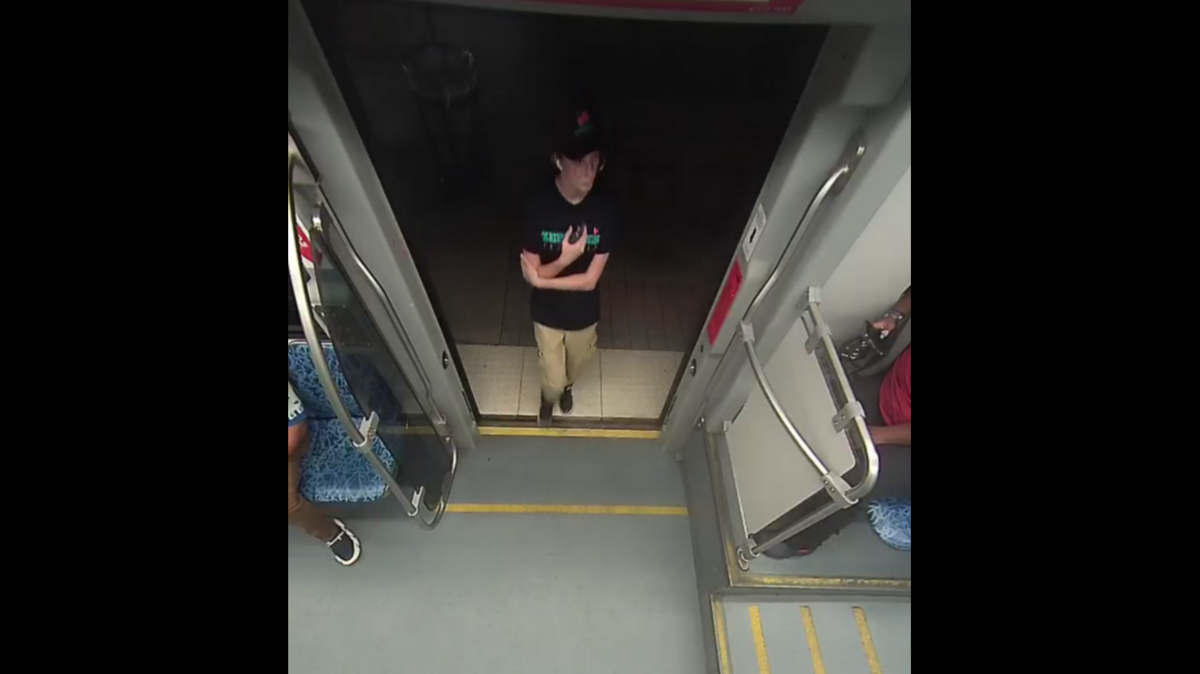
Sept. 5, 2025 — The video is released. Charlotte Area Transit System footage of the killing was made public. The images spread across social media within hours, drawing national attention.
Sept. 8, 2025 — Officials respond. Gov. Josh Stein called for more police on transit. Charlotte Mayor Vi Lyles called Iryna’s death “a tragic failure by the courts and magistrates” and pledged a bipartisan response for repeat offenders and people who cannot access mental health treatment.
Read more Here’s the new SC high football media poll. There’s a new No. 1 in Class 3A
Sept. 9-10, 2025 — Federal charges and a death penalty call. U.S. Attorney Russ Ferguson announced a rare federal charge against Brown: committing an act causing death on a mass transportation system. President Donald Trump called for Brown to receive the death penalty. Chief District Judge Roy Wiggins ordered Brown evaluated at Central Regional Hospital in Butner.
Sept. 16, 2025 — Her family speaks. In a rare interview, Scott Haskell asked that people remember his niece for the life she lived, not the way she died. Anna held up her phone during Iryna’s funeral so Stas could see his daughter one last time. Iryna is buried in North Carolina — the country, her family said, that she loved.
Sept. 22, 2025 — A memorial in South End. Community members gathered at the East/West Boulevard station for a vigil.
Sept. 30, 2025 — Auditor’s first report. The state auditor’s office released a preliminary review finding that CATS had fewer armed officers under its current contract than under an earlier one, despite tripling security spending from $5.8 million in 2022 to $18.4 million in 2025.
Oct. 3, 2025 — CATS announces changes. The transit agency deployed off-duty CMPD officers, expanded fare-enforcement blitzes and brought bike and utility patrols to Blue Line platforms. September ridership on the Blue Line still fell 10.2% compared with the year before.
Dec. 1, 2025 — “Iryna’s Law” takes effect. The state law tightened bail rules for violent offenses, changed protocols for mental health evaluations and funded additional prosecutors in Mecklenburg County. Jail populations in the state’s largest counties began climbing, with Mecklenburg’s growing from 1,622 to 2,085 by the following May — beyond its 1,791-person capacity.
Dec. 5, 2025 — A second stabbing. Oscar Solarzano, 33, was arrested and charged with attempted first-degree murder after a second stabbing incident on a Blue Line train. The incident reignited political debate about transit safety and immigration enforcement in Charlotte.
Feb. 2, 2026 — Federal audit. The Federal Transit Administration cited CATS for 18 findings of non-compliance and reported that crime against Charlotte transit passengers was three times the national average.
Feb. 9, 2026 — Charlotte leaders in Raleigh. A North Carolina House committee questioned Mayor Lyles, Sheriff Garry McFadden, District Attorney Spencer Merriweather, Police Chief Estella Patterson and City Manager Marcus Jones about public safety.
Feb. 24, 2026 — Anna at the State of the Union. President Trump invited Anna Zarutska to sit as his guest during his address to Congress. She stood and dabbed her eyes as the audience applauded. “I promise you, we will ensure justice for your magnificent daughter,” Trump said.
June 9, 2026 — Brown found incompetent. U.S. District Judge Kenneth Bell ruled that Brown, who has schizophrenia, was mentally incompetent to stand trial in the federal case. During the hearing, Brown interrupted to say he wanted “to press charges” and speak to Trump about what he called a “body emergency.” He was remanded for up to four months of evaluation and possible treatment. His state case remains on pause.
Aug. 17, 2026 — One year on. A new state auditor’s report found CATS loses up to $6.5 million a year to fare evasion and that Blue Line crime dropped roughly 69% in the first quarter of 2026 compared with the same period a year earlier. Saturday marks one year since Iryna’s death.
Aug. 21, 2026 — Lawsuit filed. Iryna Zarutska’s family filed a wrongful death lawsuit blaming the city of Charlotte and its contracted light rail security company for the train stabbing. The lawsuit her uncle, Frank Scott Haskell, filed in Mecklenburg County Superior Court Friday afternoon says it was a preventable death. The city and its security knew there were safety and crime issues related to its public transit, and they “were responsible for protecting lawful passengers from known and foreseeable dangers,” the lawsuit states.
Read more SouthPark sushi spot to welcome guests back after major revamp. ‘Beyond excited’