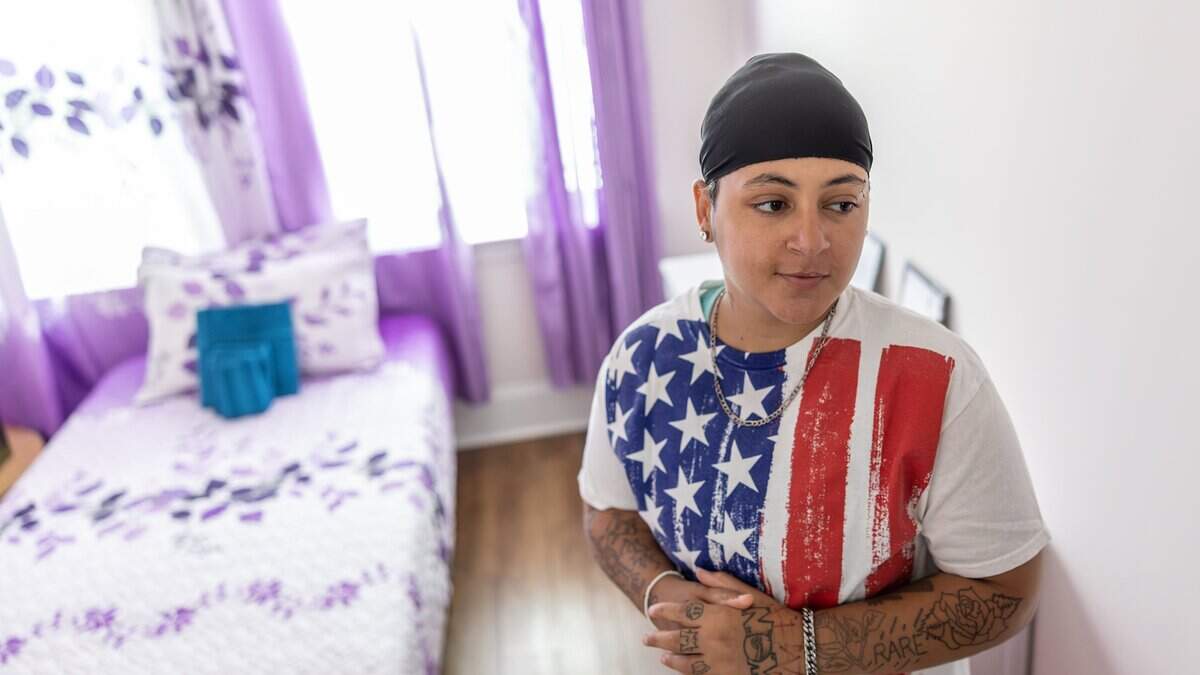
After prison, these Charlotte women are getting a second chance. Few will join them.
Karen Griffin says she’s one of the lucky ones.
At 43, Karen, who goes by “K.C.,” is starting over. After three years in North Carolina state prisons — first Anson, then Western Correctional — that ended this spring, Griffin had nowhere to go.
Read more Best beer in NC? This brewery ranks as one of the nation’s favorites
She found a spot at A New Way of Life, a six-bed home for formerly incarcerated women that just opened in Charlotte. Part of an international network of houses for formerly incarcerated women founded by Susan Burton in 1998, it offers residents services including legal and employment support, transportation and education development.
Without it, Griffin isn’t sure where she would have ended up. When she was released, she had just $45 — the standard amount of gate money given to those who have served at least two years.
“This is my second prison sentence, and last time I got out of prison, I went back to the exact same situation, doing the exact same thing,” Griffin said. “My daughter is grown, my husband’s in prison and my mom’s dead. It’s time for me to be responsible for the first time — I want to take care of myself.”
Here, she and the other women have a routine: Up for 8 a.m. meditation and chores, often followed by errands like doctor’s appointments or grocery shopping, and dinner together in the evenings. The residents remain close to home for 30 days after their arrival for “reflection,” a period meant to help them acclimate to their new environments. After it ends, they can begin working.
Many residents take their new home’s motto to heart. Next to Griffin’s paisley bedspread, Jordan Peterson’s “12 Rules for Life,” lies atop a small stack of paperbacks, its pages yellowed with age. She hopes she’ll find a full-time job soon so she can get her own apartment.
Her roommate, Sage Jones, has her own ambitions. Her side of the room covered in colorful sketches and stuffed animals, she hopes to become a tattoo artist, like her father.
“He’d be proud of me,” she says.
But most women like K.C. and Sage won’t find a stable place to land.
With more than 93,000 women released from North Carolina state prisons and county jails annually, few homes like the one near Charlotte’s Sugaw Creek neighborhood exist. Instead, many women without family support join the thousands of homeless on the streets of Mecklenburg County and, eventually, end up back in jail.
“Maybe 20% to 30% of people that come out of prison actually go back to stable environments. Everybody else, you’re starting over with nothing, and there’s [no resources] for women,” Griffin said.
Women’s incarceration rates have grown at twice the pace of men’s in recent decades. The number of women behind bars rose over 600% between 1980 and 2023, according to data from the nonprofit Sentencing Project. But advocates say services aimed at helping them re-enter society once they are released haven’t kept pace.
One of North Carolina’s most prominent transitional housing programs for women, the Center for Community Transitions in Charlotte, has just 30 beds. Smaller nonprofit efforts — often faith-based — can also offer a soft landing place, but few exist. Those that do offer only a handful of spots.
Funding challenges have forced the closure of re-entry homes like the one at Charlotte’s McLeod Center and the shuttering of re-entry organizations like Redirection-NC as well as local reentry councils across the state.
“Most individuals release indigent,” said Delilah Montalvo, a program specialist at the Mecklenburg County Sheriff’s Office who helps connect inmates with re-entry services. “Depending on how long they’ve been here, they’ve lost work, they’ve lost housing, all of it. […] When they release from here, there’s really nowhere for them to go but the homeless shelter if they don’t have family.”
Montalvo has worked in the reentry space for almost 20 years. She’s seen the female jail population in Mecklenburg swell in line with national trends, she said.
Some in county jails are there for just a few days, but others can stay behind bars for months or even years before their cases are tried in court. Jail staff have seen those pre-conviction sentences stretch longer following the passage of Iryna’s Law, which went into effect in December. Mecklenburg County’s jail has been over capacity for months. The current jail population is about 40% higher than it was last July.
In prison, workers earn as little as pennies a day, and much of those earnings go toward purchasing necessities like postage and hygiene supplies at canteens, where prices have risen along with inflation. That leaves little to save for release.
Most will have trouble finding work after their release, or keeping it without stable housing. And even with funds, many landlords don’t want to rent to those with criminal convictions.
Those barriers are compounded for women. Formerly incarcerated women have higher rates of homelessness and unemployment, and fewer resources, than their male counterparts.
Homelessness after incarceration increases the chances that someone will end up back behind bars, at a steep cost to taxpayers. It costs more than $54,000 in public dollars each year to house one person in a North Carolina prison.
Read more A popular Plaza Midwood bar has closed. What happened — and what’s next
Montalvo is proud of the robust programming the county offers inmates on everything from financial literacy to mental health. And many nonprofits do help with other re-entry services like getting identification documents or employment counseling. But without housing, any gains from those programs could be short-lived, Montalvo said.
“You go to these organizations that offer help with documentation or employment, but now you don’t have a stable place to stay, so how are you going to wake up early for work? People lose their documentation because they’re homeless. Housing is the piece that’s missing from every aspect,” Montalvo said.
One commonality among formerly incarcerated women is a history of significant trauma, advocates say. That makes them particularly vulnerable to revictimization on the streets.
“In many ways women are much more vulnerable than men because they have such serious histories of violent victimization, and finding a place that’s really safe and supportive after incarceration is such a deep need…more so than for men,” said Bruce Western, a sociology professor at Columbia University who has studied re-entry services.
Formerly incarcerated people with disabilities, chronic mental health or substance abuse issues and those who are older tend to be at higher risk for post-incarceration homelessness, Western said.
Criminal histories can also continue to limit access to social support or higher earnings. Those with felony drug convictions face SNAP benefit bans for six months or, in some cases, lifetime bans. That can prevent critical access to food support until employment is secured.
It’s where organizations like A New Way of Life that offer wraparound services hope to make a difference. Residents get $500 when they arrive at their new home and support to meet basic needs. But organization leaders say it’s about more than a temporary leg up: Residents can stay as long as they need, and they encourage them to pursue not just short-term employment, but educational and career aspirations.
“If your dreams don’t shock somebody, you’re not dreaming big enough,” Dante Butler, Director of Housing Services for the organization, said of the residents.
Other, small local initiatives have recently been aimed at improving post-release support and reducing recidivism.
New pilot programs in Mecklenburg County and Durham are testing whether a guaranteed income program to help some formerly incarcerated people with their living costs will reduce recidivism, NC Health News first reported. Data shows some promise: A study of an earlier iteration of the Durham program found that recipients had higher rates of full-time employment and housing stability, and that it was easier to comply with probation requirements and abstain from criminal activity.
But the programs will reach just 60 randomly selected residents of Mecklenburg County.
Another new Mecklenburg County program, The Sheriff’s House, houses five formerly incarcerated residents and connects them with support including employment assistance, educational opportunities, mental health and substance use services, life skills development, financial literacy and transportation assistance.
Only men qualify for the program since “there is not a large enough female reentry population to justify that type of investment,” Mecklenburg County Sheriff’s Office spokesperson Sarah Mastouri said in an email.
A New Way of Life says they continue to be inundated with questions about openings.
“We are already at full capacity, just being here two months. We get phone calls two or three times a week now asking us do we have beds because there are so many women who are returning home from incarceration without a place to go,” Butler said in June. “We’re hoping to expand here in the Charlotte area because there is such a great need.”
They hope donors might help them secure the two houses next to their first Charlotte location, both of which are for sale.
Residents say more resources will make the biggest difference in keeping women like them out of prison.
“That’s why people go back, because they come out with nothing,” said Griffin, the woman who ended up at a New Way of Life after two prison stints. “I was real lucky to get in here.”
Read more World’s best ice cream, nachos voting and buzzy Charlotte openings