NC’s baby copperhead season is here. What to know about the venomous snakes
AI-generated summary reviewed by our newsroom.
Fall is approaching, and that means new snakes will soon be slithering around.
“Copperheads give birth in late summer to early fall — usually August through early October,” Falyn Owens, wildlife extension biologist with the North Carolina Wildlife Resources Commission, told The News & Observer in a Thursday, Aug. 13 email. “Females give birth to around a dozen young, sometimes every other year.”
Read more Dolly Parton Abruptly Skips Dollywood Event Due to Ongoing Health Issues
With baby copperheads entering our landscape, we sought to answer common questions. Here’s what to know about the young snakes, including how to identify them, where you may see them and whether they bite.
Copperheads don’t lay eggs. Instead, they give birth to babies that are independent right away.
“There’s no such thing as a copperhead nest, which will hopefully make people feel a little bit better,” Owens previously told The Charlotte Observer.
The season for welcoming baby copperheads begins around this time of year.
“Weather, geography, region and other factors can influence the exact time of birth,” Jeff Beane, herpetology collection manager at the N.C. Museum of Natural Sciences in Raleigh, previously told The N&O. “But usually the last few days of August and the first few of September are peak for copperheads.”
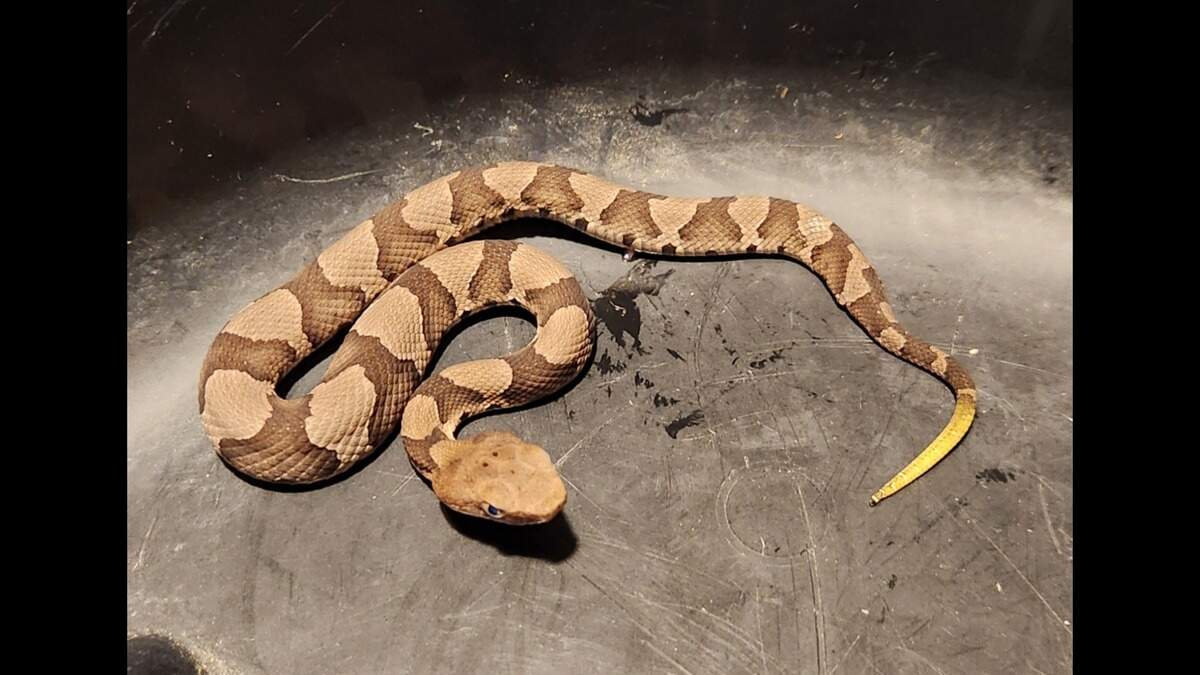
Adult copperheads have brown bodies with a pattern of bands in the shape of dumbbells or Hershey’s Kisses. Their heads are slightly pointed, and their pupils are oval-shaped, according to the wildlife commission’s website.
“Newborn copperheads look identical to adults but have a bright yellow or green tail tip,” Owens wrote. “Like adults, they have a unique pattern of darker upright triangles on a pale background that resemble Hershey Kiss candies. Both newborns and adults camouflage very well in leaf litter.”
Also, unlike adults that can be 2 to 3 feet long, newborns are 6 to 8 inches. So when the babies are coiled up, they’re “about the size of a silver dollar,” Owens previously told The Observer.
Copperheads live throughout North Carolina and are more active at night. Because they are cold-blooded, experts say the snakes also tend to move around on warmer days.
When it comes to baby copperheads, you’re likely to find them near their prey in the woods. But you also may spot one in your yard.
Read more Midwest bank’s rapid growth in the Carolinas has it betting big on Charlotte
“They do pretty well in mature suburban areas, especially if there’s a lot of very mature landscaping,” Owens previously told The Observer.
“Even in an urban area, there could be a parking lot that has some, bushes and trees and tall grass that hasn’t been mowed, so that could be good habitat for a copperhead.”
Unlike other snakes that live far from humans, copperheads are comfortable being close to people. The species is believed to cause more than 90% of venomous snake bites in North Carolina.
But bites from baby copperheads are more rare. Compared to adults, they have less venom, shorter fangs and lower chances of striking prey. But their diets can make their venom more toxic, The N&O previously reported.
“Personally, if I had to choose between being bitten by a newborn copperhead or an adult, I would choose a newborn because of the potentially much smaller quantity of venom,” Beane previously told The N&O.
Copperheads tend to leave people alone, so keep your distance and be cautious outside to help avoid encounters. Bites from the species are rarely fatal but should be treated right away, The N&O previously reported.
If you think you were bitten by a copperhead, remain calm and find a place to sit down. Here are some other tips N.C. Poison Control shared on its website:
Portions of this story were previously published in The News & Observer.
Questions about life in North Carolina? Or have a tip or story idea you’d like to share? The service journalism teams at The News & Observer and The Charlotte Observer want to hear from you.
You can submit your question by filling out this form.
This story was originally published August 14, 2026 at 11:30 AM with the headline “NC’s baby copperhead season is here. What to know about the venomous snakes.”
Read more Charlotte-area storms with ‘damaging’ 60 mph gusts expected Saturday, NWS says