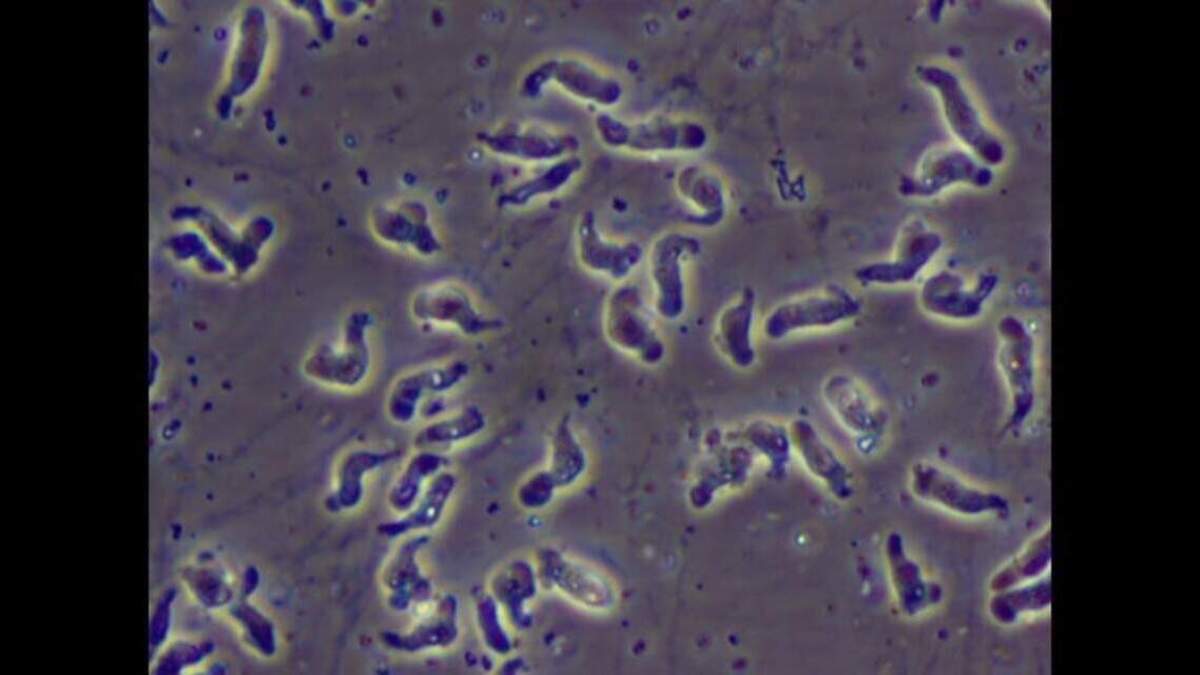
NCDHHS investigating brain-eating amoeba infection source that killed NC teen
AI-generated summary reviewed by our newsroom.
The North Carolina Department of Health and Human Services is still investigating numerous possible sources of the brain-eating amoeba, State Public Health Veterinarian Carl Williams said.
Read more WakeMed tells Stein Atrium’s $2B is ‘legally binding.’ But WakeMed will pay part.
A teenager from Central North Carolina died Monday, Aug. 31 after contracting Naegleria fowleri, a rare brain-eating amoeba that causes primary amebic meningoencephalitis (PAM). Fewer than 10 people get PAM yearly, but nearly all die, according to the CDC.
Naegleria fowleri can be found in freshwater, such as lakes, rivers and ponds. It has been found in poorly managed swimming pools and drinking water, according to the Center for Disease Control.
The teenager was identified as Moises Ponce Mendoza on GoFundMe by his mother, Mónica Mendoza. Mendoza did an interview with N+ Univision 40 on Wednesday, Sept. 2.
In Spanish, Mendoza said, “The last time we went to a pool that is in Carrboro. And afterwards, from there we went to, I went to, an appointment that I had at the Future Clinic. And the Future Clinic has a fountain outside that, even my daughter told me, that [they] had wet their face with the water from the fountain.”
At the time of reporting, Mendoza’s GoFundMe has raised $12,700 of a $13,000 goal. The fundraiser was originally set to raise $7,500, The News & Observer reported.
“He was a very dear boy, with a good heart,” Mendoza told N+ Univision 40.
Most Naegleria fowleri infections occur in the summer. Infections occur most frequently when it has been hot for a long time, as this results in lower water levels and higher water temperatures, according to the CDC.
“People are often not in just one place (in the summer). They might go to a swimming pool. They might go waterskiing. They might do a lot of things. So, if you’ve got multiple possible sources of exposure that can get a lot more challenging,” Williams said. “Yes, based on what we know right now, there are multiple possible sources of exposure.”
Williams said he wasn’t sure whether rising summer temperatures would increase risk of Naegleria fowleri infections.
“I think as water levels drop, of course, there’s less water to heat up. So when you think about shallow ponds, they’re obviously going to be much warmer than, say, Falls Lake, which has got a current in it and is relatively cool compared to something like that,” Williams said. “I think trying to demonstrate that with quantitative data is a little bit more challenging.”
Read more Mother, son fatally shot in Catawba County domestic situation, sheriff says
A study published in 2021 showed that while infection rates had been stable, cases of PAM as a result of Naegleria fowleri have spread from the South into the Midwest, possibly because of rising temperatures.
Williams said people should focus on taking precautions when entering fresh water.
“A common way to think about this is if you’ve got a pond that has Naegleria in it, and you dive into the water, you’re probably not going to get exposed to it. But if you cannonball into the water such that the water gets forced up your nose, that would be a much more concerning exposure,” Williams said. “You have to engage in a specific act to allow it to be forced up your nose, where there is the portal of entry into the body.”
While it isn’t possible to entirely eliminate Naegleria fowleri from the environment, some safety precautions can help, according to NCDHHS.
Weeks before Moises Mendoza died, a Louisiana child died of Naegleria fowleri on Aug. 8, shortly after her eighth birthday.
In 2019, an infection was reported in Cumberland County. In 2016, a college student died of an infection after capsizing a raft at the U.S. National Whitewater Center. Her family eventually settled with the center, The Observer previously reported.
Parts of this article have been previously published in The Charlotte Observer. Diamond Vences and Autumn Coleman contributed reporting.
Questions about life in North Carolina? Or have a tip or story idea you’d like to share? The service journalism teams at The News & Observer and The Charlotte Observer want to hear from you.
Read more NC’s statewide grades, test scores are out. See how your student’s school stacks up
You can submit your question by filling out this form.