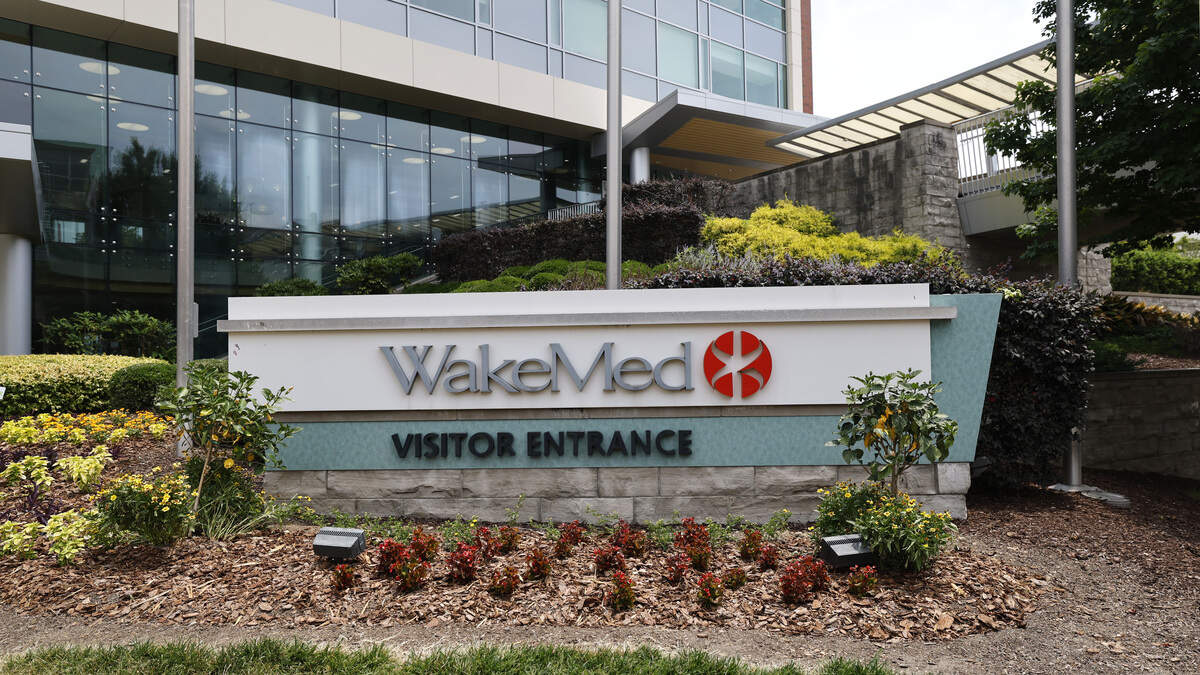
NC Gov. Stein’s office poses questions to WakeMed CEO about proposed merger
AI-generated summary reviewed by our newsroom.
The office of Gov. Josh Stein sent a letter to WakeMed CEO Donald Gintzig earlier this week posing a series of questions about the nonprofit hospital system’s proposed merger with Charlotte-based Atrium Health.
Read more Charlotte Catholic shuts out South Mecklenburg in season opener
The letter — sent to WakeMed and forwarded to Wake County Commissioners on Monday — asks for significant detail on the nature of the deal and the reasoning behind it, though it doesn’t give any opinion on the deal. The letter was signed by an attorney in the governor’s office, rather than Stein himself.
The letter notes that the governor’s office had previously sent questions to WakeMed and had them answered. The News & Observer has requested that earlier exchange, but it was not available late Friday.
Stein has not taken a public position on the merger. Asked about it in May, a spokesperson for Stein said that “North Carolina health care consumers benefit when competition is strong. The Governor has been in touch with Attorney General Jackson about his plans to carefully review any transaction.”
On Monday, the county Board of Commissioners held a public hearing on the proposed merger where hundreds spoke for and against the proposal. The commissioners will vote at some point on changing WakeMed’s governance structure to allow the proposed merger to move forward in the regulatory process. That vote could come at the board’s meeting Sept. 8.
The deal would bring a $2 billion investment from Atrium in Wake County healthcare facilities and create 3,300 healthcare jobs over the next five years, WakeMed officials have said.
While WakeMed has shared more details of its proposed agreement with some Wake County commissioners, the specifics of the detail remain undisclosed.
Wake County Attorney Tiffany Campbell previously told the commissioners that state law prevents them from sharing competitive information with the public.
WakeMed spokesperson Kristin Kelly told The N&O late Friday that the nonprofit has received the letter from Stein’s office and “we are currently working to address the Governor’s questions about this important combination and its impact on the long-term health of WakeMed and our community.”
Stein’s office released the letter to the public Friday evening. It raises similar questions to those opponents of the merger have been asking for months, including why the deal was sought, what guarantees there will be to stop prices from going up and why WakeMed would give up significant control of its governing board.
WakeMed has previously said the merger would bring an influx of money to invest in its aging infrastructure and new facilities.
Gintzig has previously told Wake Commissioners that prices will go up regardless of whether WakeMed merges with Atrium or not.
He said in a presentation to the commissioners in June that he believes it will actually help keep some costs lower.
The letter also poses questions about the proposed governance structure of WakeMed under the merger, which Gintzig has called a “marriage” and a “strategic partnership.”
Read more Charlotte art museum makes a rare move. It bought a painting for the second time
Under the deal, the Wake County Board of Commissioners would continue to approve the appointments of eight of 14 board members, with Atrium appointing six. But Wake County’s appointments could only be picked from a slate of nominees pre-approved by two-thirds of WakeMed’s board.
“Why did WakeMed agree to a governance structure that limits the Wake County Board of Commissioners’ role in selecting the WakeMed Board of Directors to merely vetoing the WakeMed Board of Directors’ nominees for the eight Community Directors who serve on the fourteen-member Board of Directors?” the letter asks. “Similarly, why did WakeMed agree to a governance structure that asymmetrically allows Atrium to remove Community Directors, including for a lack of collegiality?”
WakeMed’s current board members have admitted that they would be giving up some local control if the deal goes through.
But “the WakeMed board and its leadership will retain control over the day-to-day” operations of the hospital system, Mary Nash Rusher, one of WakeMed’s board members, told commissioners in June.
The governor’s office letter also asks about indigent care — for those who have trouble paying.
“Currently, WakeMed devotes more than 12 percent of revenue to financial assistance for indigent patients, significantly more than the 4.8 percent it is required to provide” in an agreement with Wake County, the letter reads.
“But if the proposed combination with Atrium is consummated, the excess revenue that WakeMed has used to provide more robust indigent care could instead flow to Atrium,” the letter says. “Has Atrium committed to keeping that excess revenue in WakeMed for indigent care?”
It’s unclear if WakeMed has previously addressed this question, but the agreement it’s proposing would keep its current requirement to spend 4.8% of revenue on indigent care.
Stein’s office also asked about the $2 billion Atrium has promised to invest in WakeMed.
“Will revenue generated by WakeMed account for part of that $2 billion?” the letter asks. “Has WakeMed asked Atrium to invest the full $2 billion? Has WakeMed assured itself that it could not secure greater investment from Atrium or other potential partners? If so, how?”
WakeMed has not provided additional details about the $2 billion, including where exactly it will come from. WakeMed did receive a $5 billion offer from UNC Health, but declined, it said, because an agreement with Atrium prevents them from looking at other deals.
Prominent State Treasurer Brad Briner has also raised concerns about the proposed merger. Stein is a Democrat.
This story was originally published August 21, 2026 at 7:28 PM with the headline “NC Gov. Stein’s office poses questions to WakeMed CEO about proposed merger.”
Read more Iryna Zarutska’s family files suit blaming city of Charlotte in light rail killing