NC Court of Appeals judge and Mecklenburg challenger on judicial independence
AI-generated summary reviewed by our newsroom.
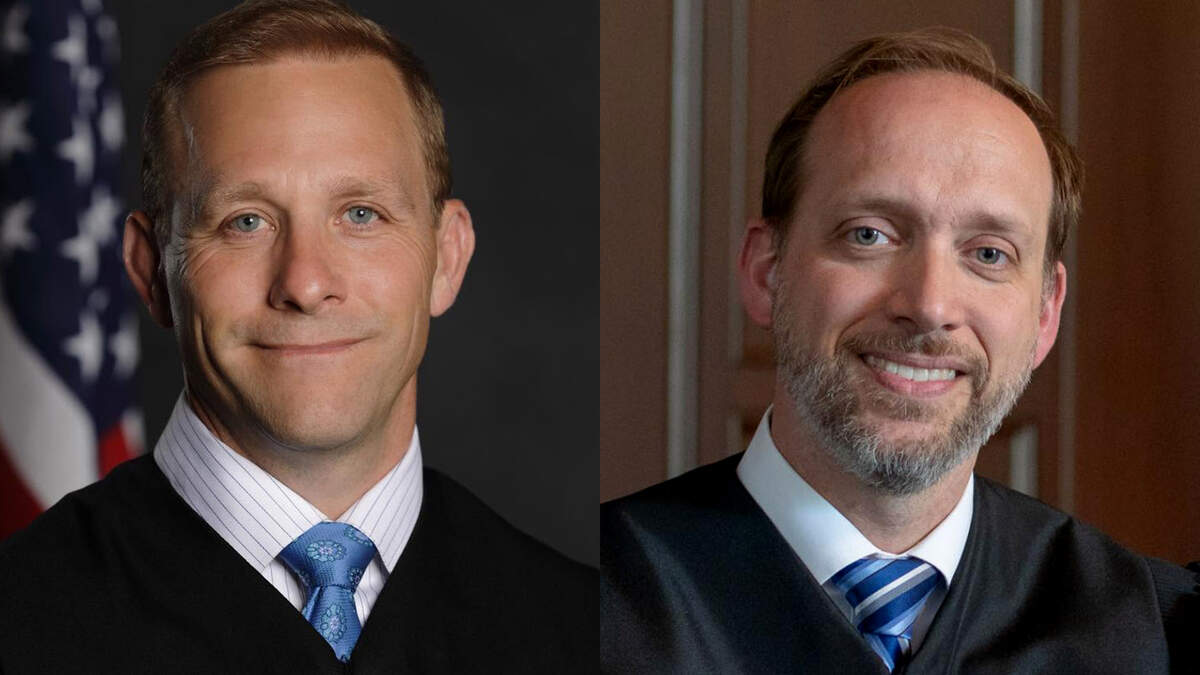
The Nov. 3, 2026, election for North Carolina Court of Appeals Seat 2 features candidates George Bell and Toby Hampson, the incumbent. The News & Observer and Charlotte Observer asked all candidates in this race to complete a questionnaire to inform voters about their opinions on big issues facing voters.
Read more Mystery grows after man vanishes from NC island that is reached only by boat
Political party: Republican
Age as of Nov. 3, 2026: 48
Seat number: 2
Campaign website: www.JudgeGeorgeBell.com
Current occupation: Mecklenburg County Superior Court Judge
Professional experience: Law Clerk to the Honorable David Pugh, 7th Judicial Circuit, Newport News, Virginia (2004-2005); Small Business Owner and Criminal Defense Lawyer, Bell & Bell Law Firm, Huntersville, NC (2006-2018); Mecklenburg County Superior Court Judge, Charlotte, NC (2019-2026).
Education: Cornell University, B.S. (2000), Ithaca, New York; Regent University School of Law, J.D. (2003), Virginia Beach, Virginia.
Please list any notable government or civic involvement.: F3 Nation, Former Shared Leadership Team Member; Grace Covenant Church, 2nd grade Sunday School Teacher; Ambassador Christian High School, Volunteer Wrestling Coach; Liberty Preparatory Christian Academy, Volunteer Substitute Teacher; Charlotte Independence Soccer Club, Former Board Member; I Got Next Jamaican Girls Soccer Ministry, Host Family; Goodwill Industries, Former Volunteer Pro-Bono Lawyer; Former Mecklenburg County Court-Appointed Attorney for Indigent Defense.
What areas of the law do you have experience in, as a judge or attorney?: Criminal, civil litigation, appellate, government/public interest, family law, insurance, labor/employment, intellectual property
What is your judicial philosophy?: My judicial philosophy is that judges should be fair and impartial, uphold the Constitution, follow the law, put victims of crime first, and hold violent, repeat offenders accountable because justice requires it. Before I was elected as a judge, I vowed that if elected, I would listen to everyone in front of me, treat every person with respect, and rule consistently by treating the same defendants charged with similar crimes, the same. I am guided by the law in every decision that I make.
Do you think judges should be able to make public political statements, and to what extent?: Yes, judges should be able to advocate for a change in the law under the First Amendment’s right to free speech; however, a judge should emphasize that despite advocating for a change, the judge will faithfully apply the law as enacted by the legislature. In addition, a judge should be prohibited from commenting on a case or controversy in which he or she has say in the outcome or any pending case. The public must have trust in its judges and be assured of their impartiality.
Under what circumstances should judges recuse themselves from a case? Has this standard been followed in recent years by appellate judges?: A judge should recuse himself when his impartiality may be reasonably questioned under North Carolina’s Code of Judicial Conduct. The standard is objective: the question is not simply whether the judge believes he can be impartial, but whether the circumstances create a reasonable concern about his impartiality. In the Leandro litigation, a few NC Supreme Court justices’ impartiality was called into question and there is legitimate disagreement as to whether the standard was followed.
Should the chief justice of the NC Supreme Court have the power to suspend trial judges without pay during disciplinary investigations?: Because this specific issue regarding the NC Chief Justice may be in front of me, I respectfully decline to state a position that could suggest that I have prejudged it.
Did you use AI to answer any of these questions?: No.
Political party: Democrat
Age as of Nov. 3, 2026: 50
Seat number: 2
Campaign website: JudgeTobyHampson.com
Current occupation: Judge, N.C. Court of Appeals
Professional experience: 2002-2004: Law Clerk, N.C. Court of Appeals (Judges Eddie Greene, Wanda Bryant, Robert C. Hunter); 2004-2007: Patterson Dilthey Clay Bryson and Anderson, Attorney (Civil and Appellate Litigation); 2007-2018: Wyrick Robbins Yates & Ponton (Appellate Practice); 2018-present: Judge, N.C. Court of Appeals
Read more Don’t approach the sand dunes on Outer Banks, NC county warns. It could be fatal
Education: High School: NCSSM 1994; Undergrad: American University, B.A. with University Honors (International Studies/History), 1998; Law School: Campbell University School of Law, J.D. with honors, 2002.
Please list any notable government or civic involvement.: I have served as Judge on the North Carolina Court of Appeals since 2019, following my election in 2018. I have also served on the North Carolina Bar Association’s Appellate Rules Committee and Appellate Practice Section Council. Other notable civic involvement has included serving as a Board Member of North Carolina Voters for Clean Elections (2008-2013) and a member of the Campbell University School of Law Board of Visitors (2016-2022).
What areas of the law do you have experience in, as a judge or attorney?: Criminal, civil litigation, appellate, government/public interest, family law, Insurance, labor/employment, taxes/accounting, municipal/zoning and planning; healthcare; administrative law; workers’ compensation; professional licensing; child welfare; business law; election law
What is your judicial philosophy?: The law, when properly interpreted and applied, should make sense in the real world because it impacts real people and real lives.
Do you think judges should be able to make public political statements, and to what extent?: Judges should be able to make public political statements but must also be careful not to stake themselves out on issues that may come before their Court, must always be sure they are not damaging their ability to be fair and impartial, and must never be biased against any individual or group.
Under what circumstances should judges recuse themselves from a case? Has this standard been followed in recent years by appellate judges?: Judges have a duty not to skip the hard cases and recuse unnecessarily because of political pressure — however, judges must recuse wherever there is a conflict of interest or where there is a reasonable concern that a judge’s impartiality might be questioned. Sometimes even the appearance of a lack of impartiality can alter whether people feel they are getting a fair shake.
Should the chief justice of the NC Supreme Court have the power to suspend trial judges without pay during disciplinary investigations?: Judges make tough decisions every day. Those decisions should be based on the facts and the law — and without fear or favor. From an administration of justice standpoint, I have concerns that putting this unprecedented power in the hands of one person will harm independent decision-making by judges fearing arbitrarily losing their livelihoods without due process including a full investigation and hearing.
Did you use AI to answer any of these questions?: No
This story was originally published September 29, 2026 at 3:35 PM with the headline “NC Court of Appeals judge and Mecklenburg challenger on judicial independence.”
Read more CMS superintendent, Facebook Live rant: What got Charlotte talking Sept. 21-27