NC Confederate memorial no longer praises ‘faithful slaves’ after lawsuit
AI-generated summary reviewed by our newsroom.
For 124 years, a Confederate soldier stood watch over the Tyrrell County Courthouse grounds atop a base bearing a jarring message.
Read more SC high school student shot at bus stop after ‘brief altercation’ with a man
The monument honored not only those who served the Confederacy but also the people they enslaved.
“In appreciation of our faithful slaves,” the raised lettering declared on the side of the 23-foot-tall memorial.
But not anymore.
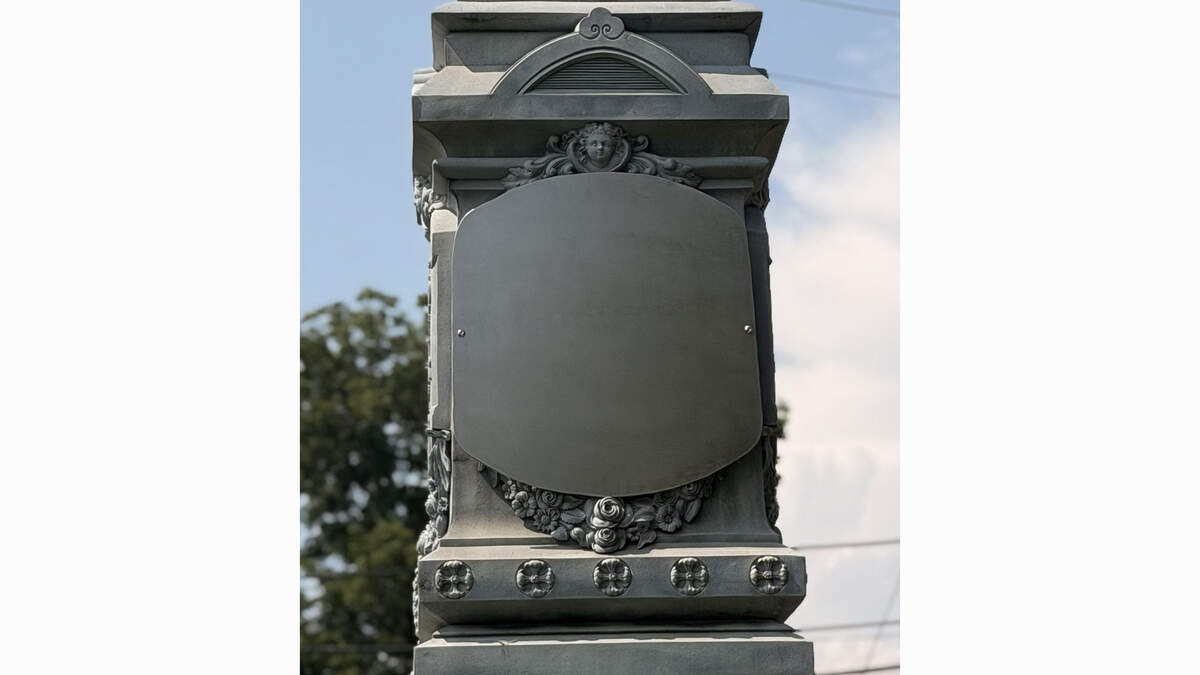
After a yearslong campaign led by descendants of the enslaved people it claimed to honor, the county recently covered the inscription with a metal plate after settling with Black residents who had filed a federal lawsuit.
Unlike broader attempts to remove Confederate monuments, the lawsuit targeted the monument’s praise of slavery. A federal judge allowed the claim to proceed, marking a rare legal advance.
Sherryreed Robinson, whose great-great-grandparents were enslaved by Tyrrell County families, sees the settlement as a step forward rather than a victory.
The “faithful slaves” inscription is hidden, but the armed Confederate soldier remains at his post atop the 12-foot base next the courthouse in Columbia. Among the many symbols, the base also bears the names of the “Confederates living” when the monument was erected, along with a sculpted portrait of Robert E. Lee, who commanded the Confederate Army during the Civil War.
“That’s just evil justice,” said Robinson, one of the named plaintiffs in the lawsuit. “I don’t feel like it has a place on the courthouse grounds.”
Robinson remembers the first time she read the inscription. She was playing clarinet with her high school band on the courthouse grounds when the words stopped her.
“In honor of our faithful slaves,” she remembered thinking. They “didn’t have a choice.”
Robinson would later learn that the monument space once held a post to restrain enslaved people while they were whipped, the lawsuit states.
To Robinson, the memorial remains a haunting reminder of her family’s enslavement. She believes it still delivers the message its supporters intended when thousands gathered for its dedication in 1902.
“We may not be able to own slaves, but you need to know your place,” Robinson said, explaining how she interprets the monument’s message.
Tyrrell County sits about 150 miles east of the Triangle, along the Albemarle Sound and Alligator River. It is one of North Carolina’s oldest and least populated counties.
On Aug. 7, 1902, an estimated 3,000 people people packed the town square as local and state politicians celebrated the new Confederate monument.
The memorial was erected during a wave of Confederate monument construction from 1890 to 1920, said Rivka Maizlish, a senior research analyst at the Southern Poverty Law Center. The center tracks about 2,000 monuments across the United States.
During that time, Confederate organizations and their supporters recast the Civil War as a conflict over states’ rights. They portrayed Confederate veterans and leaders as heroes and the people they enslaved as loyal to their enslavers, Maizlish said.
The Tyrrell County memorial was among the few to make that last message explicit, praising the county’s “faithful slaves,” according to the lawsuit.
After Minneapolis police murdered George Floyd in 2020, Robinson and her sister began campaigning to remove the memorial. They joined the Concerned Citizens of Tyrrell County, petitioned commissioners, organized marches and put up highway billboards calling attention to the inscription.
The lawsuit states organizers encountered threats and unequal treatment as the campaign gained attention. Before one rally, Robinson promised the sheriff that demonstrators would not bring guns. But she said an armed counterprotester later took over her microphone on the courthouse steps without objection from law enforcement.
Another plaintiff, Adriana Blakeman, said she was threatened and run off the road by a truck bearing the Tyrrell County emblem, according to the lawsuit.
Read more Free TV? Hornets announce huge shift in broadcast partner for 2026-27 NBA season
After years of unsuccessful appeals to county leaders, residents filed the federal lawsuit in 2024 with help from Emancipate NC attorneys Ian Mance and Jaelyn Miller.
Even with Emancipate NC’s help, the residents faced a significant legal obstacle.
In 2015, North Carolina lawmakers sharply restricted when monuments on public property could be moved. Tyrrell County’s attorneys said commissioners were simply complying with that law.
“Tyrrell County’s need to follow state law does not show discriminatory intent,” they wrote in a motion to dismiss the lawsuit.
Other counties, including Alamance and Gaston counties, have defeated lawsuits seeking to remove Confederate monuments in North Carolina courts. Judges characterized those monuments as historical memorials that might offend some residents but found no evidence that they denied Black residents access to the courts.
The Tyrrell County plaintiffs pursued a narrower argument in federal court. Instead of seeking to remove the entire monument, they challenged only the “faithful slaves” language, arguing that the continued display of a pro-slavery message violated Black residents’ right to equal protection under the law.
“The point of putting such a monument near the door of the Tyrrell County Courthouse was to remind Black people that the county’s institutions saw their rightful place as one of subservience and obedience,” the lawsuit states.
To show that the message caused harm beyond personal offense, the plaintiffs cited research by political scientists Emily Wager of Western Carolina University and Lucy Britt of Bates College in Maine.
Their surveys of North Carolinians in 2022 and Southerners in 2024 found that Black Southerners who encountered a Confederate monument at a courthouse felt less welcome and safe and were more skeptical that the justice system would treat Black people fairly. Latino residents reported similar but smaller effects.
The studies found no overall effect on white residents.
In March 2025, U.S. District Judge James Dever rejected the county’s request to dismiss the lawsuit and allowed the equal protection claim to proceed. Whether it would survive the next legal test was “a question for another day,” he wrote.
Although experts had discussed similar equal protection legal strategies, Maizlish said she had never seen one advance in court.
“This is the first time that I’ve seen it work,” she said.
More than a year after Dever let the lawsuit proceed, a dispute among Tyrrell County commissioners spilled into public view.
At a May meeting, Commissioner Rob Thompson called for a vote to remove the phrase, saying that although he isn’t Black, he understood how difficult it would be to explain the meaning of “faithful” to one’s child, the local Albemarle Observer reported.
“I think it’s about time to turn the page on that situation,” Thompson said. “No child should have to be told what a faithful slave is, and there’s no way that don’t mark a child.”
Thompson argued that removing the phrase would end the lawsuit and the county’s growing legal bill.
Thompson’s motion failed 4-1, with him casting the only vote in favor. Commission Chairman Jordan Davis said he opposed taking action while the lawsuit was pending, the Albemarle Observer reported.
Two months later, the county settled the lawsuit and covered the raised lettering with a metal plate on July 17.
Meanwhile, Robinson said she plans to continue the larger fight to have the entire monument removed from the courthouse grounds, but she’s not yet sure how she’ll move forward.
This story was originally published August 12, 2026 at 1:30 PM with the headline “NC Confederate memorial no longer praises ‘faithful slaves’ after lawsuit.”
Read more NASCAR adds punch to All-Star race weekend at North Wilkesboro Speedway