How research helped prove an NC Confederate monument’s harm
AI-generated summary reviewed by our newsroom.
Research on the harm Confederate monuments cause Black courthouse visitors helped residents show how a North Carolina memorial has unfairly affected them and others in their community, according to a recently settled federal lawsuit.
Read more Ardrey Kell’s principal is leaving. School will have 3rd leader in as many years
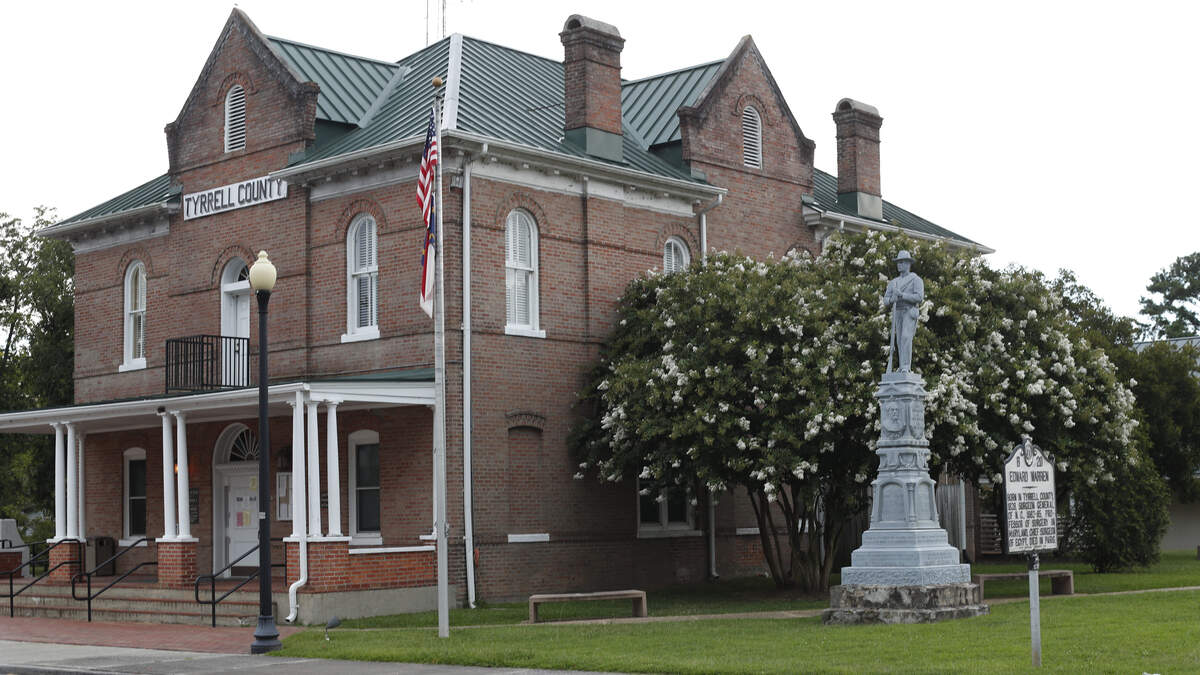
In the 2024 federal lawsuit, longtime Tyrrell County residents, including descendants of people historically enslaved there, sought to force the rural northeastern county to cover an inscription on the base of a monument next to the courthouse in Columbia.
“In appreciation of our faithful slaves,” it stated in raised lettering on the monument base holding an armed Confederate soldier.
Unlike previous legal challenges seeking to remove monuments, the Tyrrell County lawsuit focused on the six-word inscription. It argued the phrase amounted to the county endorsing a message praising slavery and discriminating against Black residents.
After a federal judge rejected the county’s motion to dismiss the lawsuit, the parties settled, and the inscription was covered while the larger memorial remains.
In lawsuits challenging Confederate monuments, plaintiffs need to show more than personal objections. They need to show actual discriminatory effects, said Ian Mance, who represented the Tyrrell County residents with Jaelyn Miller on behalf of the civil rights organization Emancipate NC.
To try to meet that legal burden, Emancipate NC turned to political scientists Emily Wager of Western Carolina University and Lucy Britt of Bates College in Maine.
While historical evidence makes clear that white supremacists used Confederate monuments to intimidate Black people, research has shown that Americans view the symbols differently, Wager and Britt wrote. White people are more likely than Black people, for example, to oppose removing Confederate monuments and flags from state capitols, the researchers wrote citing previous studies.
“Notably, those living in the South, where Confederate symbols are more prominent, are most deeply divided on this issue,” Wager and Britt wrote.
Read more Does Ralph Norman have a ‘path to victory’ over Darline Graham in SC Senate race?
In 2022, the political scientists surveyed 1,400 Black and white North Carolina residents. In 2024, they surveyed 2,400 Black, white and Latino residents across the South.
Their research, titled “The Racialized Impacts of Confederate Symbols in Public Spaces: The Case of Courthouses” and published online by Cambridge University Press, found:
Emancipate NC hired Wagner and Britt to apply their research to the Tyrrell County monument and prepare a report for the lawsuit.
The lawsuit, which the county sought to dismiss arguing it could not change the monument under state law, was settled in July. County officials covered the “faithful slave” inscription with a steel plate.
Confederate monuments on courthouse grounds are a form of “symbolic racism” that signals racial hierarchies for those who visit the building and in the surrounding community, the study found.
“These monuments negatively impact Black and Latino Southerners while positively reinforcing symbolic politics for the most racially resentful whites, thus perpetuating values of white supremacy,” the study found.
This story was originally published August 12, 2026 at 3:02 PM with the headline “How research helped prove an NC Confederate monument’s harm.”
Read more NC Confederate memorial no longer praises ‘faithful slaves’ after lawsuit