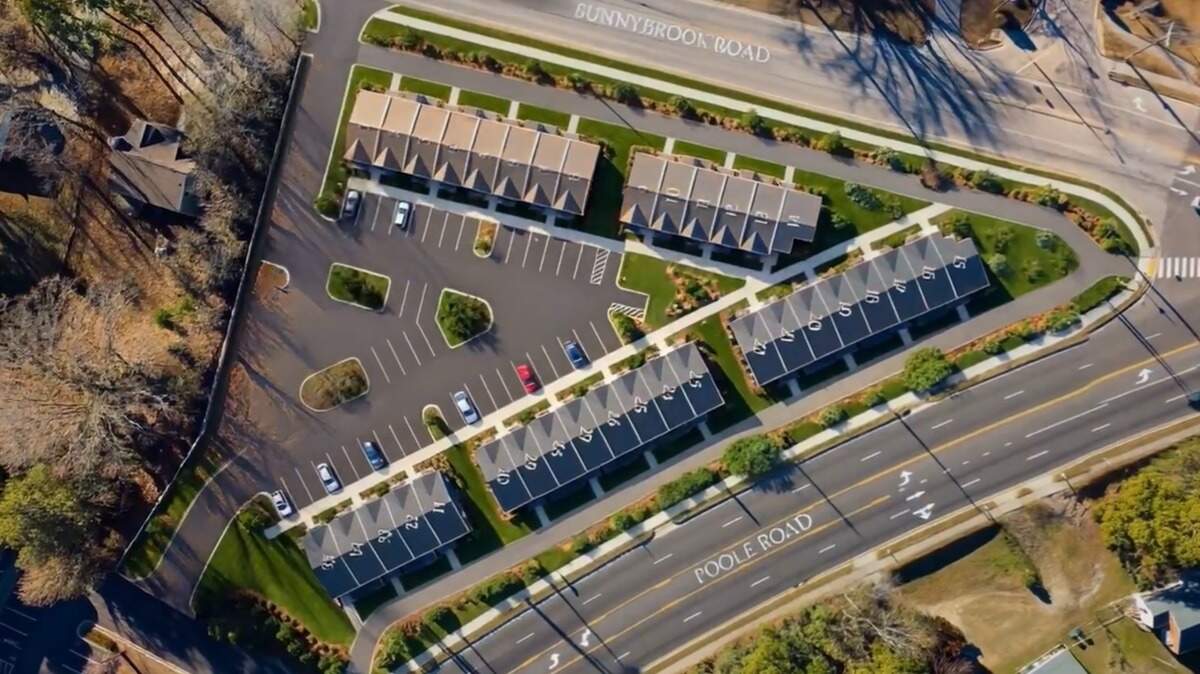
NC just ended most parking requirements for developers. Here’s what it could mean.
AI-generated summary reviewed by our newsroom.
North Carolina is now among the earliest states to scrap nearly all required parking in new development after Gov. Josh Stein signed House Bill 162: the Parking Lot Reform and Stormwater Control Act.
Read more A California man has been returning postcards for 50 years. He just sent one to York County.
The sweeping change, which takes effect Jan. 1, 2027, removes minimum, off-street parking requirements for most housing and commercial projects statewide, a move supporters say will cut development costs, reduce flooding risks and free land for more homes.
“Over time it will create greater affordability,” said Stephanie Watkins Cruz, director of housing policy at the N.C. Housing Coalition, at the signing ceremony.
The new law marks a major shift in how cities and towns across North Carolina regulate parking. While some municipalities like Raleigh and Durham County had already ended mandatory parking minimums, HB 162 extends the reform to roughly 90% of the state’s population, except in coastal counties, where mandates will remain.
The bill also includes a stormwater provision championed by environmental groups such as the Catawba Riverkeeper. Local governments may now offer incentives for stronger stormwater protections when properties are redeveloped. It’s a significant change given the role large parking lots play in flooding, runoff and pollution.
North Carolina’s reforms are yet another demonstration of the power of the YIMBY (”Yes In My Backyard”) movement and “the bipartisan recognition” across the country that people need more housing, said Sara Bronin, founder of the National Zoning Atlas, in an email.
Here’s what you need to know:
HB 162 does not ban parking.
Businesses and developers can still build as much parking as they want. The law simply removes mandatory minimums, letting builders decide what makes sense for their location, customers, and budget.
This approach has already worked in places like Raleigh, Durham County, and the Gaston County towns of Cramerton and Gastonia near Charlotte, which previously eliminated parking minimums, said Nicole Quick, director of government relations at Carolina Forward, in a blog post.
“In these places, development did not grind to a halt, and street parking did not collapse into chaos. Developers continued to build parking when it was needed — just not more than their markets demanded,” she said.
Studies from Seattle and Buffalo show similar results: developers built parking when needed, saved millions when they didn’t, and freed land for housing, retail and green space.
North Carolina is not the first state to eliminate parking minimums.
California, Oregon, and Minnesota all passed statewide reforms earlier, and several other states — including Colorado, Maine and Connecticut — have adopted versions that remove minimums in large portions of their cities.
Parking requirements date back to the 1950s, when cities tried to manage congestion by forcing developers to build abundant parking.
Read more It’s time for Josh Stein to be a leader on the I-77 toll lane mess | Opinion
Today, those rules often require far more parking than people actually use, says Raleigh Forward.
A single surface parking space costs $5,000 to $10,000 to build, according to the nonprofit, citing Strong Towns.
Structured parking (multi-level facilities) can cost $25,000 to $50,000 per space.
Those costs often get passed directly to renters, homeowners and small businesses. In North Carolina cities, the scale is already visible: 26% of Uptown Charlotte, 28% of downtown Raleigh, and 31% of Greensboro’s central city are devoted to off-street parking.
For housing advocates, environmental groups, and developers, it’s one of the most significant land-use reforms North Carolina has passed in years.
“North Carolina is leading the way,” said Jenn Truman, an architect and founder of CITYBUILDER, in a blog post.
“Allowing businesses and builders to choose how much parking they need has been shown to [cut] costs. It also reduces the environmental impact and flooding risks caused by parking lots.”
Catawba Riverkeeper, the nonprofit dedicated to preserving the Catawba-Wateree River Basin, spearheaded the effort.
“Parking reform might not sound like a water quality issue, but impervious surfaces, like parking lots, are the leading cause of water pollution in North Carolina,” said Ryan Carter, policy director at Catawba Riverkeeper.
“This is a meaningful win.”
Keep up with the latest Triangle real estate news by subscribing to On the Market, The News & Observer’s free weekly real estate newsletter. Look for it in your inbox every Thursday morning. Sign up here.
This story was originally published July 14, 2026 at 6:30 AM with the headline “NC just ended most parking requirements for developers. Here’s what it could mean..”
Read more NC behind on inspecting old dumps, landfills for hazards, new audit finds