Mecklenburg SNAP recipients reach a low. Why? And who’s filling the gap?
The number of North Carolinians, and Mecklenburg County residents receiving Supplemental Nutrition Assistance Program benefits, previously known as food stamps, is the lowest it’s been in five years.
Read more Public funeral for NASCAR legend Kyle Busch announced in NC. When and where
The Mecklenburg County Department of Community Resources said it’s received a steady number of SNAP applications, which reflects demand for assistance, but recipients are declining. These changes could be caused by a number of factors, the county added, including fluctuations in household income and policy changes affecting eligibility.
One year ago, President Donald Trump signed the One Big Beautiful Bill Act into law, which tightened eligibility for the food assistance program. Data also shows a steeper drop in November when Operation Charlotte’s Web occurred.
In a state where 15% of people experience food insecurity, a figure that’s been climbing in recent years, about 11% of residents receive SNAP benefits, according to data from Feeding America and the N.C. Department of Health and Human Services. For Mecklenburg County, the gap is similar: 13.2% of the county experiences food insecurity while just over 9% receive SNAP benefits. That gap means people who don’t have consistent access to healthy food also aren’t getting help.
From 2021 through 2024, the number of SNAP recipients statewide fluctuated between 1.4 million and 1.7 million. But since January 2025, recipients have declined to 1.2 million and continue to trend downward.
According to the N.C. Department of Health and Human Services, SNAP eligibility is determined by a number of factors including income, household size and other assets. The One Big Beautiful Bill Act imposed stricter work requirements to qualify for SNAP benefits and implemented restrictions on non-citizens accessing them. Across 10 years, it will reduce SNAP funding by more than $186 billion.
The act will also increase states’ share of the program’s administrative cost. The N.C. General Assembly budget, signed by Governor Josh Stein on Tuesday, mandates that the state shoulders 75% of the administrative cost of SNAP, up from 50%.
Those left wondering “now what?” face a familiar answer: government programs, nonprofits and other groups who provide food assistance. But they, too, are experiencing the trickle-down effects of cuts to SNAP benefits.
“There can be a lot of people who fall through the cracks when it comes to government assistance,” said Lisa Matthews, executive director of local nonprofit The Bulb. “… (We’re) trying to fill that gap between what they can afford and what they realistically, actually need in order to sustain their families.”
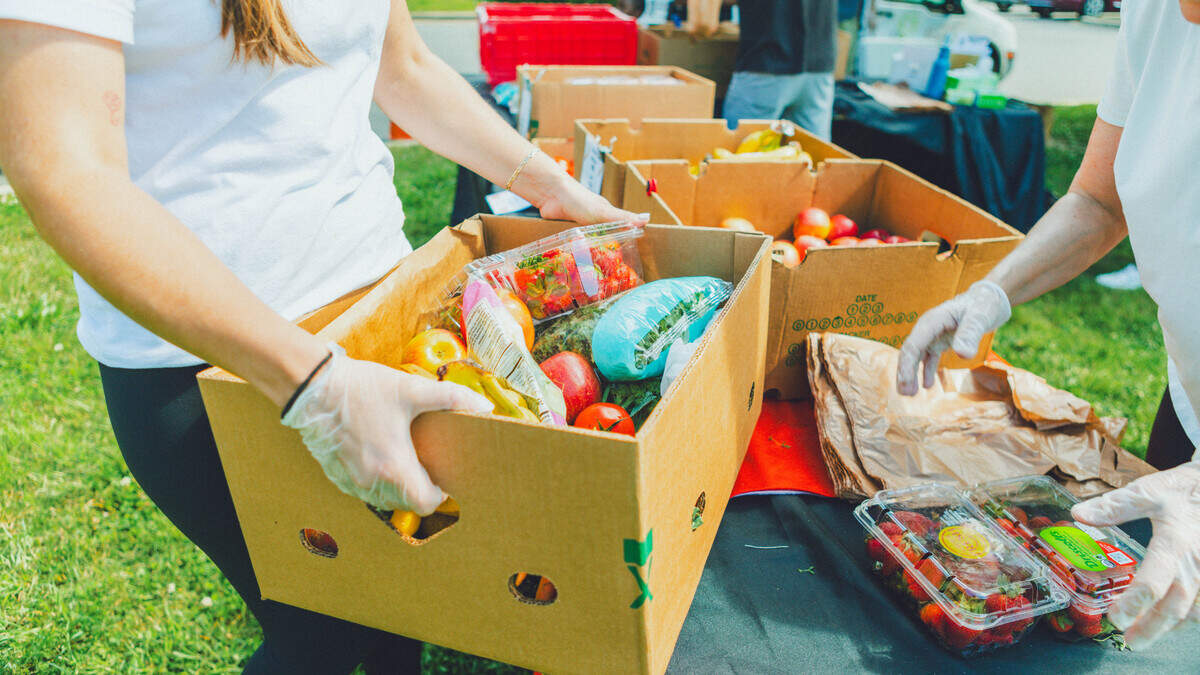
The Bulb brings produce from grocers and local farms to families in need at farmers markets — without questions or financial barriers. About 50% of people who The Bulb serves do not receive “any government assistance,” according to a recent self-report survey. For Nourish Up, formerly Loaves & Fishes and Friendship Trays, almost 70% of those served through its grocery and meal services do not receive SNAP benefits, according to CEO Tina Postel.
Read more Sports cars, ‘fraud,’ adultery: Bitter court feud over Rep. Tricia Cotham’s dad
“Any changes to SNAP make me break out in hives, because we are already serving record-breaking numbers,” Postel said.
Last month, Nourish Up served the most people of any June in its 50-year history. This year, the nonprofit has already served 80,056 people through its pantry program and another 5,732 through its food share program to rescue and distribute fresh produce. The organization’s busiest months, July and November, are yet to come.
The Bulb’s numbers are already on track to pass last year. It’s served 46,829 people and 225,317 pounds of produce as of the end of June.
Charlotte-Mecklenburg Food Policy Council works closely with the county to tackle food assistance and education through programs that “maximize government benefits,” said board chair Kenya Joseph. It includes programs that double, and sometimes triple, food stamp spending up to $50. It also has voucher programs that aid seniors and qualifying individuals in Public Health’s Women, Infants and Children program in purchasing healthy foods.
“Our programmatic work has scaled dramatically in the time that I’ve been with the council,” said Joseph, who joined in 2021. “Part of that is because that was the new direction that I wanted to take the organization, but it was also based on the need.”
Food insecurity has “exploded,” said Postel, and so has Nourish Up’s reach, she said. Today the nonprofit has 41 food pantries supplied by Second Harvest Food Bank, food drives and groceries purchased with donations.
Postel said volunteers and donations make it possible to meet this need. In her 10 years, the organization has never had to turn anybody away.
But with policy changes, she fears that could change in the future.
“I’m terrified that we might experience for the first time in our history, a moment when we’re not going to be able to meet the needs,” she added.
Read more Classic soap in fountain prank gets 2 men charged with felonies, NC sheriff says
