NC pastor: What makes a nation great? The Bible has an answer this election. | Opinion
For the last month, my congregation has been contemplating questions that are perennial in every election season. What makes a nation great? What do citizens owe their governments and vice versa? How should a nation ‘under God’ operate? But we haven’t sought answers to those questions in the political ads blaring from our screens, the platform of either political party or the stump speech of any candidate. We’re a church, so we turn first to scripture, specifically the book of Deuteronomy.
Read more Charlotte-born café named among nation’s best spots for coffee. Why folks love it
These are the last words of the prophet Moses given to the people before he dies, and they enter into the long-awaited promised land, finally free to live as God’s people. Moses tells them they will flourish if they love God, not just when they are worshipping in the sanctuary but in every part of their life. And then he gives them God’s commands so they’ll know what that looks like.
Admittedly, if you ask any three faith leaders what God reveals in Deuteronomy, you’ll get at least seven different answers. But I’ll tell you what astonishes this pastor. God commands the people to set aside a tenth of all they earn each year as a tithe. In the first and second years, they are to bring this tithe to the altar in the temple, where it will be shared with the priests as the source of their livelihood (since they have no land of their own) and then turned into a celebratory feast for the worshippers.
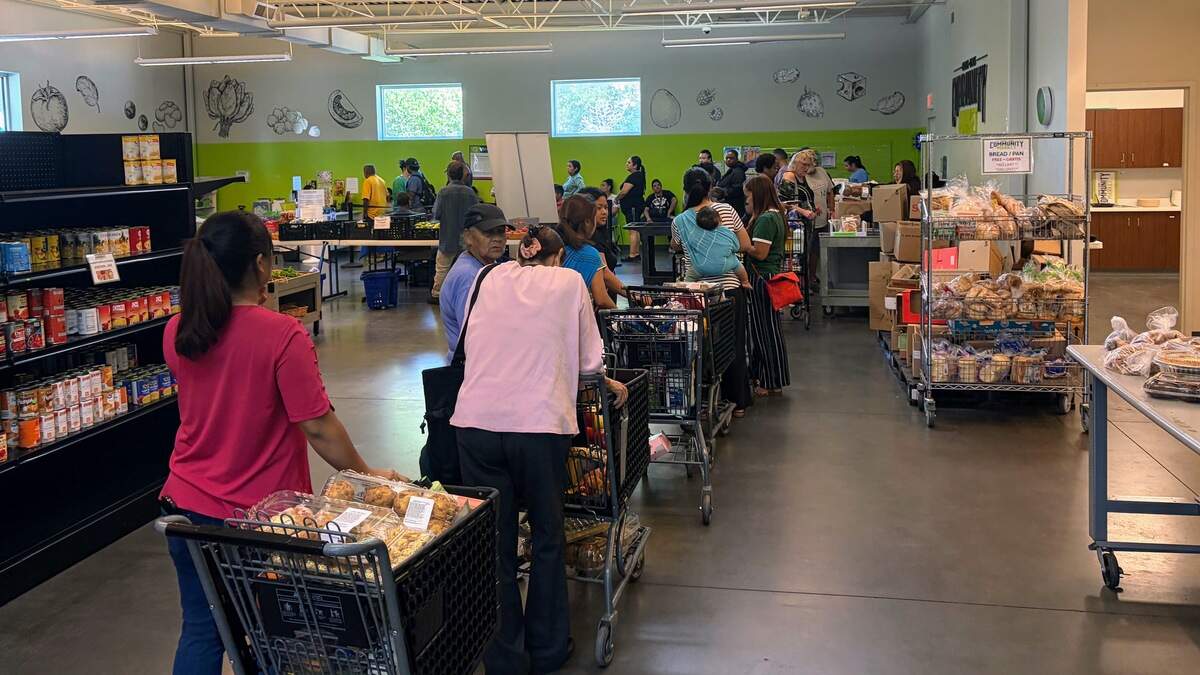
But every third year, God’s tithe doesn’t go to the temple in Jerusalem. Instead, the people are commanded to bring it to their cities and then distribute it among the poor and vulnerable. Specifically, it is set aside for widows, orphans and foreigners, because these groups cannot provide for themselves and are ripe for exploitation. According to Deuteronomy, a righteous nation worships God in its religious institutions and by caring for the poor. Those who prosper can’t ignore the poor or counsel them to pull themselves up by their own bootstraps. Scripture mandates that every citizen must set aside a significant portion of their own resources to give direct aid to the poor, and over and over again scripture specifies that this includes not just native born but foreigners “who labor in your midst.”
Deuteronomy also reveals an economic system with absolute limits on the power and accumulation of capital. In God’s eyes, the foundation of a righteous economy isn’t efficiency or profit maximization, but universal justice and neighbor love. “Pay to Play” political systems are outlawed. Judges and officials are commanded not to pervert justice or show partiality. They are prohibited from taking bribes “for a bribe blinds the eyes of the wise and twists the words of the innocent.”
Read more Hornets head coach Charles Lee benched Naz Reid at halftime. Here’s why
Government exists to protect the lives and rights of the most vulnerable citizens, because in God’s eyes people aren’t “makers or takers,” “creditors or debtors” or “upper, middle or lower class.” All citizens are neighbors, and each one is entitled to flourish in community. And so God commands wealthy neighbors to loan to their neighbors in need, without charging interest or even taking collateral. They must leave perfectly good produce in the fields to be gleaned by landless neighbors. And every seven years, every debt must be forgiven. Because in God’s economy, both rich and poor must learn to live with the risk of loss.
The vision of a righteous nation revealed in Deuteronomy is incomprehensible to most twenty-first century American Christians. Too often, Christian leaders scour the text for verses to justify genocide, ethnic cleansing and never-ending wars in the Middle East, and then dismiss the rest as “Old Testament Law” that is irrelevant to life in Christ. We lack the faith and theological imagination to take the Bible seriously. We cannot conceive of a national life that isn’t dependent on warfare, trickle-down economics and the noblesse oblige of the one percent. Deuteronomy promises there is another way: a nation under God that flourishes interdependently by centering the needs of the most vulnerable because the land itself is abundant enough to provide for all.
Moses knew it was a hard sell. The people are walking into the promised land with a sure-fire guarantee. God promised to protect them, bless them and prosper them. The prophet warns them that if they forget God and their own story they’ll destroy themselves. When they are tempted to ignore the cries of the needy, to cheat the powerless, or exploit the foreigner, they must remember this is what Pharaoh did to them when they were slaves in Egypt. And it was all perfectly legal and enormously profitable. God heard the cries of the needy then and brought judgment upon the nation of Egypt. Deuteronomy warns that any nation that ignores, or even worse, profits off of the suffering of the oppressed will suffer the same fate. And it promises that if the nation conforms to God’s vision, there will be liberty, justice and abundant life for all.
Kate Murphy is pastor at The Grove Presbyterian Church in Charlotte and author of “Lost, Hidden, Small.”
Read more Plaza Midwood resident brings ‘Willy Wonka gone wrong’ to Lowe’s Halloween collection