NC lobbyists agree to civil fine in deal to drop charge over bourbon tour
AI-generated summary reviewed by our newsroom.
Three lobbyists whose clients helped cover expenses for state lawmakers attending a bourbon tour each agreed to pay a $1,000 civil fine on Thursday and avoid the possibility of a criminal trial.
Read more Charlotte babysitter accused of killing 7-month-old boy in her care, CMPD says
Attorneys for lobbyists David Ferrell, Douglas Bowen Heath and Douglas Miskew each said in state Superior Court that their clients agreed to a deferral of prosecution on the charge of solicitation to commit violations of the offense of giving gifts by lobbyists and lobbying principals. The lobbyists also agreed to undergo education on the lobbying law, and to cooperate with the continuing investigation.
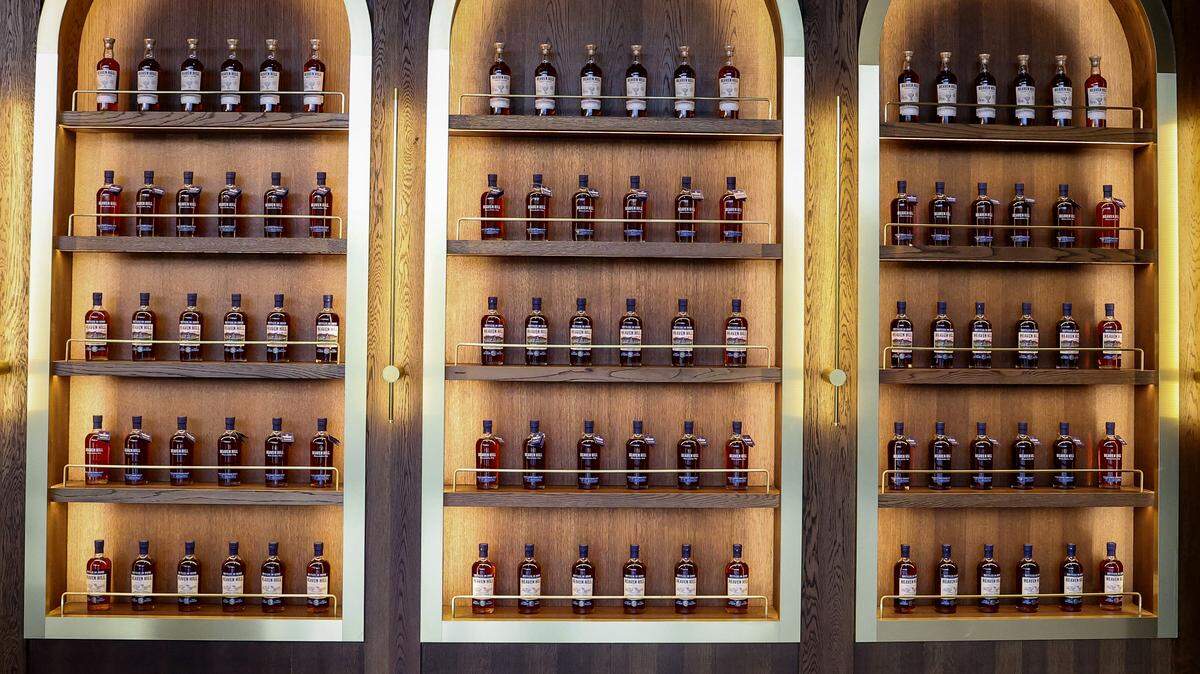
Greater Carolina, a Mooresville-based nonprofit promoting conservative economic development policies, held the 2024 tour in the Louisville, Kentucky area, and an earlier one in 2022.
Ferrell, Heath, Miskew and a fourth lobbyist, Kevin Wilkinson, were indicted in April by a Wake County grand jury. According to the indictments:
None of the lobbyists nor their clients reported the expenses on their quarterly lobbying reports submitted to the N.C. Secretary of State’s Office, which regulates lobbying. No charges arose out of the 2022 trip because the statute of limitations for misdemeanors is two years, Wake County District Attorney Lorrin Freeman has said.
Neither Wilkinson nor his attorney were in court for the disposition. Freeman told The News & Observer after the hearing that she was not able at this point to determine that his involvement was at the same level as or greater than the other three.
Freeman said the civil fine, required education and further cooperation with the probe made sense given the misdemeanor charge only carries a $200 fine.
“We could have gone through a whole trial, brought a bunch of witnesses from Kentucky, a jury could have convicted them, and at the end, a judge would have given them a $200 fine,” Freeman said. “That was part of what we had to weigh out in reaching our resolution.”
In court, she said the state’s lobbying and ethics laws contained “exceptions” that might have made a conviction difficult. None of the three lobbyists had paid for the expenses, she noted.
Ryan Willis, a Raleigh attorney for Heath, also noted what he called a “very complicated, murky area of the law” at the heart of the charge.
“The outcome that was negotiated here reflects an appropriate resolution of this case based on the state’s own investigation,” Willis said in a short interview after the hearing.
The leader of Maynard Nexsen, the firm Ferrell works for, said in a statement he was pleased with the outcome.
“By the terms of the agreement, David does not admit guilt, and there is an acknowledgement that there is no evidence that David personally gave a gift, directly or indirectly, and an acknowledgement that David is not the subject of an ongoing investigation” said Jeff Grantham, the firm’s managing shareholder.
Miskew also said in a statement that he admitted no wrongdoing and he is moving to have the charge expunged.
“As the dismissal acknowledges, I voluntarily cooperated with the investigation, I’m not the subject of any ongoing investigation, and the investigation found that I did not give a gift, directly or indirectly, to any state lawmaker,” Miskew said.
He added: “Based on media reports, this investigation continues. If allegations reported in the media are true, then I feel duped, as I expect do others who were led to believe the organization was acting in good faith in pursuit of its stated mission.”
Outside of court, Freeman said the case ought to persuade lawmakers to tighten the lobbying and ethics laws. They took effect in 2008, and did not anticipate the forming of social welfare nonprofits such as Greater Carolina that are now being used for political purposes. They are known as 501(c)(4)s, which is how they are characterized under the federal tax code.
“I think, unfortunately, with the advent of 501(c)(4)s, there is a sense that there are not rules that restrain them,” she said.
Read more Family argument over messy kitchen escalates to gunfire, NC sheriff says
Eleven lawmakers went on the 2022 trip, and nine attended the 2024 trip, search warrants say.
Only one lawmaker, state Sen. Tim Moffitt, a Henderson County Republican, reported the trip on his annual statement of economic interest, investigators said. One other, state Sen. David Craven, updated his economic interest statement to show the trip after an earlier statement showed he was an officer with Greater Carolina.
State Sen. Todd Johnson, a Union County Republican, and Rep. Ray Pickett, a Watauga County Republican, were identified as 2022 tour attendees in a search warrant, while Reps. Kyle Hall of Stokes County and David Willis of Union County, also Republicans, were identified in receipts from the 2024 tour. The receipts were obtained by Carolina Forward, a Carrboro-based, left-leaning think tank whose complaint prompted the state investigation.
“We look forward to seeing the men behind the Greater Carolina scheme held liable for their actions, as well as the lawmakers who were happy to collude with them,” said Blair Reeves, Carolina Forward’s executive director.
Then-Rep. Jason Saine, a Lincolnton Republican who was the top budget writer in the House, helped organize the bourbon tours. He is closely connected to Greater Carolina. It was formed by one of his former legislative aides, and its director, David Coble, occasionally co-hosted a radio show with Saine.
Saine, who attended both tours, resigned from the House shortly after the 2024 tour became public when a distillery worker at one of the stops complained in a Reddit post about the group’s behavior. Saine is now a lobbyist.
Freeman has said that none of the “current” lawmakers who went on the tours are facing potential charges. She wouldn’t comment on Saine.
The clients who underwrote the bourbon tour expenses could face civil penalties under the lobbying laws, Freeman said. That would be handled by the N.C. Secretary of State and the State Ethics Commission.
She said she hopes to wrap up the investigation within a few months, and plans at the case’s end to identify all the lawmakers who went on the tours.
She has also said that the investigation into Greater Carolina goes beyond the bourbon tours. Search warrants have identified expenses that investigators say appear to be improper, including payments to two businesses that operate adult entertainment clubs and a payment to a medical business that helps men with sexual performance issues.
A search warrant made public this week reported that Coble acknowledged in May to Greater Carolina’s tax preparer roughly $30,000 in personal expenses he inadvertently made on the nonprofit’s credit cards. He has repaid those expenses, the search warrant said.
In July, Freeman said the investigation was expanding to look into Greater Carolina’s connections with the M Group Companies, a Florida developer that won a big assist from state lawmakers in the final version of the 2023 state budget. An M Group subsidiary — Mooresville BTR — received $15 million in the budget, which largely covered its commitment to the Mooresville Town Council to build a connector road through a residential community it sought to build in the fast-growing town.
Coble was a local representative for Mooresville BTR working with town officials. Wilkinson was the subsidiary’s lobbyist.
In June, The News & Observer reported that the M Group won behind-the-scenes help from House Majority Leader Brenden Jones in its efforts to win a contract to build a 600,000-square-foot liquor warehouse for the state Alcohol Beverage Control Commission. Jones, a Columbus County Republican, has said through a spokeswoman that he broke no law in pushing for a path the M Group needed to build the warehouse.
The controversy over Jones’ actions, which were publicly opposed by ABC Commission Chairman Hank Bauer, helped cause lawmakers last session to hold off passing wide-ranging legislation that included building the warehouse.
Freeman has not provided specifics as to why the Greater Carolina case is also focusing on the M Group. The company’s CEO, Patrick Marino, has acknowledged making a contribution to the nonprofit but did not say how much and why.
This story was originally published September 17, 2026 at 3:54 PM with the headline “NC lobbyists agree to civil fine in deal to drop charge over bourbon tour.”
Read more Photos of the Week