NC identifies most likely source of brain-eating amoeba infection that killed teen
AI-generated summary reviewed by our newsroom.
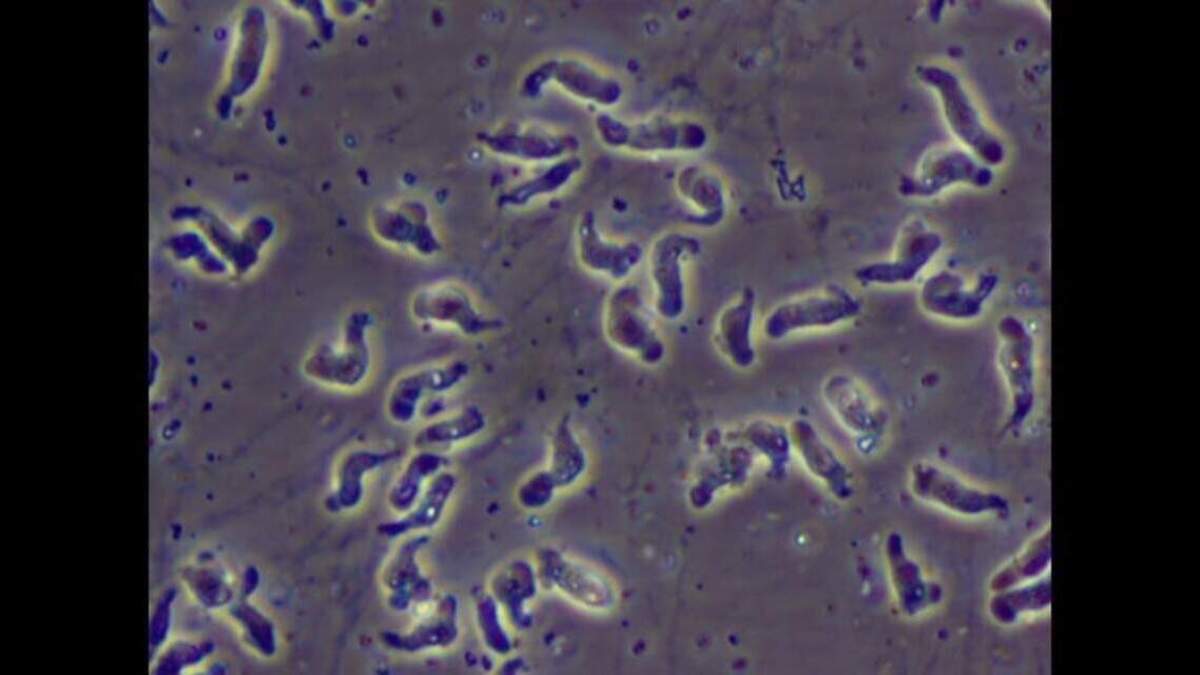
The North Carolina Department of Health and Human Services identified a water feature at a community organization in Durham as the most likely source of the brain eating amoeba that killed a North Carolina teenager in August.
Read more Two more Charlotte-Mecklenburg Schools leaders to leave district amid exodus
NCDHHS announced a central North Carolina teenager had been infected with Naegleria fowleri, a rare brain-eating amoeba found in warm freshwater on Aug. 27. The teenager died on Aug. 31.
The investigation does not “conclusively determine” where the teen was exposed, but the findings suggest he was exposed by splashing water onto his face at a water feature outside El Futuro in Durham.
The water feature was closed on Aug. 28, and subsequently tested positive for Naegleria fowleri.
Interviews with the patient’s family identified several possible sources of the infection in Durham County, Alamance County and Orange County, including ponds, a pool and the water feature. The possible exposure sites were tested by the Center For Disease Control and NCDHHS, in coordination with local health departments.
The teenager was identified as Moises Ponce Mendoza on GoFundMe by his mother, Mónica Mendoza. Mendoza did an interview with N+ Univision 40 on Wednesday, Sept. 2.
In Spanish, Mendoza said, “The last time we went to a pool that is in Carrboro. And afterwards, from there we went to, I went to, an appointment that I had at the Future Clinic. And the Future Clinic has a fountain outside that, even my daughter told me, that [they] had wet their face with the water from the fountain.”
State Public Health Veterinarian Carl Williams had previously confirmed to The Charlotte Observer there were several possible locations being investigated.
El Futuro has not been reached for comment.
Naegleria fowleri infects people after water containing the amoeba goes up the nose. It causes primary amebic meningoencephalitis. While fewer than 10 people typically die of primary amebic meningoencephalitis yearly, nearly everyone with PAM dies, according to the Center for Disease Control.
Read more Banker horse wearing mask is scaring other horses, NC Outer Banks nonprofit says
A Louisiana child died of Naegleria fowleri on Aug. 8, shortly after her eighth birthday. Previous reporting by The Guardian shows that rising temperatures associated with climate change have caused the rare illness to be seen in the Midwest, along with the South.
In 2019, an infection was reported in Cumberland County. In 2016, a college student died of an infection after capsizing a raft at the U.S. National Whitewater Center. Her family eventually settled with the center, The Observer previously reported.
The infections typically occur in hot weather, as the amoeba grows best at 115 degrees Fahrenheit.
While it isn’t possible to entirely eliminate Naegleria fowleri from the environment, some safety precautions can help, according to NCDHHS.
At the time of reporting, Mendoza’s GoFundMe has raised $14,300 of a $16,000 goal. The fundraiser was originally set to raise $7,500, The News & Observer reported.
“He was a very dear boy, with a good heart,” Mendoza told N+ Univision 40.
Parts of this story were previously published in The Charlotte Observer.
Questions about life in North Carolina? Or have a tip or story idea you’d like to share? The service journalism teams at The News & Observer and The Charlotte Observer want to hear from you.
You can submit your question by filling out this form.
This story was originally published September 15, 2026 at 12:54 PM with the headline “NC identifies most likely source of brain-eating amoeba infection that killed teen.”
Read more Former FBI director James Comey asks judge to delay NC Trump threat trial