I-77 toll support returns amid regional board vote: ‘Let Raleigh decide what’s built’
The Interstate 77 South toll lane project is, once again, moving forward, even as local government leaders admit the decision stems from state legislative backlash.
Read more CMS board releases Crystal Hill investigation report. Read the full documents
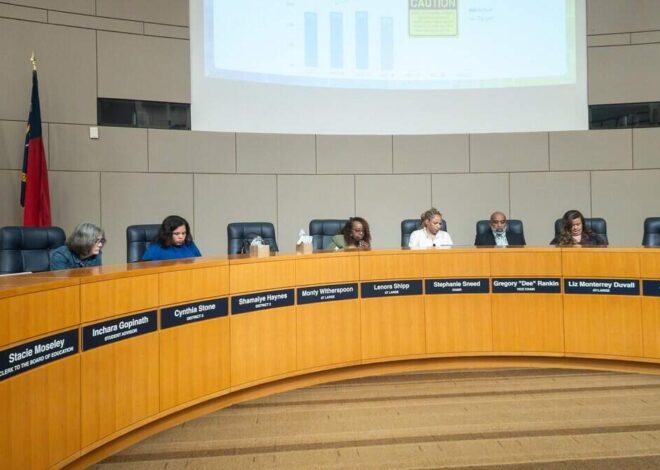
On Wednesday, the Charlotte Regional Transportation Planning Organization restored its support of the funding agreement for the $4.3 billion toll lane project.
Mecklenburg County and the town of Matthews were the only municipalities to maintain their opposition. The Metropolitan Public Transportation Authority withdrew its vote on the motion.
Unlike the organization’s surprise vote in May to rescind support of the funding agreement, Wednesday’s meeting and decision was short and expected.
On Monday, Charlotte City Council voted 7-4 to support the project. The town of Davidson switched its stance on Tuesday. And several other municipalities changed their positions during the summer.
CRTPO uses a weighted vote system with Charlotte carrying 41% of the vote alone. With Charlotte’s switched stance the controversial toll lanes project was guaranteed to move forward.
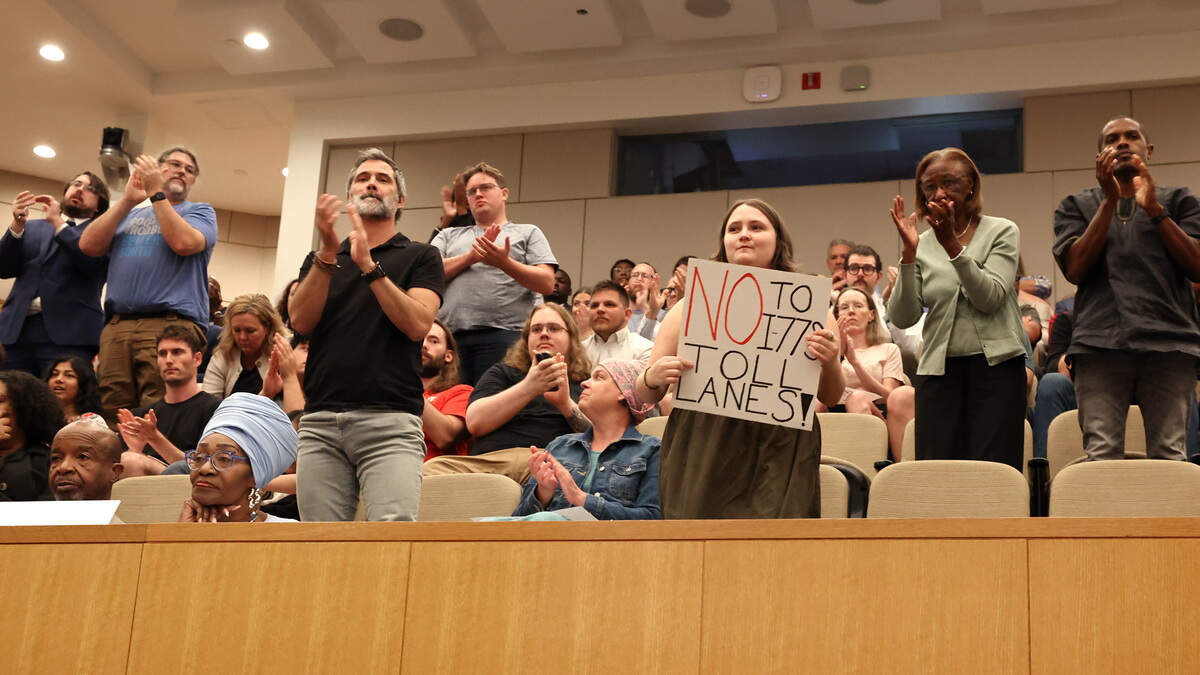
But some residents and government leaders are disappointed in the decision. Especially since some say it was fueled by pressure from the state legislature.
In July, a provision in the state budget threatened municipalities who voted against the toll lane project. Unless the project was revived, the provision would force those municipalities to repay what the North Carolina Department of Transportation already spent on project.
That cost: $69 million. Charlotte would have had the largest share of the payback starting at $59 million, according to the city.
“It sets a terrible precedent for the region,” said Matthews Mayor John Higdon. “This decision was made because of coercion, force and not because of a collaborative process with the state. If this board is going to be nothing but a policy board and rubber stamp what the state does, then I really question why we even need this board. Let’s just let Raleigh decide what’s built.”
The legality of the repayment provision has been questioned by all the municipalities that voted against the funding agreement in May.
But Charlotte, Cornelius, Davidson, Huntersville, Mint Hill, Monroe and Pineville switched stances.
Higdon, along with the town of Davidson Mayor Rusty Knox both resigned from the CRTPO because of the state’s provision.
“I’ve been here for eight years, and at the end of the day, to realize that Raleigh, on a whim, can make the decisions for us just because they don’t like them, I can’t do that,” Knox said. “I can work in the trenches and do a better job.”
During Wednesday’s meeting Higdon and Knox agreed that the municipalities that switched stances did so out of fear.
But board member and Charlotte City Councilmember Ed Driggs denied that claim.
Council members Malcolm Graham and Joi Mayo flipped their votes in favor of the project Monday. They cited a new guarantee the state would supplement the project with at least $300 million toward community benefits in impacted communities. That’s the reason for the switch, Driggs said.
“I do not appreciate the suggestion that the Charlotte City Council made this big decision out of fear of the consequences of not making it,” Driggs said. ”Five of us had already said before that we wanted to do it. Two more of my colleagues then were satisfied that the agreement that was executed was reliable. That they could count on that money. Once they knew that, they thought, why would we not do that?”
To reduce congestion and crashes, NCDOT plans to add toll lanes to an 11-mile stretch of I-77 from uptown to the South Carolina border. The project is estimated to cost somewhere between $3.2 billion and $4.3 billion.
In order to pay for the project, a private-public partnership would have a developer pay for a majority of the cost. NCDOT would contribute $600 million.
Read more CMS board made math error in claim about how little Hill investigation cost
CRTPO approved a public-private funding agreement in 2024.
But in November when NCDOT released early design maps that showed the interstate expansion running through historically Black neighborhoods, residents began to speak out against the project.
Those maps changed earlier this year. But about 29 homes in the Wilmore neighborhood would be removed to make way for the highway, as well as parks.
NCDOT tried to increase community engagement to ease tensions.
But residents argued that neighborhoods along the corridor already bore the brunt of highway expansions in the 1960s, which included displacement of minority communities in McCrorey Heights and Biddleville.
They wanted a pause put on the project to allow for more research and design alternatives.
In May, seemingly listening to some constituents, Charlotte City Council rescinded its vote against the funding mechanism. CRTPO followed suit. And the project was shelved.
In the past four months, state legislators have threatened Charlotte and other municipalities with the $69 million bill.
And some community stakeholders met with officials from NCDOT to work on a community benefits agreement.
NCDOT, along with the Charlotte’s attorney office, worked on a memorandum of agreement binding the community benefits plan.
The plan notes that the developer of the project, when chosen, will give a minimum of $300 million toward community needs. Some of the those needs include grocery stores on the west side and a recreation center.
About $150 million would go toward reconnecting the westside neighborhoods by capping and stitching overpass on the highway.
The benefit package isn’t finalized, according to NCDOT. But it’s binding.
“I do think that the opponents (of I-77 south) were successful in driving a hard bargain,” Driggs said. “I think that their opposition caused NCDOT to back up, caused all of us to back up, and think harder about these vague promises about benefits. We would have lost the benefit of that precedent if we hadn’t voted for it. It’s like we have established a new paradigm.”
Board member and Mecklenburg County Commissioner Leigh Altman said next steps for the project include holding government leaders and NCDOT accountable for the promises they made.
And political backlash could follow. After the approval of the north toll lane project several elected officials were voted out of office, including then-Gov. Pat McCrory.
Similarly, Altman indicated that accountability may be seen at the polls in the upcoming elections.
And political backlash could follow. After the approval of the north toll lane project several elected officials were voted out of office, including then-Gov. Pat McCrory.
“I think that every elected official and every Democrat who said— who tried to push it forward and who was responsible for going forward are going to need to answer for all the outcomes they promised,” Altman said. “This agreement between NCDOT and the city is just an agreement to agree…I will do everything I can to hold those who made very grandiose promises to you accountable.”
With the I-77 South project back on the table, timelines are unclear when NCDOT will put out a request for proposals from developers. Or when the community will begin to see the benefits from the agreement.
Read more Providence Day hall of fame inductees include NBA, NFL players and an Olympian
This story was originally published September 23, 2026 at 6:35 PM.