Hurricanes’ Brind’Amour on Stanley Cups, ‘Rod the Bod’ and his worst day in hockey
AI-generated summary reviewed by our newsroom.
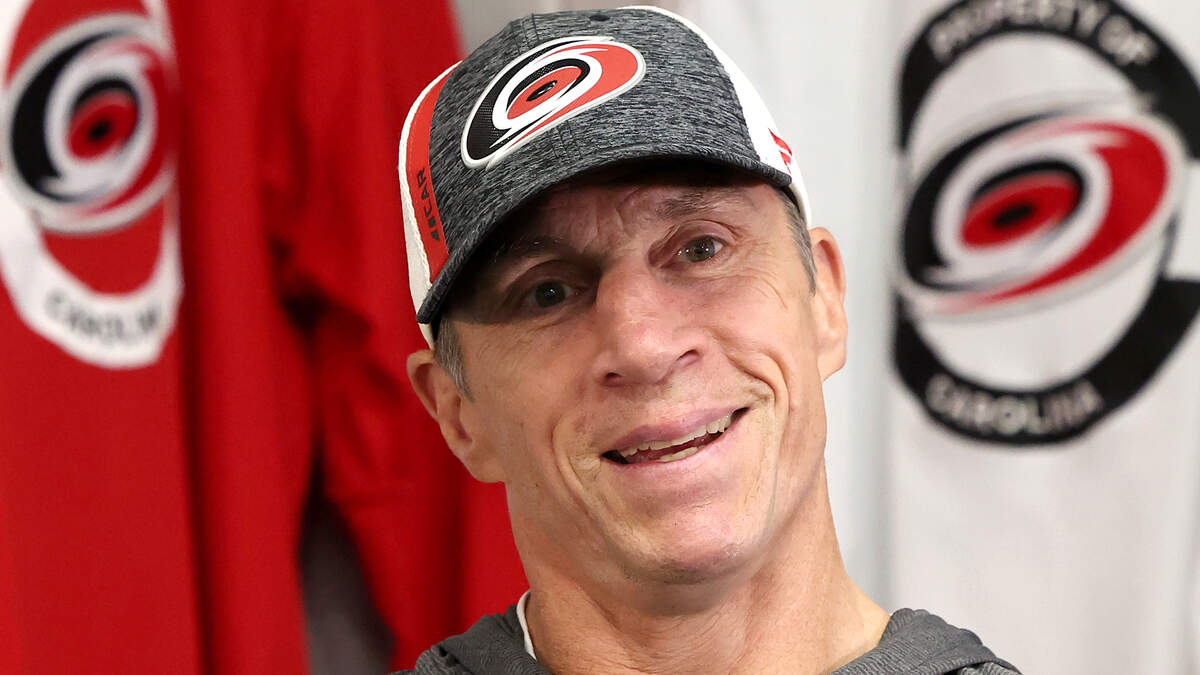
Rod Brind’Amour has authored one of the most unique careers in Carolinas sports history.
Read more 2 NC destinations rank among nation’s top ‘boomtowns.’ Here’s why
In 2006, Brind’Amour played for the Carolina Hurricanes and captained the team that won the Hurricanes’ first Stanley Cup.
Now Brind’Amour is the coach of that very same team. And after years of “almosts,” Brind’Amour directed the Hurricanes to their second Stanley Cup win in June. Imagine if Luke Kuechly’s Carolina Panthers had won that Super Bowl in 2015 and then Kuechly became the team’s head coach and won another Super Bowl — that’s what this was like.
Brind’Amour and his wife, Amy, live in Raleigh, the city that the longtime Canadian has adopted as his hometown. His Hurricanes open the NHL regular season at home on Sept. 29, when they will also raise their second championship banner to the rafters of the Lenovo Center.
In our interview, conducted at the Hurricanes’ practice arena, Brind’Amour, 56, told stories about quitting hockey as a kid and why he believes it was more satisfying to win the Stanley Cup as a coach in 2026 than it was as a player in 2006. He also discussed his “Rod the Bod” nickname, his worst day as a hockey player and the challenges of trying to repeat this season.
Our full conversation can be found on the “Sports Legends of the Carolinas” podcast, as well as on The Charlotte Observer’s YouTube channel. Here are some excerpts, edited for clarity and brevity.
Scott Fowler: What are some of your favorite moments of your championship run?
Rod Brind’Amour: The ending, obviously. Culminating with winning it and seeing the reaction of all the players… This has been a long time (coming). Years and years and years of a lot of hard work from these guys, and I get to see it every day. So I understand what they put in. And then that all just kind of came pouring out there at the end, and that’s something you’ll cherish forever.
SF: When you had your day with the Stanley Cup recently, what did you do with it?
RB: That’s a unique thing they do in the NHL, and one of the things they do right. They allow people that are part of the winning Stanley Cup (to have) a day with it, and we all know how much that trophy means. So you want to share it with people…
We started with showing respect to the police officers and firemen who come to our games and help at the arena. It was just a little way to say we appreciate what you do.
And then we surprised people along the way, some of my good friends and their businesses. We popped into a school my son had attended… We went to Sugar Koi, a great little ice cream spot. My wife has known the owner since they were in college together at N.C. State. He’s a great person and a real good friend, and so that was a nice moment to surprise him with that.
SF: What was the championship parade like in Raleigh?
RB: I’m glad you mentioned the parade. Because we’re in a bubble. It’s Groundhog Day for the hockey guys. We get up, we practice, we prepare, we play. You go to the next city. You’re blocking out the noise.
You don’t realize the momentum that is building. That parade, it was just amazing. In 2006, we had a nice parade… But this one just blew me away right from the start. The amount of people! And how well everyone respected each other…. And how well received it was, but how people that would never really talk to each other, like an N.C. State fan and a Duke fan, they were all together. Everyone was a winner that day. It was really something that I will never forget.
SF: Did you enjoy the Stanley Cup more as a coach?
RB: Definitely. I had a dream as a kid. I wanted to win the Stanley Cup. As long as I can remember, that was just it. I grew up in Canada. That’s what I played for.
So when I got to be a pro, it took a long time. And I wanted it for my teammates. I wanted it for the guys. But I really wanted it for me.
And then when you flip it as a coach, you know what it does for your life. It changes your life in ways I can’t even really explain. But I wanted it for those guys because I knew what it would do. I knew the bond they would create for life by winning that. So it meant more, to watch those guys achieve that.
SF: Your teams had gotten close so many times. Was winning the Stanley Cup more of a celebration or a relief?
RB: It was a bit of both. I would be lying if I didn’t say it was a sense of relief because we’ve been pretty good for a long time. Actually, really good. I don’t like to dwell on all that, but we have the most wins in the NHL in the last eight years… So if we had that Cup won in, let’s say, Year Two, they would be talking a lot different about this team all this time. But we didn’t, and I get it. You gotta win.
Now we don’t have to hear about that (being unable to win the big one), which was just a bunch of negative jumbo that wasn’t really accurate. That negative that was kind of always surrounding our group: I don’t think that should be there anymore.
SF: Didn’t you quit hockey entirely, early in your life?
RB: Yes. I didn’t like it.
In Canada, everybody plays hockey. It’s like picking up basketball here. Everybody tries it. And I started at age five. I quit because it was my Dad’s buddy that coached me. So he knew me. So I think he thought he could be a little harder on me.
And I didn’t like being yelled at. And so I quit. I’m like, “This is not fun.”
But two years went by and I realized that on the weekends, I had nothing to do, because all my buddies were playing hockey. So I was like, “I gotta get back into this thing.” Thankfully, I did, and it took. But yeah: It could have been a lot different.
SF: If you had never returned to hockey, what would you be doing now?
RB: I’m a sports guy. So I would have tried something (in sports).
SF: You left home at 15 in Canada to go play junior hockey. That’s common in this sport.
RB: Unfortunately.
SF: What do you remember about leaving?
RB: I remember leaving at five in the morning. My dad packed up the car, and he was driving me to a private school in Saskatchewan… Nothing around there. It was a three-day drive to get there.
I was excited because it was an opportunity for me to go improve my craft. But I remember my mom — she was just bawling. And now as a parent, I get it. I’ve had to send one of my kids away (to play hockey) — although not that young. And now we’re dealing with it with my youngest. We’re getting to the crossroads of that.
SF: What do you think are the biggest challenges in the youth hockey world?
RB: Keeping up with the Joneses. So everybody thinks they’ve gotta send their kid away, because over there is better.
And they might have better teams. But is that better for your kid? Are you getting better coaching? Are you getting a better opportunity? They’re going now at 13 or 14. And it’s breaking up the families, and for what?
A small amount of kids are gonna actually make it and do it for a living. And like I always say, “If you’re good enough, they’re gonna find you anyway.”
SF: You’ve said Jan. 23, 2000, was one of the worst days of your hockey life. Why?
RB: I got traded from the (Philadelphia) Flyers to the Hurricanes.
The Hurricanes had just moved to Raleigh. They were in Greensboro (from 1997-1999, while their arena was being built). They had just started their inaugural season in Raleigh. And, you know, I was a Flyer, and I didn’t want to leave. It kind of caught me off guard.
People that are from Raleigh will remember the snowstorm of the century was the next day (it snowed 20 inches). So I arrived and played one game. My car was stuck in the snow. It was just a disaster. For two weeks, we couldn’t get out of the hotel.
It was a tough time, and that was my initiation to being in a new city. It was very, very tough.
Read more NC Police: Burglary suspect caught after getting stuck overnight in grocery store
But I look back and how people treated me when I first got here was special. Not just the hockey people. I mean the people in the area.
You remember how people freak out when stuff like that happens? So there was a line at the grocery store that was out the door. And remember, I’m in a hotel, so I don’t have any access to food.
So I had to go to the grocery store. I had been traded from the Flyers, and I was on a one-day trip. So I was in Pittsburgh (when the trade came through). I had one day’s worth of clothes. (The Hurricanes) said, “Come and play the game in Carolina. We’ll fly you back to Philadelphia and get your clothes.”
Well, I couldn’t do that. So I’m in a suit in the line, and the line went out the door of the grocery store. And I’m freezing. But I’ve gotta get food.
And people let me go to the front of the line into the store, to get me in, so at least I wasn’t freezing.
I remember thinking, “Something’s up.”
Like, why would they do that?
No offense, but in Philadelphia, they’re not letting you do that.
SF: I’m sure you learned pretty quickly here you couldn’t just be a fan of college sports. You had to pick a side.
RB: Yeah, I had no idea. I’m a huge sports fan. I grew up watching college basketball. I remember my first memories of college basketball was watching N.C. State win in the Jim Valvano days. And Michael Jordan.
Never in my wildest dreams would I ever think I would end up in Raleigh, North Carolina. You know, they didn’t have hockey back then, but life happens weird.
I ended up becoming an N.C. State fan because within the first couple of weeks I got here, N.C. State was playing Carolina at the arena. That was the first game I went to, and it was sold out. It was crazy. But the N.C. State people gave me tickets to go, so I’m like, “All right. I’m gonna put the hat on.” Thankfully I did that. My wife went to N.C. State. My father-in-law is Eddie Biedenbach, who played for N.C. State.
So if I had chosen a different team, it would not have worked out at all. So we’re N.C. State people.
SF: What are the challenges of repeating this year?
RB: We’ve got distractions. We’ve got the short summer. I can make an excuse chart. But we have a saying for that: “The excuse chart is full. There’s no room for excuses.”
We know that we didn’t have the training, the summertime that we needed to really improve. But these are good problems to have. The good news is we’ve got a very similar group.
So we know what it takes. That’s also sometimes a curse because you know how hard it is. You’ve been through it and you’re like, “Ohmigosh, can we do that again?” But I think the guys have all kind of tasted it, and I think we may have little bumps in the road, but I’m pretty sure we’ll be able to keep it on track.
SF: You’re an old-school hockey guy, and the Hurricanes are very into analytics as an organization. Does that lead to some clashes?
RB: Well, you kind of touched on a nice little subject right there. There’s been a big push: Our ownership and management are huge analytics (people) and we probably are (at) the forefront of it in the league.
And yet, I’m the opposite. So I’m getting flooded with information that I’m already like, “We already know this. It’s a day late.”
And they’re trying to get ahead of it. So we go back and forth all the time… But I’m always learning different ways to do it. And I appreciate Eric Tulsky, who’s our GM, coming down to learn our way…. If you can get good people in there, we’ll figure it out and we’ll mesh. He’s done a really nice job of trying to combine the two.
SF: Do you like the nickname “Rod the Bod”?
RB: Ah I mean — whatever. I’m too old to worry about stuff like that.
SF: Your workout regime is legendary. When did you start that?
RB: My dad was a pipe fitter. And that’s not a job he wanted to do or liked to do, but he had to do it…. He got up at 5:30 a.m. Cranked his old rusty Volkswagen. That was him, going to the mill. And he was like, “You don’t want to end up like this.”
I always wanted to play in the NHL and he knew that. But he’s like, “You gotta do something different than the next kid.” Meaning more work. If you’re just doing the same, like how are you gonna get ahead?
And he bought me this cheap weight set, and we put it in the basement.
I didn’t know what I was doing at 12 or 13, but I started throwing weights around. I would do it before school. And then after school, too, because I knew that nobody else was doing that. That was kind of how I started.
It did help me, because I got into the NHL at 18. It wasn’t because I was that much better. I was just physically able to do it, to go against the men.
SF: What are your workout tips for the average person?
RB: I’m big on consistency. Anybody can work out and eat (right) for a week. But don’t take weeks off, because it’s hard. Especially the older you get, when you do that, it just goes down really fast.
To me, it doesn’t even matter what you’re doing. Get a sweat. Get a lift. Figure it out. And I knock it out with the coaching staff, first thing in the morning. If you wait to try and get a good workout in, it doesn’t happen.
SF: What is special about hockey as opposed to any other sport?
RB: It’s the greatest team sport there is. Football is close, and I say that because you have to count on everyone. Like you can have the best quarterback on the planet, right? But if his line is no good, he’s not going to excel. I promise you.
Hockey’s the same. The best players only play a third of the game…. We’re a weakest link sport. Your weakest link is going to get you, so you can’t have one. Everyone matters. Everyone has to feel a part of that.
SF: When you raise your championship banner on Sept. 29th before the opener in Raleigh, what will you be feeling?
RB: Mixed emotions. You have to enjoy the moments that you’ve created.
But we’re on a different journey now, so we have to also get focused on that. And that’s going to be the hard part all year.
People are going to be patting you on the back, telling you how good you were. That was a different race. We’re on a different one now. So that’s going to be the balancing act that we’re going to have to fight through.
But I want to enjoy it, and our fans should enjoy it, because that Cup is theirs as much as it is ours. And then we have to go win a hockey game.
The Charlotte Observer’s “Sports Legends of the Carolinas” series profiles iconic figures in sports. All 50-plus interviews are also available wherever you get your podcasts. The next interview is scheduled to be published Oct. 13.
Read more Brunch at this Charlotte restaurant is perfectly ‘improper.’ Here’s why it works