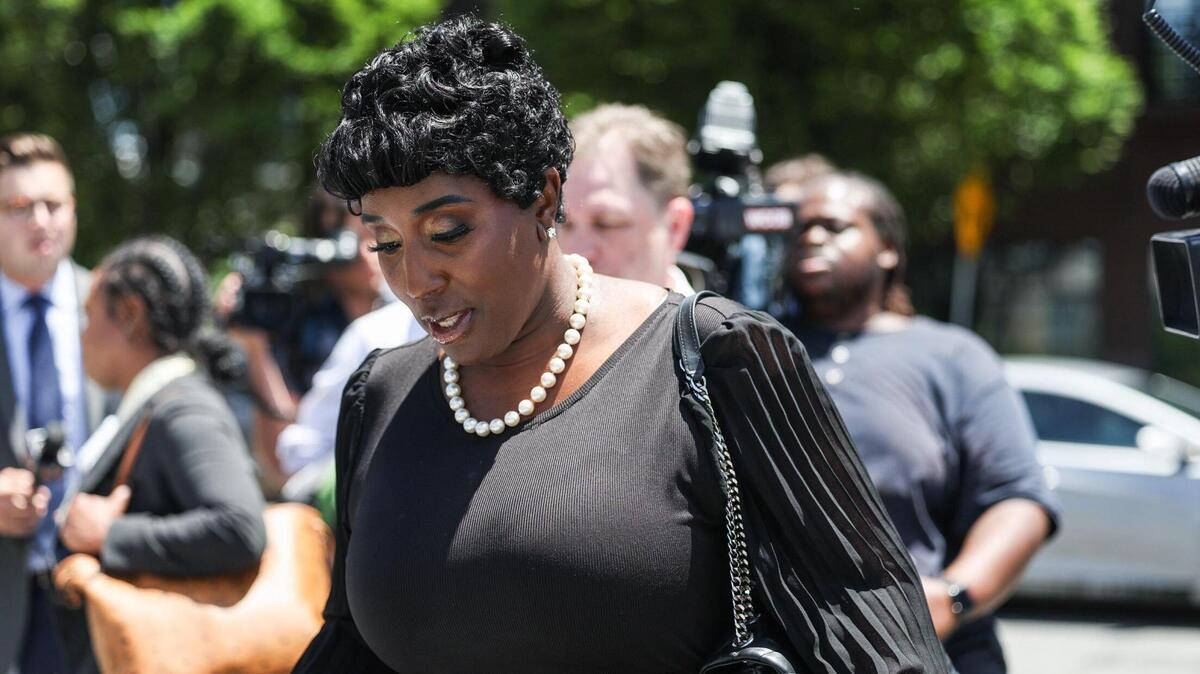
Former Charlotte councilwoman argues for probation in COVID fraud sentencing
Days before sentencing in her federal COVID-fraud case, the attorney for former Charlotte councilwoman Tiawana Brown argued “she has been punished” already and wants a judge to sentence her to probation.
Read more In week 2, Carolina Panthers see a return on their investment in defense
The case cost Brown her seat on Charlotte’s council and her a college scholarship, her attorney, Rob Heroy, wrote in a sentencing memorandum filed this week, adding: “She has also endured vile, demeaning attacks far beyond anything a criminal charge ordinarily brings.”
Brown, a 54-year-old who served District 3 as the first Charlotte council member with a prior felony conviction, landed back in court with her two daughters last year after they were accused of fraudulently obtaining pandemic relief loans and spending the money on Louis Vuitton items and an extravagant celebration.
Brown’s 50th birthday party, according to federal court documents, featured a throne and horse-drawn carriage.
All three were charged with wire fraud conspiracy and wire fraud. At the time of the indictment, Brown called the case a political attack and “deliberate effort to interfere with her re-election.” Then, after Brown lost her seat in the primary, she and her daughters took plea deals and admitted to the conspiracy charges in the U.S. District Court for the Western District of North Carolina.
Brown was accused of stealing more than $40,000 from the government. She paid half of that back two months before being indicted, Heroy wrote in recent filings and Brown previously said. Her daughters, Antoinette Rouse and Tijema Brown, are each accused of taking more than $50,000.
Judge Kenneth Bell, appointed by President Donald Trump in 2018, will sentence the family Tuesday morning.
In attorney statements to The Charlotte Observer, Tiawana Brown and Rouse said they are asking for probation. In court documents, assistant U.S. attorneys with Russ Ferguson’s office say that is “generally appropriate.”
Tijema Brown’s attorney, Jimmy Quander, previously said he hopes “the Court will consider the full context of this matter at sentencing.”
Read more Judge limits suspect’s alleging roommate involvement in Faith Hedgepeth murder
As of Friday afternoon, neither daughter had filed their sentencing memorandums.
Earlier this month, Rouse blamed her mother in the case. Her federal public defender, John Parke Davis, said Rouse “wouldn’t be here but for her mother” and is “the least culpable of the defendants here.”
Heroy, representing Tiawana Brown, declined to respond to that claim. In his 109-page memorandum filed last week, he detailed her previous incarceration and climb from serving time for student loan fraud in the 1990s.
That previous conviction — during which Tiawana Brown gave birth to Tijema Brown — is not calculated into her official criminal history level because it happened more than 20 years ago. However, Heroy wrote, it was calculated into how Tiawana Brown has lived the rest of her life.
Tiawana Brown recently had a job for nine years at American Airlines and a scholarship to Johnson C. Smith University — where she will soon receive a bachelor’s degree. A transcript submitted in court shows she dropped out of the historically Black university shortly before her prior conviction with “Fs” in humanities, social science, personal health and American government. She previously had a “B” in speech and an “A” in drama. Now, she has all “As” in the criminal justice courses she is enrolled in, court records state.
Tiawana Brown also successfully ran for city council and founded Beauty After the Bars, which has partnered with the Mecklenburg County Jail and Sheriff Garry McFadden to give 24 women at a time a home while on probation or after serving time.
Her job, scholarship and position on the council vanished after charges were filed, Heroy said. A probation sentence would allow Beauty After the Bars, a program the U.S. probation office used to refer people to, to continue running.
According to court documents, Tiawana Brown used $15,000 from the nonprofit’s account to throw her birthday party. That was after receiving $20,000 in relief loans.
Read more Trump, NC Rep. Virginia Foxx, and restrictions on journalists