Charlotte teens need more than third spaces. They need rides, experts say.
When The 704 Way organizes a popup for Charlotte’s youth, two things are non-negotiable, according to director Ricky Singh: price and transportation.
Read more Suspect arrested in shooting that killed former Garinger High athlete, CMPD says
“If we’re doing a youth activation, it has to be free, and we have to be able to get people there,” Singh said in an interview with The Charlotte Observer.
That’s because, aside from affordability, the biggest barrier to teen-friendly events and programming in the Charlotte area is transportation, Singh said.
The 704 Way, a youth-led initiative launched by My Brother’s Keeper, where Singh works as the executive director, is trying to find ways around both of these issues.
“Providing creative, free popups around our city where youth can engage in healthy conversation and dialog with each other, with adults, around like what a piece of Charlotte looks like,” Singh said. “Building pride in neighborhoods that might be sometimes associated with high violent crime.”
The initiative is trying to “disrupt the algorithm” by showing the opposite of that to youth, Singh said. My Brother’s Keeper is a local nonprofit that provides mentorship and programming to young boys of color, according to its website.
Earlier this month, The 704 Way held a free shoe decorating popup at Archive CLT, a northwest Charlotte coffee shop. Over 30 kids, mainly teens, showed up to spray paint, heat press and decorate pairs of Vans shoes purchased by My Brother’s Keeper.
To make sure youth could attend, the organization provided Uber vouchers. My Brother’s Keeper will either provide transportation, using vouchers, or ensure neighborhood events are within walking distance for the people living in the area.
Between June 2025 and July 2026, the organization paid about $27,000 in Uber vouchers to transport youth to events, Singh said.
“We’re very particular about that because we never want … to tell the youth no,” Singh said.
My Brother’s Keeper isn’t the only organization spending thousands of dollars providing transportation.
Wayfinders, a local nonprofit that provides mountain camping experiences for students in fourth through 12th grade, spends about $10,000 to $20,000 in transportation costs each year, according to Jazzi Goode.
Goode, who works as Wayfinders as an enrichment coordinator, said that money is spent on gas and Uber gift cards for families, mileage reimbursement for volunteers and staff, and other local transportation.
“Transportation is the number one factor that keeps kids from being able to do the programs and things that they probably want to do,” Goode said. “If you don’t have a car in Charlotte, what are you doing? How are you getting from point A to point B?”
While nonprofits have helped fill in that transportation gap, Goode said she’d like to see more money devoted to transportation in the city budget. She said she also thinks Charlotte officials need to stop focusing on so-called “teen takeovers” and instead on actual issues teens face.
By putting attention on “takeovers,” officials have given an incident “way more power than it needs” and instead should focus it elsewhere, she said.
“Just stop sensationalizing it,” Goode said. “Stop pointing fingers.”
Instead, elected officials, Charlotte-Mecklenburg police, and nonprofits need to meet with teens directly and hear what they have to say, she said.
Read more How a breakfast phone call led to a ‘grateful’ return to Panthers training camp
One thing they’re likely to learn is that youth desire teen-specific spaces — hubs where they can meet up with friends, do their homework and study, or connect with local organizations and resources.
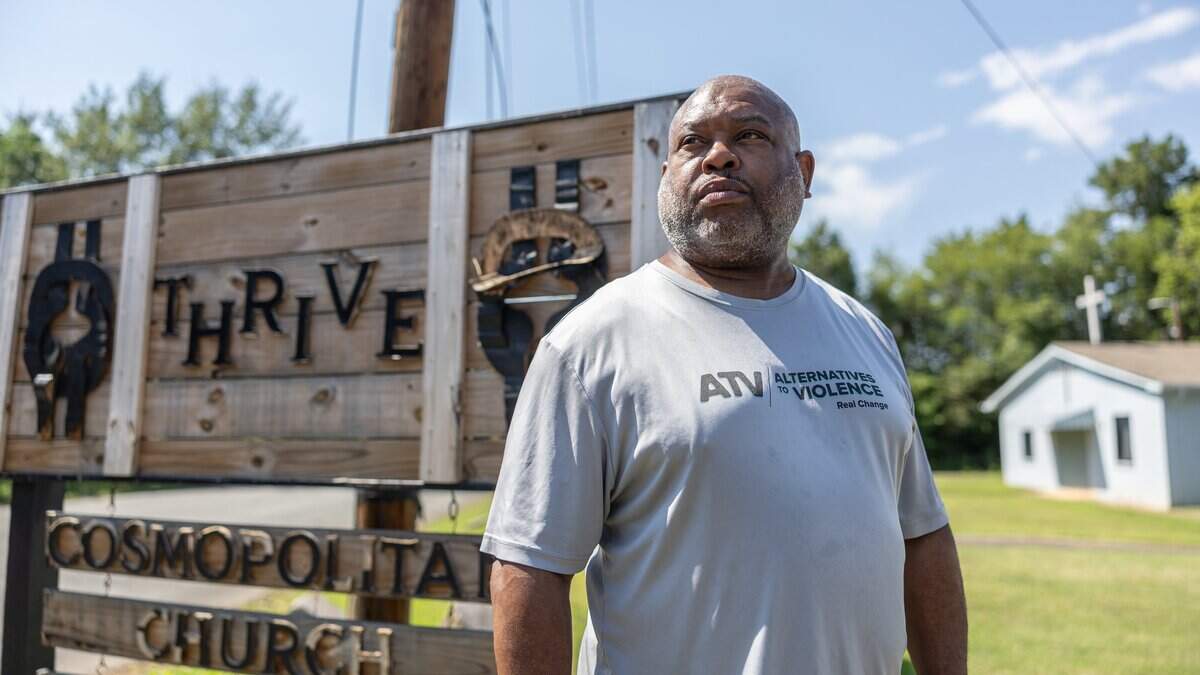
Roosevelt Brooks, a site supervisor Alternatives to Violence near Beatties Ford Road, said he also has an issue with the phrase “teen takeover.” Alternatives to Violence is a program run by the nonprofit Youth Advocate Programs, which provides services to people impacted by crime and violence.
“I think many of them … just want to come out and have fun,” Brooks said. “I don’t think any of them have any intentions of going to jail.”
Through his work, Brooks has seen the way giving teens access to activities throughout the city can help. Brooks works with teens as young as 14 and adults as old as 25 who have been impacted by violence in some way, including gun violence, he said.
When participants come into the program, some want to finish a trade school, like HVAC or beauty school, while others may want to improve their grades.
At a church on Newland Road, participants will find a safe space to play video games, gym equipment for working out, a kitchen for cooking, bikes to borrow and a piano to play music. They’ll also be taken out for activities like bowling, golfing, or an escape room.
Charlotte needs more programming and activities throughout the city that’s accessible to youth, Brooks said. He, like others, also pointed to transportation being a major roadblock. Many participants grow interested in activities they’re taken to, but have no way of getting back without transportation from the program.
Funding individual events is only “part of the solution,” according to Aaron Randolph, the executive director of Carolina Youth Coalition.
Randolph’s organization supports underresourced students as they apply to and attend college. Part of the nonprofit’s work involves afterschool programming in high schools around Charlotte.
Even if “third spaces” — safe spaces for people to hang out and socialize outside of work, school and home — were created for teens, getting them there remains an issue.
“If we can’t figure out a way … for it to be accessible and for people to get there, then that might also prohibit the investment in the first place,” Randolph said.
The YMCA of Greater Charlotte is looking into providing greater transportation support for teens in the upcoming year, according to Vice President of Teen Experience Jemarion Young. In the past, the organization has provided bus passes and rideshare vouchers for teens who have needed them.
Young’s role is a new one. It was created last year as part of the organization’s strategic plan, which included “equipping the next generation of change makers,” he said.
The organization created a teen advisory board last year, and it kept its Teen Innovation Lab going after funding from Best Buy ended in April.
“We try not to make [transportation] be a barrier,” Young said. “Something that we’re looking to look more into for this upcoming year is, how might we create more strategic partnerships to erase that barrier for our young people?”
Read more Driver ejected during crash found pinned under fallen power pole, NC rescuers say