Can they play or not? Latest on the NCAA eligibility lawsuits in NC, Colorado
AI-generated summary reviewed by our newsroom.
Uncertainty remains after legal chaos in college athletics continued over the weekend.
Read more Charlotte says it needs more time for independent I-77 study as state deadline looms
Friday night, Judge Charlotte Sweeney of the U.S. District Court of Colorado granted a preliminary injunction that requires the NCAA to provide student-athletes from the high school class of 2022 eligibility for the upcoming season, if they exhausted all four seasons of eligibility this spring. This was in response to the NCAA’s recently-adopted 5-for-5 rule.
She provided additional context this weekend about her ruling in Wisne v. NCAA, however, after the NCAA filed an emergency motion for clarification Saturday.
Sweeney emphasized the decision strictly prohibits the NCAA from prohibiting the plaintiffs or members of the class from participating in a fifth season under the rule, as defined in the preliminary injunction, or NCAA bylaws. Her clarification said the ruling did not change anything regarding roster limits, portal windows or age requirements.
This means teams cannot add more players if their rosters are already full. For example, N.C. State head coach Justin Gainey told reporters last month that the men’s basketball program held two additional spots available, allowing the Wolfpack to sign additional players.
Players are not eligible to transfer unless they entered the portal in the spring. If their current team has room on the roster, they can stay. Those who entered the portal may remain with their current institution or transfer. The injunction, however, does not override the rules surrounding the portal window.
Additionally, NCAA Chief Legal Officer Scott Bearby told member schools players “must be within five years of when they first enrolled at any college or turned 19, whichever occurred earlier.” Players who were 20 years old at the beginning of their collegiate careers are not eligible.
“The court’s antitrust analysis did not result in the court enjoining any member school from making eligibility decisions based on whether a student-athlete was over twenty years of age at the time of their enrollment during the 2022-23 season,” Sweeney’s clarification stated.
Sunday, legal representation for the NCAA filed an emergency motion for administrative stay and motion to stay the preliminary injunction pending appeal.
The NCAA seeks to pause the implementation of Sweeney’s judgment until 48 hours after the U.S. Tenth Circuit Court of Appeals rules on the organization’s appeal.
“A stay is necessary to prevent irreparable harm to the NCAA, hundreds of NCAA member institutions, thousands of student-athletes and the orderly administration of collegiate athletics nationwide,” the request states. “The NCAA is substantially likely to succeed on the merits. Plaintiffs indisputably exhausted their eligibility at the end of the 2025-26 season. The court has now determined that the NCAA must alter the age-based eligibility rule so that it applies to them.”
The request states the plaintiffs did not provide adequate evidence to prove antitrust violations, stating the lawsuit did not provide a “well-established requirement of economic evidence based on current market realities.”
Additionally, the NCAA claims it and its member schools would “suffer substantial and irreparable harm.” It cited the destabilization of rosters, the upcoming season and commitments to current athletes. The plaintiffs, meanwhile, would face little hardship because they have received “the full measure of eligibility under the rules in effect throughout their collegiate careers.”
Read more NC can protect kids from hemp, but a ban would bring new dangers | Opinion
The document states public interest “strongly favors” the NCAA’s request. It claims a stay preserves the organization’s ability to govern collegiate athletics.
The NCAA is seeking multidistrict litigation, according to legal documents obtained by the News & Observer. A filing from Wilkinson Stekloff LLP requests pretrial proceedings for eight related cases to take place in the Middle District of Tennessee. The motion for transfer actions request was dated July 31, the same day Sweeney issued her decision. It was filed on Monday.
This is a process to centralize the various cases, assigning them to a single court and single judge. This is aimed to provide consistency and reduce administrative and logistical burdens.
Not every case seeks additional player eligibility as a remedy. Zakai Zeigler v. NCAA is the primary listed case in the request, and Zeigler no longer seeks an additional season of eligibility. Instead, he seeks damages for a missed fifth year. Zeigler sued the NCAA over its four-seasons eligibility rule in 2025 and was denied a preliminary injunction.
The request features three cases filed in 2025 and five filed in 2026. However, it does not include the North Carolina lawsuit (Chisom Okpara et al. v. NCAA) from last week. The complaint was filed in the Guilford Superior Court and includes plaintiffs who played at N.C. State and in the ACC. It’s unclear if the lawsuit was excluded because it was filed in state, not federal, court.
The N&O contacted the attorney listed on the NCAA’s request for further information.
Several filings were made on Monday in North Carolina state court regarding the lawsuit filed last week. It has been designated as mandatory complex business and assigned to Special Superior Court Judge Matthew T. Houston, according to court documents.
The NCAA also requested a motion of admission for attorneys David J. Zeitlin and Taylor J. Askew, allowing them to practice pro hac vice in the case. Approval would allow Zeitlin and Askew to represent the NCAA in North Carolina court, despite holding legal licenses in Tennessee. They are not licensed in North Carolina.
An approval has yet to be granted for the attorneys.
North Carolina guard Seth Trimble, 21, meets all the criteria and is eligible to play next season. It is unclear whether he will return or pursue other opportunities. A spokesperson did not have any information regarding Trimble’s future.
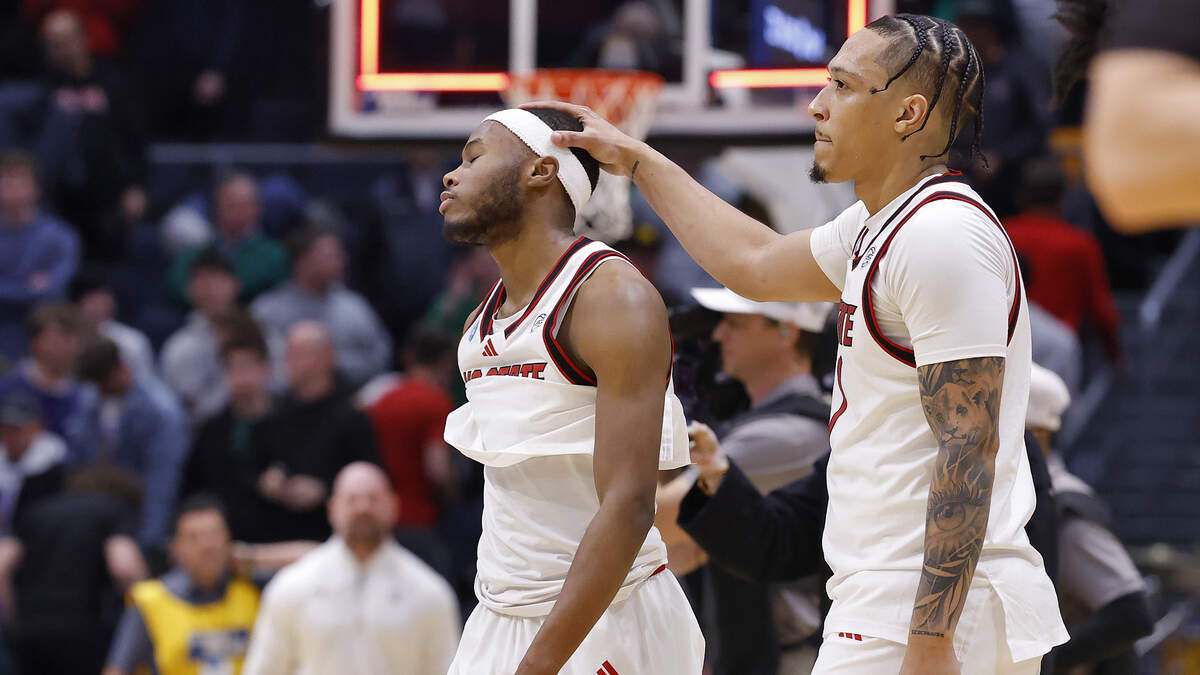
Similarly, N.C. State players Ven-Allen Lubin (22), Tre Holloman (22) and Darrion Williams (23) are eligible to play. Each entered the transfer portal, have schools interested in adding them to the roster, and meet the age requirements.
Holloman and Williams, according to a lawsuit filed in North Carolina, stated they have received interest from other programs. Lubin, meanwhile, has received interest from other universities and N.C. State. It’s unclear whether the Wolfpack would have resources remaining in its player budget to pay Lubin, who averaged 13.7 points and 7.1 rebounds per game last season.
This story was originally published August 3, 2026 at 4:41 PM with the headline “Can they play or not? Latest on the NCAA eligibility lawsuits in NC, Colorado.”
Read more Mecklenburg sheriff says a death in the jail is under investigation