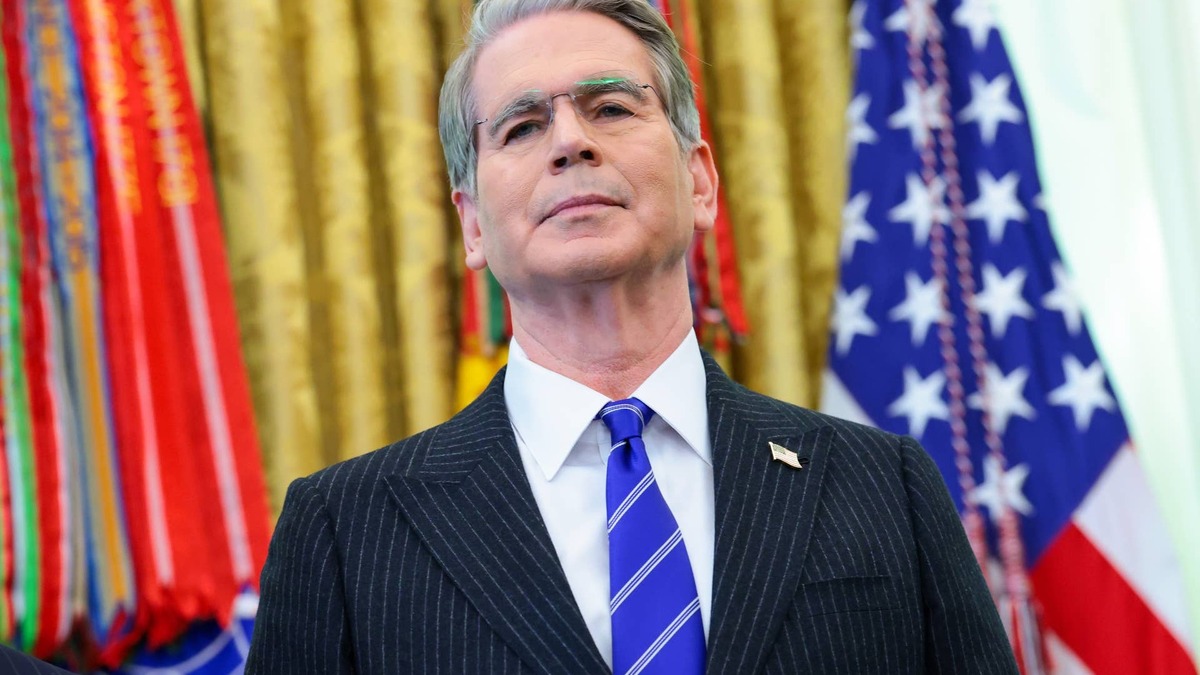
Bessent has a warning for anyone helping Iran sell oil
You pay for wars you’ll never see. It usually shows up at the pump, a few cents at a time, long before it shows up in a headline.
Read more Costco sales surge as Americans shift spending toward value
This fall, it isn’t a few cents. The national average for regular gas was $4.37 on Oct. 10, according to AAA. A year ago, the same gallon cost about $3.12.
This is the first year the national average has stayed above $4 in October, AAA noted in its Oct. 8 update.
I ran that gap through a simple household budget. On a 15-gallon tank, you’re paying roughly $18.77 more per fill-up than last October. Fill up once a week and that’s close to $976 a year, before you’ve bought a single bag of groceries.
Brent crude, the global oil benchmark, sat near $104.43 a barrel on Oct. 9, up about 66% from a year earlier, according to Trading Economics.
So when Washington announces a big win against Iran’s oil business, you’re entitled to one blunt question. Does any of it reach your wallet?
That’s the backdrop for Treasury Secretary Scott Bessent’s latest move against Tehran’s oil trade. On Thursday, Oct. 8, Treasury sanctioned 17 vessels it calls the remnants of Iran’s “shadow fleet,” the aging tankers the regime uses to slip petroleum to foreign buyers.
“Treasury is starving the tyrannical regime in Tehran of the money it uses to wage war in the region, and we will continue exposing those who enable the regime’s oil sales,” Bessent said in a Treasury statement.
Then came the warning aimed squarely at the middlemen. “No enabler of Iranian sanctions evasion is safe from the full force of Treasury’s authorities,” he added.
George Pachantouris / Getty Images
The action is part of Operation Economic Outcast, the campaign Bessent launched Aug. 24 and branded “Economic D-Day.” Its goal is to “sever every economic lifeline that sustains this tyrannical regime until Tehran stands alone,” Bessent said at the launch, according to Treasury.
The new targets are registered across more than a dozen jurisdictions and run through a web of front companies, Treasury said. Counting related designations, the day’s Iran actions covered six individuals, 27 entities and 22 vessels, reported Iran International.
The move was “the most significant blow yet” to Iran’s remaining illicit shipping network, a Treasury official said, according to Alhurra.
Related: Scott Bessent’s Hormuz declaration puts Chevron at the center
What struck me when I went line by line through Treasury’s vessel list is how few of these ships are crude tankers. By my count, only two of the 17, the Tina 5 and the Shenzhen, are described as crude oil carriers.
Seven are liquefied petroleum gas (LPG) tankers. The rest haul naphtha, fuel oil, methanol and even asphalt.
That matters. Iran sells far more than crude oil. It also exports the cooking gas, plastics feedstock and industrial chemicals that keep its petrochemical sector breathing.
Here’s the uncomfortable part. Iran’s barrels largely left the market months ago, so squeezing the last of them doesn’t free up much supply for you.
Read more Gypsy Rose Reveals Last Time She Saw Ex Ken Urker Before His Death
More Bessent and Iran oil:
The U.S. naval blockade of Iranian ports began April 13, and Iranian exports have been effectively halted since mid-July, according to Vortexa data published by Hellenic Shipping News.
The real pressure on your fuel bill comes from the Strait of Hormuz. Eleven tankers were attacked while crossing the strait in the week ending Oct. 4, helping push global freight rates to record highs, reported Trading Economics.
In my analysis, that’s the gap most sanctions coverage misses. Treasury is going after Tehran’s bank account, while the price you pay is being set in the shipping lanes.
Bessent has argued before that the oil market was better supplied than the panic suggested, a point I dug into when he revealed why the Iran oil market didn’t buckle.
The numbers show how little is left to squeeze.
I ran that last figure against the roughly 100 million barrels the world burns each day, the same benchmark the official used. Twenty million barrels covers less than five hours of global oil demand.
That’s why Treasury can call this its biggest blow yet without traders flinching. Brent was up just 0.14% on Oct. 9, the day after the announcement, Trading Economics reported.
Not everyone thinks the fleet is gone for good. Tehran may be able to replace the sanctioned ships, even as Treasury keeps tracking them, Atlantic Council nonresident senior fellow Tom Warrick told Alhurra.
So what do you do with all this? Start by separating two stories that sound like one.
Treasury appears to be winning the fight over Tehran’s cash. Your pump price hinges on something else entirely, whether ships can move safely through Hormuz.
There’s a hint of movement. President Trump said Washington is in “productive discussions” with Iran and won’t strike the country again before the Nov. 3 midterms, while Iran’s foreign minister said Tehran is reviewing the U.S. response to its proposal to reopen the strait within seven days, according to Trading Economics.
Until a deal actually reopens the strait, I wouldn’t build your budget around cheaper gas. Price your fall and holiday driving at today’s $4-plus and treat any drop as a bonus.
If you hold energy funds, the same logic applies. These sanctions don’t add barrels to the market, but a Hormuz reopening could drain a big chunk of the war premium quickly.
Bessent’s warning to Iran’s enablers is real, and the shipowners on Treasury’s list will feel it. Your relief arrives only when tankers can cross Hormuz without getting shot at.
Watch the strait, not the sanctions list.
The Arena Media Brands, LLC THESTREET is a registered trademark of TheStreet, Inc.
Read more Travis Kelce Rocks Cleveland Guardians Gear While Cheering on Team
This story was originally published October 10, 2026 at 8:33 PM.