Charlotte shocked NC with I-77 tolls flip-flop. Will city do it again Monday?
Charlotte stunned the state in May when the City Council veered from the night’s planned agenda and voted to pull support from the controversial Interstate 77 South toll lanes project. Other towns followed. The project that took years to plan was, quite suddenly, dead.
Read more ‘Juvenile’ killed, adult injured when shots are fired at multiple homes, CMPD says
The vote was a moment of triumph for community organizers and residents, particularly those whose neighborhoods border the interstate and were vulnerable to demolition.
Now, Charlotte is primed to walk it all back.
The council on Monday will hold a public hearing followed by a vote deciding whether to revive the project amid financial pressure from state lawmakers. The General Assembly included a provision in this year’s budget that would penalize any local government that voted against the toll lanes.
Last week’s meeting indicated two key council members are ready to flip, although they said they hadn’t yet made up their minds. The move would singlehandedly bring the same project they killed four months earlier back from the grave.
The council’s historic vote could decide whether the state moves forward with the most expensive transportation project in North Carolina history.
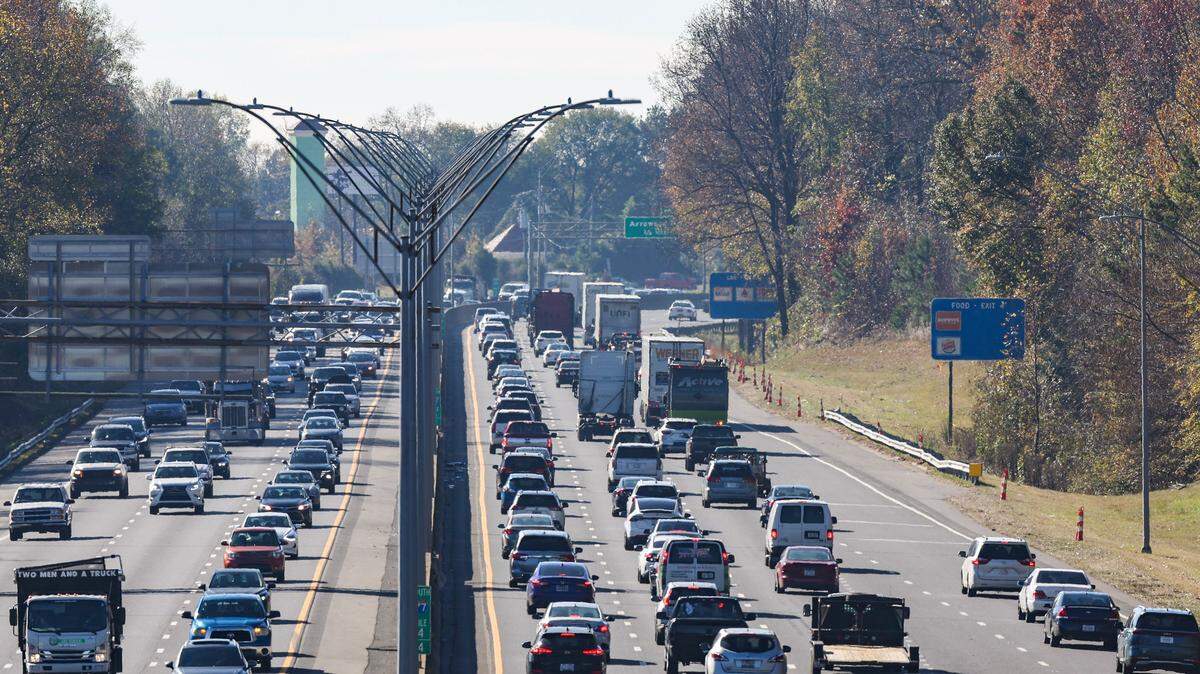
I-77 has a traffic problem. Even the council members against the toll lanes agree something must change to ease congestion in the highly traversed corridor.
Transportation planners began discussing the possibility of express toll lanes in 2007. After several stages of studies and approvals, the Charlotte Regional Transportation Planning Organization voted in 2024 to approve a funding agreement for the toll lanes. Under the agreement, a private company would shoulder a majority of the costs for the estimated $3.2 billion project.
The goal was to reduce traffic and crashes along an 11-mile stretch of I-77 South from the Brookshire Freeway exit to the South Carolina border. The corridor had a crash rate more than 2.5 times higher than the statewide average for urban interstates, a statistic the North Carolina Department of Transportation attributes to ever-increasing congestion.
NCDOT would spend $600 million on the project, plus an additional $100 million on transportation projects of Charlotte’s choosing.
But a year after the CRTPO approved it, NCDOT released the first maps of the project’s proposed design showing it would cut directly through historically Black neighborhoods.
That set off a frenzy among people in those neighborhoods and community organizers who don’t want houses torn down. They were joined by residents who, neighborhood impacts aside, didn’t want another set of toll lanes because the express lanes running up I-77 north have not solved the congestion problem up there.
Elected officials have since fielded an unrelenting pressure campaign from every direction.
Business leaders pushed for council members to stay the course and, after the council flipped, undo their action.
And NCDOT tried to ease tensions by establishing a community engagement center and delaying the project by a month to collect more feedback. The department also committed to rebuilding at least 17 of 22 bridges and overpasses along I-77’s southern footprint and adding pedestrian and cycle access to them.
The Black Political Caucus meanwhile demanded pledges from its members on City Council to support voting “no” on toll lanes.
The BPC is considered one of Charlotte’s most influential groups in local politics. About half of the Democratic primary voters in Charlotte are Black, and the BPC’s endorsements usually go on to win.
“They put a huge amount of pressure on the people that knew that support from the Black Political Caucus was probably critical to their reelection,” District 7 Councilman Ed Driggs previously told The Charlotte Observer. “The position they were in and are in was very difficult.”
District 4 Councilwoman Renee Perkins Johnson motioned at the May 11 meeting to rescind support for the project’s funding agreement. In a narrow 6-5 vote, council members Malcolm Graham, Joi Mayo, LaWana Mayfield, JD Mazuera Arias and Victoria Watlington supported the motion.
Officially, Graham said it was reporting by The Charlotte Observer that swayed his vote. He read a story detailing the impacts a previous highway project had on residents, who were displaced in the name of progress.
“At the end of the day it came down to my neighbors and their discomfort with the process,” Graham previously told the Observer. His District 2 and Mayo’s District 3 in west Charlotte are in the interstate project’s impact zone.
Read more Despite a strong lead, Roy Cooper is urging caution in NC’s Senate race | Opinion
But Graham, who was seen as a pivotal swing vote in the decision, appeared to lean back in favor of the project during council’s most recent meeting.
State leaders didn’t let the decision lie.
By June, Sen. Vickie Sawyer, a Republican representing Iredell and part of Mecklenburg County, proposed legislation that would require Charlotte and other local governments who voted to rescind the funding agreement to reimburse NCDOT for money it already spent on the plan. Those governments would also lose access to state aid for road maintenance until they repaid.
“This is me actually being kind to the City of Charlotte, and to those communities who did vote to rescind,” Sawyer said in her weekly radio show on WAME at the time. “And I am communicating to you right now that this will happen. This is not a joke. You will lose this, and you will have to pay back the money to the state, and until you pay back the money from the state, your Powell Bill dollars will be frozen.”
The General Assembly implemented that threat as a provision in the state budget, which passed in July. It gave Charlotte and other local governments on the CRTPO until Oct. 5 to reverse their vote or split a hefty bill
The cost, NCDOT would later reveal, was $69 million. Even though the CRTPO didn’t approve the funding agreement until 2024, the legislation requires cities to reimburse costs dating back to 2018.
Representatives of Charlotte, Mecklenburg County, Davidson, Monroe, Cornelius, Matthews, Mint Hill and Huntersville originally supported the rescission. For many of the smaller jurisdictions, the cost proved too big a threat.
Cornelius, Monroe and Huntersville already committed to reversing course.
“We’re in favor because we’re trying to avoid a very, very, very steep penalty,” Mayor Denis Bilodeau told WCNC. “We’re not in favor of the tolls.”
Matthews, one of the strongest critics of the project, called on Charlotte to pay the penalties for small towns so they don’t have to flip their votes. Charlotte City Attorney Andrea Leslie-Fite said the city cannot legally do that.
NCDOT tried to sweeten the deal for Charlotte by pledging “up to” an additional $300 million toward community benefits such as workforce development or a grocery store. That promise, as of now, is nonbinding.
When the council publicly revisited the issue last week — for the first time in months — they were frustrated.
City staff revealed Charlotte would be on the hook for between $59 million and nearly the full $69 million depending on which jurisdictions flip. Repayment is based on their weighted CRTPO vote, which follows population size. Charlotte’s vote holds about 41% of the power.
In order to pay that back, the city would likely have to raise property taxes, reduce debt capacity in future affordable housing bonds or both.
Council members cast state leaders in the General Assembly and NCDOT as bad faith partners and questioned the legality of the repayment threat. They weren’t convinced legislators could force the city to repay, especially dating back to 2018. Leslie-Fite confirmed she, too, was skeptical and would pursue “all available legal remedies to address the legislation.”
Charlotte would still have to budget for the money, though. And Graham said he didn’t think suing the state was the right path regardless because Charlotte still needs to work with lawmakers on other important issues.
“I believe the state budget provision requiring repayment is both unconstitutional and an affront to due process. It punishes an elected body for exercising its democracy and its authority on behalf of constituents. That is damn wrong,” Graham said.
Mayo spoke directly to her constituents seated in the audience when she explained why she is wavering. The community benefits and new bridges could be life changing for people in her district and bring needed transit opportunities, she said. Mayo encouraged the people to look at the project “in totality.”
Mayfield, Mazuera Arias, Perkins Johnson and Watlington indicated their stances had not changed.
Charlotte will vote on Monday. If just one council member flips, the project will be revived.
Read more ‘Sweet Magnolias’ Creator Breaks Silence on Show’s Shocking Cancellation
The CRTPO will make the decision official at its Wednesday meeting.