‘Shakeup after shakeup.’ How Trump admin’s changes are hitting NC college research
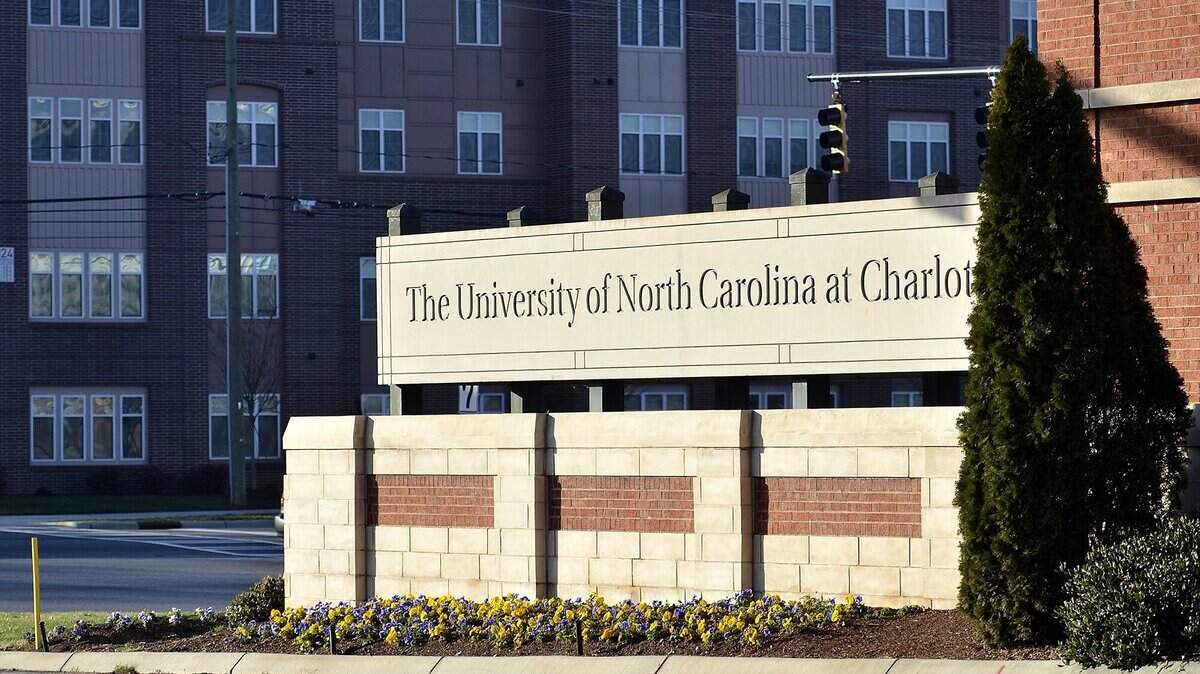
Colleges like UNC Charlotte are facing a research funding landscape in limbo, and the sheer amount of new grant dollars they receive doesn’t tell the full story.
Read more How many NC high school athletes are getting paid? New report out on NIL deals
UNC Charlotte, for example, has seen a slight increase in funding from the National Science Foundation compared to the same time last year, but the number of projects being funded by the NSF has decreased. The same holds for universities like UNC Chapel Hill and N.C. State, where NSF dollars increased but the number of approved grants decreased.
In the long-term, that could mean some difficult decisions for local institutions when it comes to how to adapt to funding uncertainties.
Spokespeople for each school declined interviews about the numbers, but experts at the American Association for the Advancement of Science said it’s due to a combination of layoffs and shifting priorities at the federal level.
“People who write, apply and secure grants are adapting to all the changes, but there are so many that they need to adapt to now that it’s taking more and more of their time,” Alessandra Zimmermann, a project director at the AAAS told The Charlotte Observer. “It’s just this constant attempting to catch up, to build the plane while you’re flying it, for researchers right now as they exist in a space that is experiencing shakeup after shakeup after shakeup.”
There are a few areas of study the Trump administration is placing more emphasis on, Travis York, director of the Center for STEMM Education and Workforce at AAAS, told the Observer.
“The current administration has clearly outlined some high priority areas of scientific funding: artificial intelligence, quantum semiconductors, biotechnology, energy technologies,” York said.
However, the administration has simultaneously cut funding for some other types of research.
Last year, UNC Charlotte lost millions of dollars in grants, largely for research related to specific population groups such as racial minorities or LGBTQ people.
As part of a lawsuit filed against the federal government by researchers in California, the government admitted that agencies like the NSF and National Institutes of Health used keywords related to diversity, gender, vaccine hesitancy and COVID-19 to screen for projects that went against the Trump administration’s priorities in their decisions about which grants to terminate last year. Terms included words such as “discrimination,” “prejudice,” “climate change,” “racism,” and “LGBTQ.”
Meanwhile, layoffs in staff at entities like the National Institutes of Health and NSF have slowed down how quickly universities are able to receive research dollars. In total, an estimated 25,000 people departed from organizations that oversee research in the U.S. between January 2025 and January 2026, according to Nature Magazine.
That means that the money being dispersed is moving more slowly, York said.
“We’ve seen a lot of reporting that has shown us that those funds have not been flowing at the rate that they normally do,” he said. “The reduction in government workers has meant that it’s been difficult for these foundations and agencies to get dollars out.”
Read more Lake Norman officer charged with improper use of Flock to search for vehicle
It hasn’t looked the same at every university or for every agency that doles out funds, York said.
N.C. State University, UNC Chapel Hill and UNC Charlotte all received more new funding from the National Science Foundation in the first half of the 2026 fiscal year than in the same period of the year prior, the universities told the Observer.
N.C. State’s new NSF funding came out to $20.3 million in the first half of this fiscal year, about $3 million more than last year. At UNC Charlotte, the NSF doled out $10.9 million in new research funding between October and July. Last year, it received about $8.7 million over the same period.
Davidson College, just north of Charlotte, reported a significant drop in new NSF funding, meanwhile. In the first half of the 2026 fiscal year, it received $50,000 from the NSF for one grant. Over that period last year, it received $440,000.
Duke University did not respond to the Observer’s request for 2025 and 2026 federal grant data.
But the NSF is just one of the federal agencies responsible for dispensing research dollars and research funding from other entities for North Carolina schools is a mixed bag.
At UNC Chapel Hill, for example, NSF funding rose between 2024 and 2026, while funding from the National Institutes of Health dropped by about 6% – or $44 million.
Meanwhile, at N.C. State over the same period, NSF funding rose while Department of Defense funding fell 23%, The Raleigh News and Observer reported.
The uncertainty means many institutions may get more conservative in their choices around funding, Zimmermann said. Though, what that means will likely look different from school to school.
“Some of them will interpret that as having less graduate students. Some of them will interpret that as fewer tenure positions coming up,” she said. “Some of them will interpret that as more iterative research, because that’s safe and they know those grants won’t be critiqued as much.”
Read more Why Coby White thinks Hornets ‘can surprise a lot of people’ in 2026-27