Historical marker honoring lynching victim vandalized in Reedy Creek Park
A marker meant to shed light on Charlotte’s ugly racial history was vandalized just three months after it was installed in Reedy Creek Park.
Read more Charlotte has an illegal dumping problem. City says it needs help
Krista Faye Terrell, communications chair for the Charlotte-Mecklenburg Remembrance Project said the project’s members are deeply disappointed. The remembrance project is responsible for the marker.
The marker was unveiled April 18 and vandalized June 22. Terrell said the vandalism appears to be markings and does not include words or images. She didn’t provide additional information about the vandalism, saying the project wanted to avoid amplifying the vandalism further.
She said the project is not deterred from its mission.
“We’re disappointed, but we’re committed to telling the truth about this history, in partnership with the Equal Justice Initiative,” Terrell said.
The marker honors Willie McDaniel, whose death was the second of three confirmed lynchings against Black Americans in Mecklenburg County.
McDaniel moved to Mecklenburg County with his wife to begin a farming career. He rented his home and land from Mell Grier, a white man from a family of Mecklenburg County landowners.
On June 30, 1929, a young Black girl found McDaniel’s body lying face-down, with a broken neck and bruises.
The afternoon before McDaniel was found, he reportedly asked Grier to pay him for work he and his wife had done. After Grier refused and ordered McDaniel to leave, Grier threw a baseball at McDaniel’s head, witnesses said.
Read more 8 inches of rain fell in parts of NC Thursday. What did Mecklenburg County get?
Witnesses said Grier then retrieved a shotgun and pursued McDaniel, according to reporting from the Remembrance project’s website. That was the last time he was seen alive.
No one was ever held accountable for McDaniel’s death.
The exact location of the killing is unknown. But today, the marker sits on what became of Grier’s land — in Reedy Creek Park and Nature Preserve near Joseph W. Grier Academy.
That historical context is what appears to fuel much of the outrage about the death of Juliana Nzita, a Black teenager who was found hanged in Charlotte on May 8 on United House of Prayer property, on social media. And it’s what creates an imperative for police to fully investigate deaths like Juliana’s, and offer transparency to an understandably alarmed community, said Jill Collen Jefferson, the attorney working for Juliana’s family. That’s regardless of any ultimate determination of how Juliana died.
Observer reporting found more questions than answers about how Charlotte-Mecklenburg Police handled the case
Between 1865 and 1950, nearly 6,500 Black men, women and children were lynched in the United States, according to the marker. White authorities “rarely conducted thorough investigations of racial terror lynchings,” the marker notes.
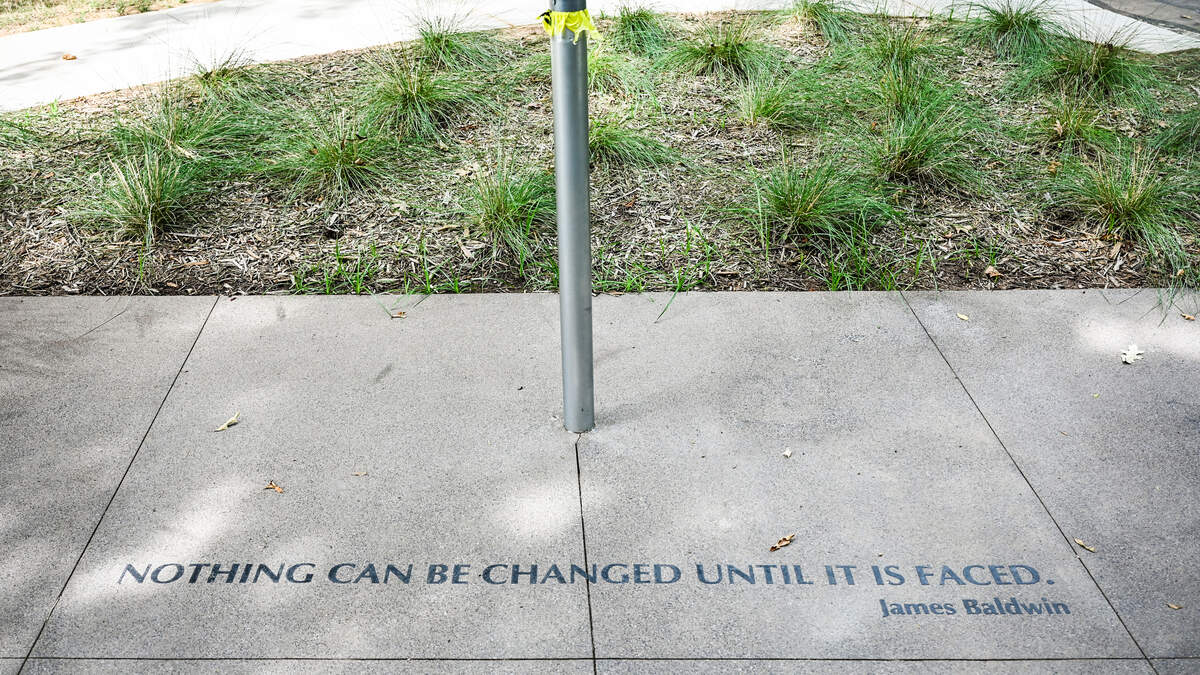
A James Baldwin quote sits at the sign’s base: “Nothing can be changed until it is faced.”
Terrell said the marks are being removed and the marker is expected to be restored soon.
Read more Bank of America Stadium renovation plans don’t include a dome. Here’s why