Dallas Woodhouse resigns from NC auditor’s office after early voting controversies
AI-generated summary reviewed by our newsroom.
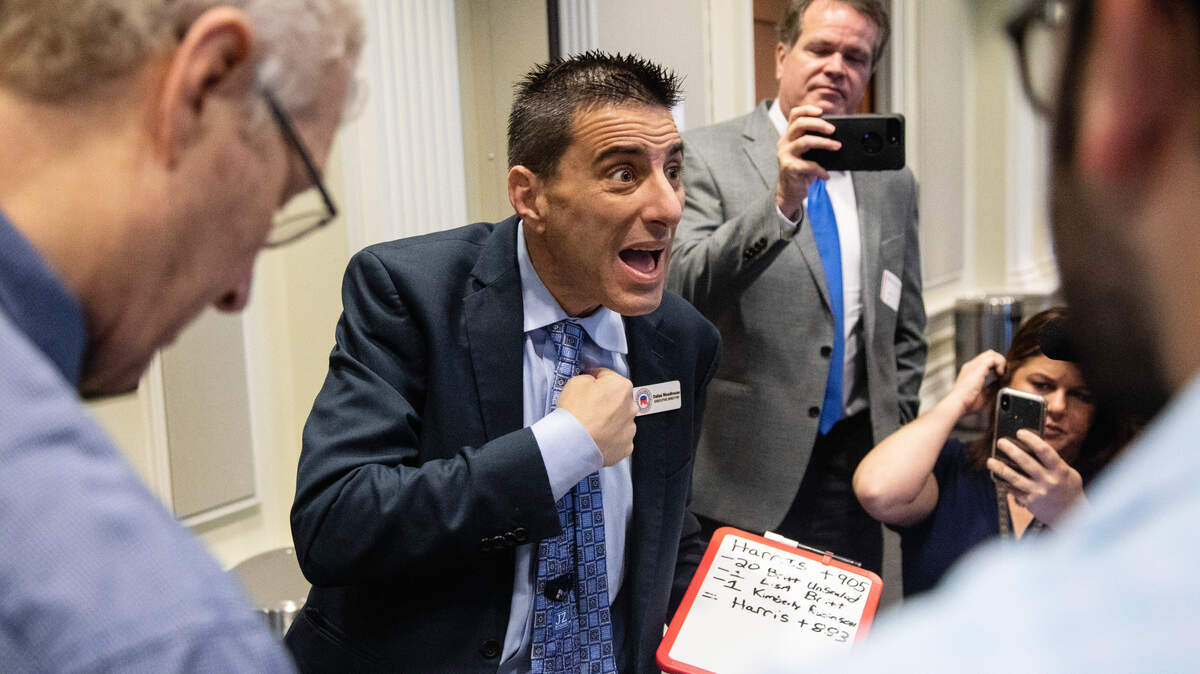
Dallas Woodhouse, the former leader of the North Carolina Republican Party who served in a controversial new role as an elections liaison for the State Auditor’s Office, resigned his post on Monday after a series of controversies involving his influence over early voting plans.
Read more NC just ended most parking requirements for developers. Here’s what it could mean.
In his resignation letter, obtained by The News & Observer, he wrote that he “knew my time would be short” and that he would return to the private sector after helping the auditor’s office transition to its new election responsibilities.
“I am certain that my advice was not always correct,” Woodhouse wrote. “Looking back, there are recommendations I might make differently today. I certainly would have been more precise in my communications at times. But every recommendation I offered was made honestly, thoughtfully, and with integrity. My only objective was to help local boards comply with the law while improving voter access and strengthening public confidence in our elections.”
The resignation, reported by The Assembly and WRAL and confirmed by The N&O on Tuesday, comes less than a week after the auditor’s office said Woodhouse had been reassigned to a new non-elections role focused on “strategic initiatives that relate to constituent services and communications.”
A spokesperson for Auditor Dave Boliek said he accepted Woodhouse’s resignation on Monday, but did not provide further comment.
Boliek, a Republican, gained control of appointments to state and local election boards last year after Republicans passed legislation stripping that power from Democratic Gov. Josh Stein. Shortly after the law took effect, Boliek hired Woodhouse to serve as a liaison with the state’s 100 county election board chairs.
His position, which had never existed when the governor had control over election boards, was intended to “ensure election integrity while encouraging maximum participation in elections.”
However, as local boards prepared for the midterms, news of Woodhouse’s involvement in early voting plans drew scrutiny.
Last month, Republican officials in Jackson County said they had been pressured by the GOP and the auditor’s office to reject an early voting site on Western Carolina University’s campus. In texts obtained by NC Local, Woodhouse told the chair “don’t let them have a vote” about the plan.
And in Pasquotank County, Woodhouse told the board chair to “drop Sunday,” according to a text message obtained by Common Cause NC, a voting rights group.
Woodhouse’s involvement drew high-profile criticism, including from Gov. Stein.
“Every lawful voter deserves to have his or her voice heard,” he wrote on social media last week after news of Woodhouse’s reassignment broke. “Yet under Auditor Boliek’s watch, the State Board of Elections has been directing counties to eliminate Sunday voting and remove early voting from college campuses including the country’s largest HBCU. It’s cynical politics and it’s wrong. To ‘reassign’ the former Executive Director of the NC Republican Party is too little too late. The administration of our elections should have been free from partisan influence from the beginning and should remain so.”
Read more Sculpting Lu-u-u-ke: Behind the scenes as Kuechly strikes pose for hall of fame
Francis De Luca, chair of the State Board of Elections, responded to Stein’s statement in a letter last week that accused him of “blatant factual misstatements.”
“The standards of professionalism and code of conduct of this agency did not change because the appointing authority of its board members changed, nor did our commitment to impartial election administration,” De Luca, a Republican, wrote. “… To suggest otherwise is not only inaccurate — it is unfair to the dedicated public servants across North Carolina who work long hours, often under intense public scrutiny, to ensure every eligible voter has the opportunity to cast a ballot and have that ballot counted accurately.”
In his resignation letter, Woodhouse noted that the state had expanded the number of early voting sites since the auditor’s office took control of election boards.
“We demonstrated that expanding voter access and strengthening election integrity are complementary goals — not competing ones,” he wrote.
During the March primary election, the state hosted 319 early voting sites, compared to 301 in 2022 (the last non-presidential primary).
They also expanded the total number of on-campus polling sites by one, though the rejection of sites at two HBCUs and at Western Carolina University drew significant backlash and a lawsuit.
And while the total number of voting sites increased, the 2026 primary also had fewer Sunday voting opportunities than the last comparable election. Nine counties that previously had Sunday voting chose to cut it.
As counties prepare for the November general election, Sunday voting and on-campus polling sites continue to be sources of conflict. As of Monday, 18 county boards have failed to come to a unanimous agreement on an early voting plan, Carolina Public Press reported.
Early voting plans are due to the State Board of Elections by July 24. Any county that fails to unanimously approve a plan must have their sites and hours decided by the state board, which has a 3-2 Republican majority.
This story was originally published July 14, 2026 at 9:32 AM with the headline “Dallas Woodhouse resigns from NC auditor’s office after early voting controversies.”
Read more $25.6 million fix underway for chronically congested Lake Norman intersections