NC budget requiring Charlotte to repay I-77 tolls costs becomes law. What’s next?
A new state budget that includes a plan to make the Charlotte-area municipalities who voted down adding toll lanes to Interstate 77 pay back millions is now law, leaving the city and local towns to figure out their next step.
Read more NC prison staff will get raises, but still among nation’s lowest-paid, agency says
Republican lawmakers released and quickly passed their long-awaited budget last week. It included a version of a proposal to put Charlotte and other local governments on the hook for tens of millions of dollars unless they reverse their position on the controversial highway project.
Democratic Gov. Josh Stein signed the budget, which was more than a year overdue, Tuesday despite what he said were some “flaws” in the plan, including the I-77 provision.
“The budget makes real the General Assembly’s wrong-headed threats of retribution against Charlotte,” Stein said in a statement to The Charlotte Observer. “Charlotte needs to enhance road safety and minimize community impact; that balancing process should be collaborative.”
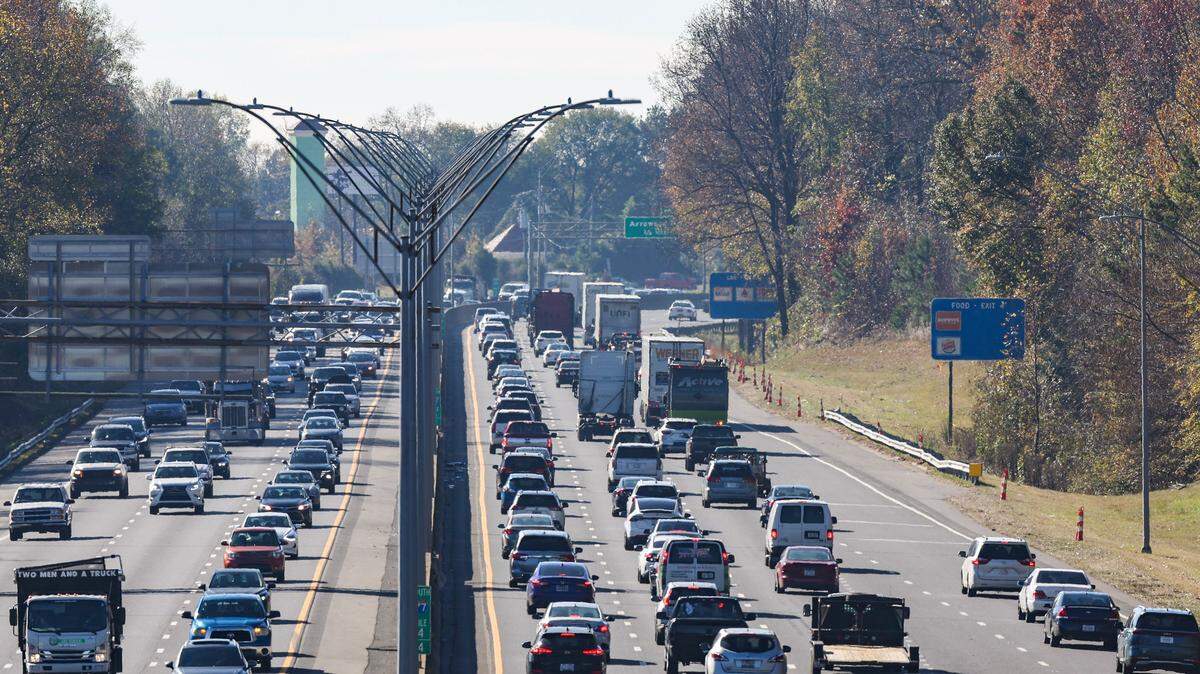
The state Department of Transportation planned to add toll lanes to an 11-mile stretch of I-77 from uptown to the South Carolina state line, and local officials approved a public-private partnership to pay for it in 2024. But the Charlotte Regional Transportation Planning Organization voted in May to rescind support for the project after months of consternation in the community over the impacts of the new lanes on neighborhoods and the environment.
NCDOT spent about $60 million on the project before CRTPO reversed its decision.
The provision that made the budget, originally proposed by Charlotte-area Republican Sen. Vickie Sawyer, says those who voted to kill the plan must reimburse the state or see other transportation funding withheld. The plan calls for local governments to divide the cost based on the value of their weighted CRTPO votes.
Representatives of Charlotte, Mecklenburg County, Davidson, Monroe, Cornelius, Matthews, Mint Hill, Huntersville and the Metropolitan Transit Commission voted to rescind support in May. Monroe reversed its position after Sawyer’s amendment became public and called for the CRTPO to vote again on the issue, but the push to reopen the discussion failed.
Asked about Stein’s decision to sign the budget despite the I-77 provision, Mecklenburg County Commission Chairman Mark Jerrell told the Observer he was “more disappointed” the measure was put in the budget in the first place.
“We should actually have a say over what’s good for us at the local level, and I wish that would be respected by others that are outside the community, or, you know, not here. I wish they would listen to the voices of our constituents,” said Jerrell, whose board reiterated its opposition to the toll lanes after Sawyer’s proposal became public.
Read more What Jeff Peterson said about Charlotte Hornets’ offseason moves
Jerrell would “like to see the governor stand with the community unequivocally and understand the issues that are being presented.”
“No one is saying that we shouldn’t address congestion. No one’s saying it’s not a problem,” the east Mecklenburg Democrat said. “What we are saying is that we shouldn’t be repeating the mistakes of the past. We should listen to the community, and we shouldn’t be penalized when we’ve been given false choices.”
Jerrell said county commissioners have not yet discussed where they’d find the money to reimburse the state if things move forward.
“Hitting us with that kind of tab would certainly have an adverse impact on our residents,” he said. “… We’re going to have those conversations. We’re going to understand how we move forward. I’m going to make sure that we have an outcome that is fair, that’s equitable and that serves the residents of Mecklenburg County.”
Other local governments are also working to figure out their next step.
Huntersville’s Town Board “has not yet had the opportunity to discuss this issue or its potential implications,” spokesman Ethan Smith told the Observer.
“Town leadership will examine the options and determine the best path forward for the town in the near future,” he said.
Spokespersons for Davidson, Cornelius, Matthews and Mint Hill did not immediately respond to requests for comment on the budget becoming law with the I-77 provision and any planning for how they plan to potentially pay back the state.
Read more Spot off the NC Coast ranks among nation’s best island getaways, survey says
