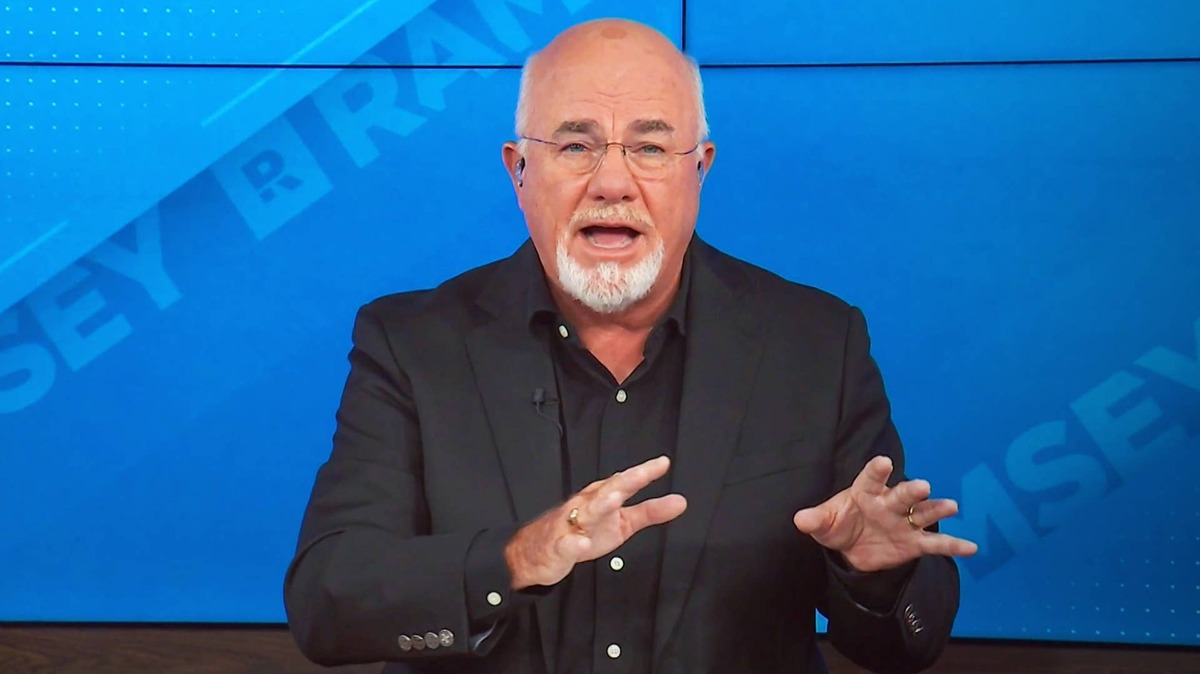
Dave Ramsey warns Americans on 401(k)s, IRAs (he’s not wrong)
Americans prioritize building reliable post-work income for their retirement years, making Individual Retirement Accounts (IRAs) a cornerstone of that effort.
Read more Tesla’s blowout quarter comes with a warning sign
Traditional IRAs use tax-deferred contributions with taxes paid upon withdrawal, whereas Roth IRAs require upfront taxes so distributions are tax-free, according to the Internal Revenue Service.
Financial security relies on navigating these choices, leading many savers to seek retirement advice.
Bestselling personal finance author Dave Ramsey consistently recommends Roth IRAs over traditional IRAs, emphasizing the importance of tax-free withdrawals in retirement.
“A traditional IRA is funded with money before it’s taxed (pre-tax dollars), which gives you a tax deduction now,” Ramsey explains.
But Ramsey has a warning for Americans about traditional IRAs.
“You’ll pay taxes on all your withdrawals in retirement (which includes your contributions and any tax-deferred growth,” he wrote.
Before investing, households must eliminate consumer debt and establish a fully funded emergency reserve, according to Ramsey.
Individuals should start by contributing to a workplace 401(k) up to the employer match, Ramsey says.
“This is the big one,” Ramsey emphasized. “Probably the best thing about a 401(k) plan is that your employer can match your investment up to a certain amount. That’s a 100% return on your investment right off the bat. Matching isn’t required by the government, so not all employers offer it.”
“If yours does, make the most of it. Don’t overlook free money.”
The next step involves opening a Roth IRA and maxing it out or investing up to a 15% goal, according to Ramsey. If a saver maxes out their Roth IRA without reaching that 15% threshold, they should return to their 401(k) and increase contributions, according to Ramsey.
Both options serve long-term savers well, but the Roth IRA cannot be beaten for building wealth and achieving retirement dreams, according to Ramsey.
As I wrote June 29, based on my own calculations, Ramsey’s advice about using Roth IRAs instead of traditional IRAs does turn out to be the more lucrative option in many scenarios.
When a saver anticipates higher taxes in retirement, the Roth IRA is the more fruitful option, because paying taxes upfront protects future withdrawals from higher rates.
An extended investment timeline combined with the expectation of higher tax brackets down the road gives the Roth IRA a significant edge, whereas facing the exact same tax rate during both your working and retirement years usually means both account types yield comparable results.
Choosing a traditional IRA typically makes more sense if you anticipate falling into a lower tax bracket during your post-work years, as your money grows tax-deferred and distributions will be hit with a smaller tax bill down the road.
This raises an obviously important question, which I want to address here.
Which Americans pay higher or lower tax rates during their working years than in retirement? This is a key question, because knowing where you fit in may well be the determining factor on whether you choose a traditional IRA or a Roth IRA for your retirement savings.
Read more Tokyo puts billions behind Micron’s chip plan
“Most Americans will have a lower tax burden in retirement than during their working years,” according to CNBC. “However, that may not be the case for some retirees, especially for higher earners and big savers, which could have a significant impact on their financial plans, according to financial advisors.
Recent federal tax data indicates that income tax rates remain highly progressive, resulting in distinct outcomes for different segments of earners when moving from their working years into retirement.
More on personal finance:
Lower earners ($0 to $48,475 annually) typically occupy the 10% or 12% marginal tax brackets during their working years, according to the IRS. They almost always see their federal income tax rate drop to 0% in retirement.
This happens because standard deductions protect a substantial baseline of income, allowing their Social Security and modest retirement withdrawals to fall completely outside the federal income tax net.
Middle-to-upper-middle earners ($48,476 to $197,400 annually) experience the most common shift, with their tax rates dropping significantly lower in retirement.
During their peak working years, these individuals usually find themselves in the 22% or 24% tax brackets.
However, because retirees no longer need to replace 100% of their working income – since they are no longer saving for retirement or paying payroll taxes – their overall taxable income drops, often landing them back down in the 10% or 12% brackets.
High earners ($197,301 and up) and diligent savers who occupy the 32% to 37% brackets during their careers often see their tax rates stay the same or even increase.
If an individual builds a massive pre-tax nest egg, mandatory Required Minimum Distributions combined with investment income can easily keep them in a high bracket,
“Required minimum distributions (RMDs) can take a toll on your tax bill,” Charles Schwab wrote.
This breakdown reveals a smart rule of thumb for your retirement savings strategy. If you are a lower or middle earner, a traditional IRA is statistically optimal because you get a tax break now at a higher rate than you will pay in retirement.
Conversely, if you are currently a high earner or an early-career worker who expects to retire wealthy, a Roth IRA protects you from upper-tier tax brackets.
Note: This piece of financial journalism is for educational purposes only and not for formal tax or investment advice.
Related: Charles Schwab, Fidelity sound alarm on Roth IRA rule
The Arena Media Brands, LLC THESTREET is a registered trademark of TheStreet, Inc.
Read more Goldman Sachs sends strong wake-up call to Americans on AI job impact
This story was originally published July 5, 2026 at 6:32 PM.
