Falling fuel prices won’t mean cheaper flights out of Charlotte airport — for now
Jet fuel prices have fallen from their peak levels in April, but despite the change, travelers may not see cheaper flights in the near future.
Read more Hornets expand merch plans, as new partner opens Concord Mills store in July
The Iran war caused jet fuel prices to nearly double, pushing airlines to raise fares earlier this year. But even as fuel does become cheaper, airlines may not reduce fares for a long time because they have not yet recouped the money they spent and because they’ve learned travelers are willing to pay, according to aviation experts.
“Airlines have developed perhaps the best ability of any business to understand consumers’ willingness to pay,” Henry Harteveldt, an airline industry analyst with Atmosphere Research Group, said. “So if air fares are higher than average, but people are still booking, the fares are going to stay at higher levels than they were before the war in Iran began.”
As of Monday, the average price of a gallon was $2.87, according to the tracking firm Argus. That’s down around $2 from the peak in April. Average air fares have declined slightly in the past month, but are still up more than 10% compared to this time last year, according to provisional reporting from tracking firms.
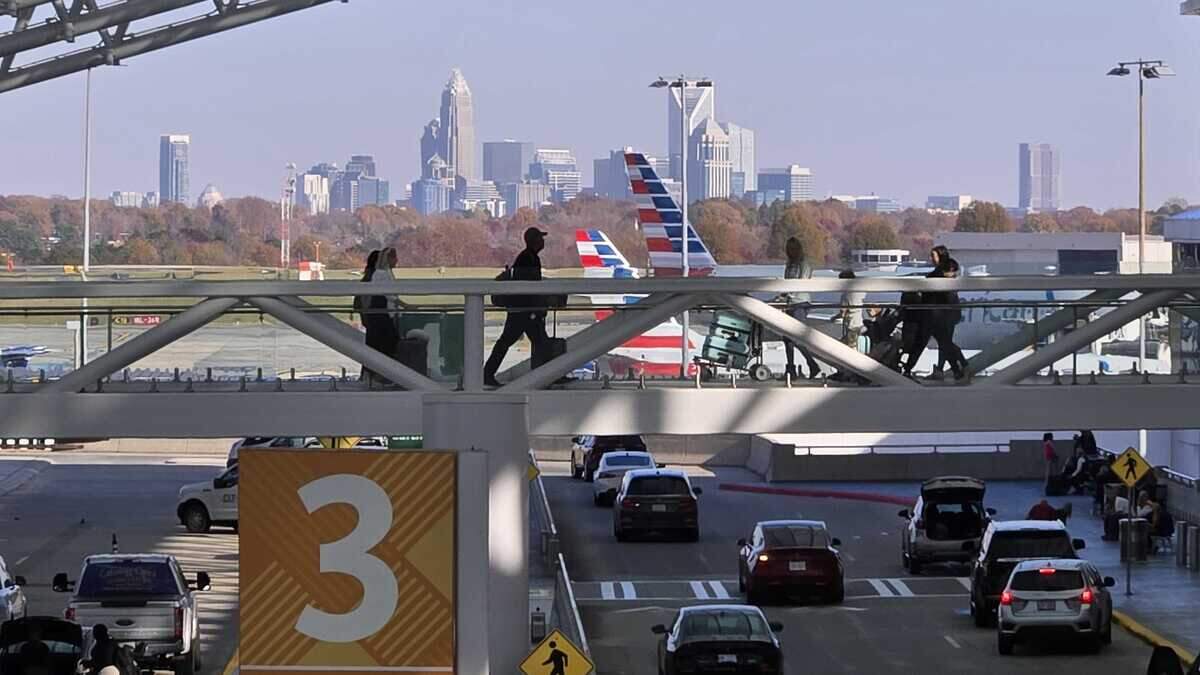
It comes as travelers ready for Fourth of July travel. More than 7,600 flights are scheduled to depart Charlotte Douglas International Airport for holiday travel, but despite strong demand, airport officials recently announced passenger activity is expected to be down compared to last year.
Charlotte Douglas is the second-largest hub for American Airlines. Harteveldt said American tends to be the most aggressive with discounts out of the three largest airlines in the country, but lack of competition in Charlotte poses its own risks.
“When you have a very large airline at any airport it reduces price competition, and it reduces other airlines’ interest in serving the market,” he said. “That makes it tougher for people who live in Charlotte to find low fares.”
Richard Aboulifa, managing director of aerodynamic advisory, said across the country numbers are slightly down, but not enough to make airlines reconsider prices.
“Historically, a good market share war could get people to drop airfares,” he said. “But I think there’s this almost industry-wide consensus that they’re better off focusing on higher paying passengers.”
Aboulifa added uncertainty in the market in addition to airlines still trying to recoup costs will keep prices high.
Read more ‘Frightened’ wild horse was being stalked by drone on NC’s Outer Banks, photos show
“They were paying very high prices up until recently,” he said. “So that’s part of their current cost structure, and also, very good chance that fuel will go up again because of the volatility in both geopolitics and the market.”
When fuel prices soared at the onset of the war, airlines absorbed some of that cost. But there’s little incentive for carriers to lower fares now, according to analysts.
And the high costs from earlier this year will hit airlines’ bottom lines, according to Willie Walsh, the head of the International Air Transport Association, which represents airlines around the world.
“We expect average jet fuel prices to be 70% higher year-on-year,” Walsh said at the organization’s summit meeting in June. “And that will add $100 billion to our collective fuel bill this year.”
In America alone, airlines lost a billion dollars in the first quarter of the year, according to the Department of Transportation.
Another challenge complicating matters for travelers this summer has been the loss of Spirit Airlines, according to Harteveldt. The airline was one of the largest national, ultra-low fare airlines. While other major airlines have started to add routes to fill the vacancies left by Spirit’s closure, there’s still fewer low fare flights and seats compared to last summer, he said.
“One area where airlines compete vigorously is price,” he said. “If there’s less price competition there’s less incentive for airlines to offer deep discount fares.”
Shaky peace talks to formally end the Iran war means the specter of inflation also still remains, according to analysts. The price of jet fuel ticked down to $2.76 per a gallon last week, but climbed back up to $2.87 on Monday after Iran and America traded fire over the weekend.
“We’re prisoners of broader current events,” Aboulifa said. “Nobody knows what’s around the corner.”
Read more 3 companies allegedly helped inflate egg prices. Now, NC will get 3 million eggs
