With ‘teen takeovers’ on the rise, Charlotte youth organizations find solutions
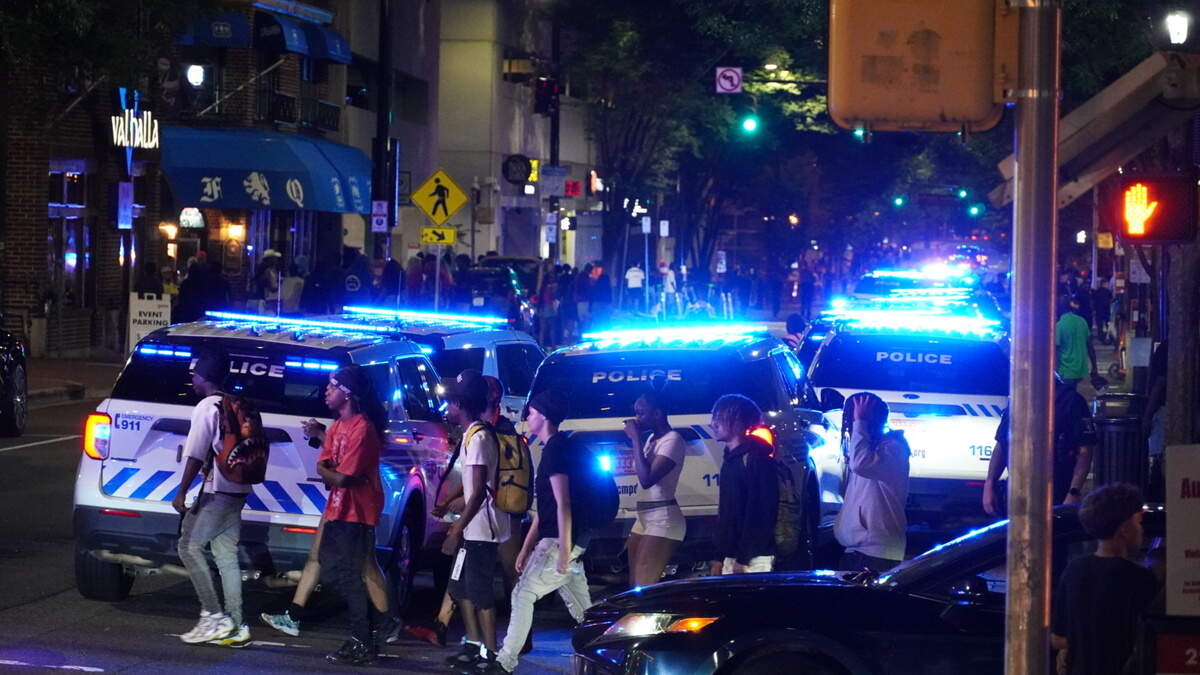
Concerns about the rise of “teen takeover” events in cities across the country — including one such instance uptown on June 20 — have prompted increased police activity and stricter curfew enforcement in Charlotte.
Read more $500M Dilworth and South End mixed-income housing starts going up near the Pearl
Part of the problem, organizations and young people in Charlotte say: not having a place to go and not knowing what to do.
“In this era, Charlotte does not have a lot of free spaces where youth can go and just hang out outside of home and school,” said Winny Gracy Kapuba, a rising senior at Rocky River High School in Mint Hill.
While local officials have said they’ve stepped up their own initiatives, teenagers and the organizations that support them say there’s more that should be done. They’re working to find solutions, from workforce development to opportunities to speak with public officials to doing research on gathering spaces.
“Teen takeovers” are events that rally large groups of teenagers, often organized quickly and gathered in downtowns, public spaces and shopping centers. They’re commonly mobilized over social media, and have happened in major cities across the country, such as Detroit, Chicago and Washington, D.C.
These groups can be noisy, disruptive and occasionally violent or destructive.
In Charlotte, hundreds of teens gathered at Romare Bearden Park on the evening of Saturday, June 20, where they mainly kept to the sidewalks. However, some rode electric bikes — causing concerns about traffic safety — and at least two fights involving minors broke out.
Several shopping centers in the Charlotte area have also tried to address the disruptions that arise from large teen gatherings.
Camp North End instituted a curfew for unsupervised minors starting in April after teen takeovers took place there, and Birkdale Village in Huntersville put a similar set of policies in place in February. Concord Mills has had a teen curfew in place on Friday and Saturday afternoons since 2021.
The increased attention on teen takeovers correlates with a recurring concern — how to keep teenagers engaged once school lets out for the summer.
Ahead of uptown teen gathering, CMPD vowed on social media it would enforce the Youth Protection Ordinance, or the teen curfew.
The curfew doesn’t allow minors under 16 to be in public from 11 p.m. to 6 a.m. without a parent or a guardian. Parents who allow a teenager to be out, and those over 16 who help them stay out, are also in violation of the ordinance.
According to a June 22 news release, CMPD arrested 23 teenagers and one adult from the teen takeover crowd, and issued citations to 13 parents.
CMPD has increased its presence and enforcement across several initiatives, especially in higher-density areas, according to a city spokesperson.
“[H]owever, the national trends regarding ‘teen takeover’ events will require additional mitigation, education, and prosecution strategies from all our law enforcement partners in the justice system,” Lindsay Machak, the city’s deputy director of communication and marketing, wrote in a statement for this story.
The city’s Office of Youth Opportunity provides career, development and safety support for Charlotte youths. This summer, Machak said the office is working with community partners on event programming, including a midnight basketball event that’s yet to be announced.
Read more Multiple days of triple-digit heat headed to Charlotte area, forecasters say
City spokespeople declined to make officials available for interviews.
“Third spaces” refers to places that aren’t work, school or home — in other words, any other safe space that allows teenagers to hang out and socialize. It’s a concept that some have said is not getting enough attention.
“I personally had two conversations last week with two people who are in pretty significant decision-making power that had not … even heard that concept before, of third spaces, that teens need a place to go,” said Amy Farrell, the executive director of GenerationNation.
GenerationNation is one of the organizations supporting the Charlotte-Mecklenburg Youth Council, the student advisory council that works with city and county government, as well as CMS. The group provides an opportunity for high school students from across the Charlotte area to participate in advocacy and civic engagement.
Alesha Brown is the founding executive director of For The Struggle, a nonprofit that helps Charlotte communities facing hardship. The city’s recently passed budget left out her organization, after it had received $100,000 in previous years’ allocations, she said.
For The Struggle runs the SaluteU program, which aims to keep teenagers out of trouble and the criminal justice system through paid work opportunities and personal development trainings.
“There’s no way the city can provide all these resources, so therefore they have a responsibility to make sure that resources are pouring into organizations like For The Struggle, who are creating those spaces, who are making sure that our youth in the community have those services,” Brown said.
With the lack of awareness about the need for safe alternative spaces, teenagers have taken the issue into their own hands.
Kapuba is one of the Charlotte-Mecklenburg Youth Council’s incoming district presidents.
“We’ve been talking to community leaders, and two of our youth leaders at CMYC even talked with a national official about how important it is and how belonging it is to have third spaces for youth,” Kapuba said. “So CMYC has really been trying to get the city to acknowledge this and create more spaces for teens, because I think that’s truly what they’re looking for.”
Teenagers are also leading and conducting a research project this summer focusing on how existing third spaces already cater — or don’t cater — to youths. The project is supported by City of Hobbies, a group of organizations supporting youth fellows in Charlotte who conduct research on the impact of hobbies and hobby-developing spaces.
Malia Springs, who is also a rising senior at Mint Hill High School, is working on the project. She’s interested in ways that teenagers can gather “and prevent it from being a disruptive thing.”
“As an organization, we do hope that we can not just identify the problem but fix it,” she said.
One of the ultimate goals is to find ways to get teenagers to take on activities that are more out of law enforcement’s way and less dangerous.
“[We want to] keep us from being … a disruption to our community, or being harmful to spaces that were previously welcoming and are not welcoming us anymore because of these takeovers,” she said.
Read more In Charlotte, is SouthPark like South End for grownups?