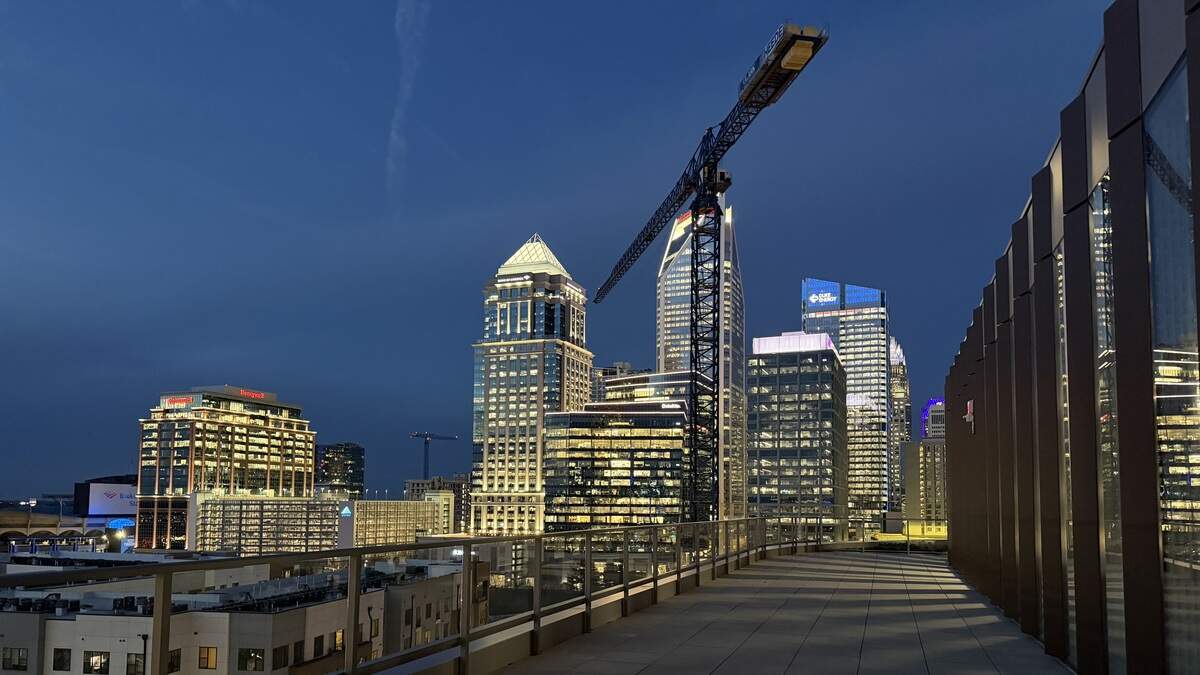
Why is downtown Charlotte called ‘uptown’? Learn the city’s history
AI-generated summary reviewed by our newsroom.
Charlotte is an uptown girl living in an uptown world — but most cities aren’t.
In most cities, a central area full of businesses and culture is called “downtown.” As any native and most transplants will tell you, Charlotte’s financial district is called uptown.
Read more A hidden Dominican deli, cheap pizza and Charlotte’s lost BBQ joints
Charlotte is the only major city in the United States where the central business district is officially known as “uptown,” according to Charlotte Center City Partners. But why?
One explanation for the name comes from Charlotte’s higher elevation, Tom Hanchett, a Charlotte community historian, explained to The Charlotte Observer in 2015.
“In the mid-1700s, the nation’s trading path from the southeast to the Atlantic ran along a ridge top,” Hanchett said. “One of those Indian trading paths in Charlotte came to be Tryon Street and it crossed another that became Trade Street. This was the highest elevation point and the city grew around it. When people came to this point, they were going ‘up.’”
Hanchett also noted that the name gained traction after a 1974 Charlotte City Council declaration aimed at encouraging people to visit the district.
“A city council proclamation declared that the shopping and business district in the center city be officially named ‘Uptown Charlotte,’” said Hanchett. “The push for this came from local merchant and booster, Jack Wood. Wood argued that Uptown name was in use in the 50s and needed to be restored.”
Uptown was built around the intersection of Trade and Tryon streets, the Observer previously reported.
Read more North Carolina among the most economically segregated schools in the US, report says
Trade Street was named for the area’s early role as a trading path, as Hanchett mentioned. Tryon Street was named in honor of William Tryon, former governor of North Carolina according to Charlotte Center City Partners.
The intersection was once the site of the home of Col. Thomas Polk. He was a North Carolina legislator who played a key role in drafting the Mecklenburg Declaration of Independence and the Mecklenburg Resolves.
Polk is long dead, and Trade Street is no longer a trading path in the same sense as it was in the 1700s. Now, the intersection is called Independence Square.
Independence Square is marked with four statues memorializing the industries that brought Charlotte to prominence, according to Center City Partners:
Today, Charlotte is home to nearly 1 million people, and 19 Fortune 1000 companies are headquartered here.
Portions of this story were previously published in the Charlotte Observer.
Questions about life in North Carolina? Or have a tip or story idea you’d like to share? The service journalism teams at The News & Observer and The Charlotte Observer want to hear from you.
Read more Charlotte region adds budget, nonstop flights to Indianapolis, Cleveland
You can submit your question by filling out this form.