How new CMS speech policy could affect student protests, ‘disruptive’ actions
The Charlotte-Mecklenburg Board of Education last week approved its newest free speech policy for students that defines categories of speech and disruptive demonstrations. Since the policy’s passage, some students have expressed concerns that it could be implemented too broadly and limit protests and demonstrations, including Celia Kaul, a rising ninth grader at J.T. Williams Secondary Montessori. During an interview, Kaul said she was concerned that the policy’s vague language could be used to discourage students from joining demonstrations. “It was so vague that they didn’t provide any information about disruptive speech. I think they’re tightening the reins, and I think it can be harmful to some students,” Kaul told The Charlotte Observer.
Read more Vi Lyles repaired Charlotte’s relationship with Raleigh. I-77 toll fight risks it | Opinion
The policy was created to provide guidelines for students to express free speech that “better supports the school environment and helps students engage in productive civic discourse,” according to a CMS news release. The policy also establishes schools as institutions of “neutrality”, and are there to ensure a safe learning environment.
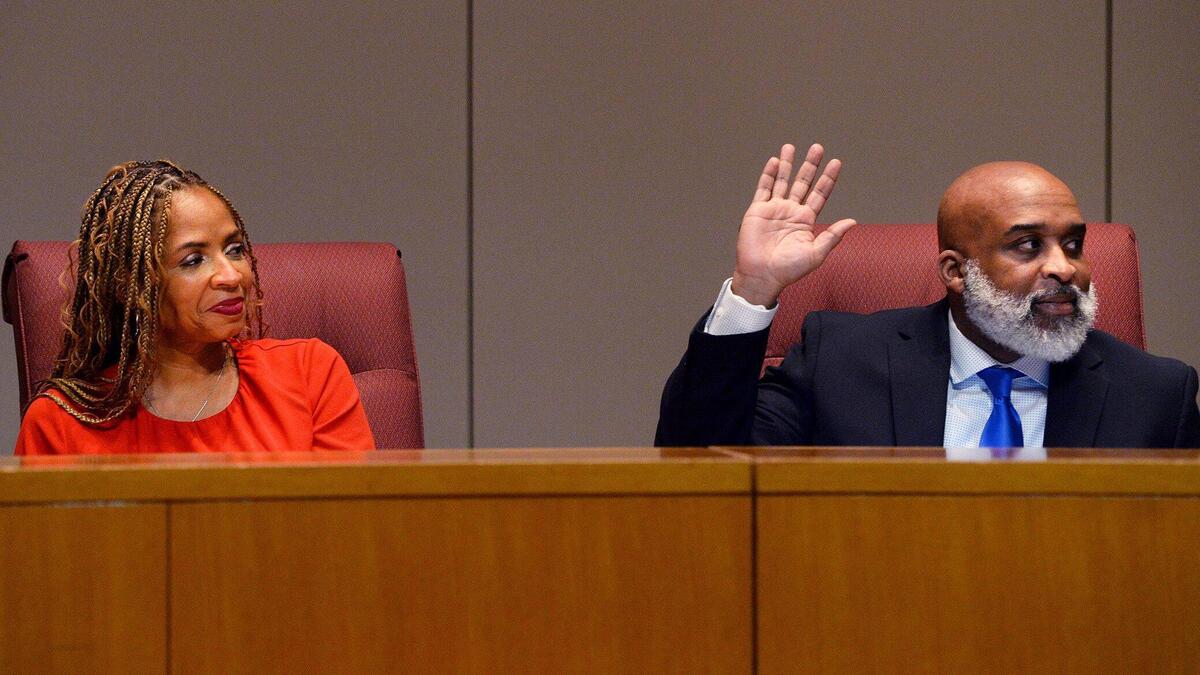
“This policy’s goal is to make sure that we have a consistent framework that all school leaders can utilize when students are looking to express themselves based on their First Amendment rights,” CMS board Vice Chair Gregory “Dee” Rankin said.
The policy says students within Charlotte-Mecklenburg Schools retain First Amendment rights while also outlining circumstances the school can restrict speech deemed disruptive. However, the school notes that speech can’t be restricted just because of fear of disruption or fear of an unpopular opinion.
The policy provides a framework for allowed student protests, which have become more common in recent months through walkouts and sit-ins. It requires schools to establish written rules for designated areas of student expression.
Read more 2-year-old killed when family’s dogs suddenly turn vicious, NC police say
“There will be a procedure in place if students know that they want to organize a walkout or a sit-in or anything like that,” Rankin said. The policy also came just before the school board announced it settled the case of G.S. v. Charlotte-Mecklenburg Board of Education, which involved the painting of the Ardrey Kell High School spirit rock in memory of conservative activist Charlie Kirk following his assassination at Utah Valley University in September 2025. The school board announced the lawsuit settlement in an update to its original free speech policy news release, but Vice Chair Gregory “Dee” Rankin said the policy was not implemented because of one or two specific incidents.. The policy establishes guidelines on student expression spaces, including spirit rocks, parking spaces, murals and benches. Schools have to also create a procedure in writing on how students can use those spaces to express their viewpoints. The policy expands upon a school’s role in delegating speech rules, requiring them to act in a neutral manner with students. Students cannot be treated any differently due to political, religious or social views, and proposals for designated spaces offered by students can’t be rejected due to political or religious opinions.
The policy also says schools may exercise editorial control over school-sponsored student media. However, Rankin said, the policy does not represent a change in how student media is currently overseen.
“There would be no difference than the editorial responsibilities occurring right now,” Rankin said. “This isn’t more so trying to limit expression. We’re just trying to give information that the school, which currently has editorial responsibilities over the newspaper, understands that particular relationship.” For students like Celia Kaul, she expressed concerns for the future with the possibility of upcoming demonstrations, expressing that she and others could face administrative backlash for speaking out and being a part of demonstrations.
“I’m an outspoken student, so this policy could target some of my future actions,” Kaul said.
Read more Mecklenburg commissioners slam pitch to require Charlotte to repay I-77 toll costs