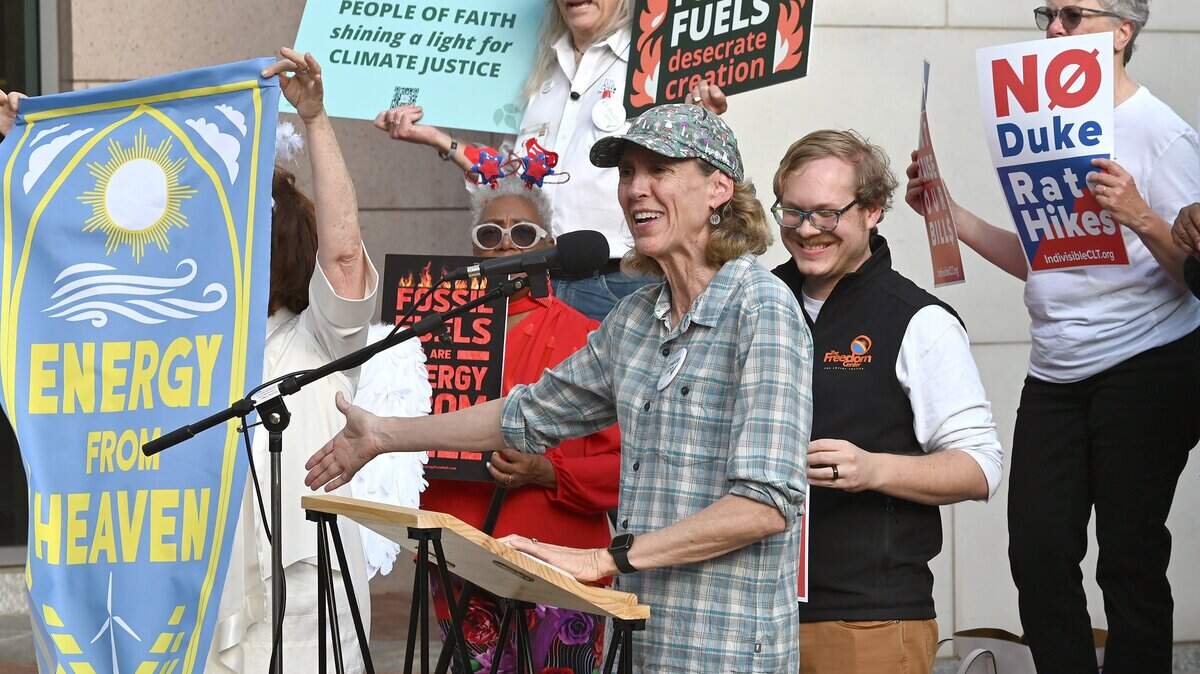
As Duke seeks higher rates, will gas plant plans collide with clean energy goals?
Just a few years ago, North Carolina’s energy future looked very different.
For much of the last decade, utilities were planning for slow growth and a transition to cleaner energy. Today, soaring demand from data centers, artificial intelligence, manufacturing and population growth is forcing Duke Energy, regulators and lawmakers to rethink how North Carolina will generate enough electricity — and who will pay for it.
Read more Canoe tosses 3 men into creek, but only 2 make it to shore, NC searchers say
North Carolina law calls for carbon-neutral electricity generation by 2050. At the same time, Duke says meeting rapidly growing demand will require new natural gas plants. That has sparked debate over how the state can keep electricity reliable and affordable while still meeting its long-term climate goals. Environmental and consumer advocates have also questioned whether customers should bear the costs of new infrastructure built to serve data centers and other large power users.
“It’s hugely different than it was five to 10 years ago,” said Robert Cox, director of the Energy Production and Infrastructure Center at UNC Charlotte said of the rise in electricity demand. “Five years ago, nobody saw this coming.”
The debate sits at the center of Duke Energy’s latest long-range plan, the utility’s request for higher electric rates and a legislative push to reexamine parts of North Carolina’s clean-energy transition.
The utility is seeking roughly an 18% rate increase over three years for typical residential customers, arguing it needs major investments in generation, transmission and grid infrastructure to serve a rapidly growing region.
“Given the Carolinas’ exponential growth, we need all available economically viable resources – nuclear, renewables, storage, natural gas and coal – to meet the needs of our customers,” Duke Energy spokesperson Bill Norton said.”
One reason natural gas continues to play a major role is reliability. Unlike solar power, which depends on weather conditions, natural gas plants can ramp production up or down when demand changes.
“The future has changed. I think there is an economic driver that requires large power, and that’s why they’ve gone back to natural gas,” Cox said. “I mean it’s just the reality of where we’re at.”
North Carolina law calls for carbon-neutral electricity generation by 2050. Environmental groups, including the Sierra Club, have questioned how long-lived natural gas facilities fit into that future and whether customers could ultimately be left paying for expensive modifications or technological upgrades.
But Duke argues the goals are compatible.
“We remain firmly on target for carbon neutrality by 2050,” Norton said.
The utility’s position is backed by a previous decision from state regulators.
In a November 2024 order, the North Carolina Utilities Commission concluded that a 35-year anticipated useful life for new natural gas generation was reasonable for planning purposes and determined the projects fit into North Carolina’s carbon plan.
The commission acknowledged uncertainty surrounding future technologies, particularly hydrogen, but concluded Duke identified ways the facilities could provide value in a carbon-neutral future. Carbon neutrality does not necessarily require eliminating all emissions. Utilities can also reach neutrality through a variety of strategies like carbon capture, sequestration and offsets.
Public Staff, the state agency responsible for representing utility customers before regulators, generally agreed a 35-year useful life assumption is reasonable. Dustin Metz, director of the Public Staff’s Energy Division, said equipment manufacturers and industry standards often place the expected useful life of natural gas assets at roughly 35 years.
Read more Charlotte business week: 1,000 jobs across NC, BofA insights, hospital land swap
However, Metz said long-term utility planning involves looking at a range of possible futures, including changes in fuel prices, regulations, construction costs and electricity demand.
For Cox, one of the biggest uncertainties may not be carbon capture or hydrogen. It may be forecasting demand itself.
Utilities across the country are preparing for massive growth tied to artificial intelligence and data centers, but questions remain about how many proposed projects will ultimately be built.
“One of the big risks ultimately may be that we begin to plan too much infrastructure relative to the number of data centers that actually get built,” Cox said.
The debate over Duke’s plans has also reached the General Assembly.
On June 3, the North Carolina House approved Senate Bill 730, known as the Ratepayer Protection Act. In addition to imposing new guidelines and restrictions on data centers, the measure would require a study examining the current and projected effects of North Carolina’s carbon-neutrality requirements on residential, commercial and industrial electric bills.
The bill would also prohibit the Utilities Commission from approving the retirement of certain large coal and natural gas facilities until Duke Energy receives approval for a new nuclear project capable of generating at least 1,000 megawatts.
Supporters say the legislation would help protect ratepayers and ensure reliable electricity generation as demand grows. Critics argue it could slow the state’s transition away from fossil fuels.
Senate Bill 730 would tie certain retirement decisions to approval of a future nuclear project, but Duke’s own planning documents suggest the requirement may not significantly alter the utility’s current timeline.
Duke’s resource plan calls for seeking approval of a new nuclear project by the end of 2028, while its next major coal retirements are scheduled for 2029, meaning the legislation’s requirement could be satisfied before those retirements occur.
“Duke Energy is committed to its customers and communities and will continue working with policymakers and regulators to deliver reliable and increasingly clean energy while keeping rates as low as possible,” Norton said.
Read more Tommy Tremble makes two predictions about Panthers QB Bryce Young in 2026