Former Wells Fargo tower readies for redevelopment after historic designation
A 55-year-old uptown office tower is now a Charlotte historic landmark. Redevelopment of the building is set to begin and its transition to a mixed-use project will eventually help reduce the city’s office vacancy rate.
Read more Union County team returns to The Observer’s Sweet 16 high school football poll
The former Two Wells Fargo Center at 301 S. Tryon St. is officially a historic landmark. With that designation, the building’s owners, Riverside Investment & Development and Singerman Real Estate LLC, are now preparing for redevelopment of the site.
The Chicago-based duo filed a land development construction plan permit with the city on Thursday, according to city records. These permits usually signal the beginning of grading work and construction.
The permit description suggests as much. It notes that developers are working on “streetscape improvements to accompany the mixed-use development project.”
Riverside and Singerman bought the property for $36.5 million in April and announced plans to redevelop the site.
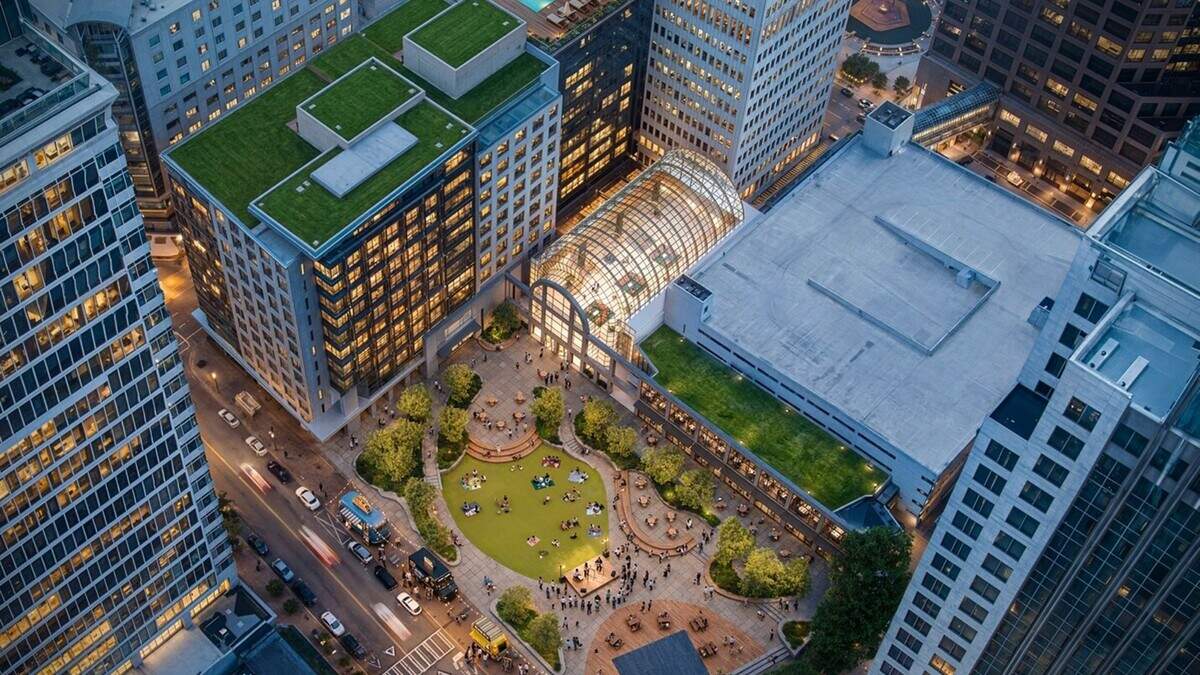
Specifically, developers are planning a $250 million renovation that would add 282 apartments and a 180-room hotel to the tallest tower, according to James Anderson, vice president at Riverside. He spoke during the landmark designation hearing at a Charlotte City Council meeting. The plans also include renovated office space in the smaller tower, retail throughout the complex and shared green space.
To help finance the redevelopment, Riverside and Singerman sought a historic designation to potentially qualify for state credits. Riverside and Singerman will also seek a federal historic designation.
Developers are eligible to receive up to 50% in tax credits from the state and federal governments combined.
The 3.4-acre complex includes two office buildings, a glass atrium, a plaza and a parking garage. The designation applies to the 32-story tower and the 12-story connector, which links the two office buildings. Under the designation, the site will be known by its original name, the Jefferson-First Union Tower.
The move also saves a historic building.
Development in Charlotte isn’t often kind to older buildings and usually involves tearing down historic sites.
For example, the 100-year-old Court Arcade building in uptown was demolished in September to make way for a larger data center.
“Our proposed redevelopment of 301 South Tryon will preserve a significant historic building while removing one of the largest office vacancies in the central business district,” Anderson said during the council hearing. “We will transform the large public plaza and atrium into welcoming places with year-round activity. Together, these uses will bring more people to uptown shops and restaurants, particularly during evenings and weekends, and add housing closer to jobs and transit.”
Utilizing Using those tax credits has been one suggestion for revitalizing uptown office space, Stewart Gray, the Charlotte-Mecklenburg Historic Landmarks Commission’s director, previously told The Charlotte Observer.
The sentiment was also acknowledged by Shahid Rana, the city’s director of economic development, during the designation hearing.
Charlotte’s office vacancy rate stands at 18.5%, according to an October report from commercial real estate firm JLL. That’s the lowest rate the Charlotte office market has seen since 2022, the report reads.
Uptown’s office vacancy rate has also fallen to 20.2%, according to JLL.
Which is a good thing.
Vacant buildings lead to revenue loss for property owners. That could decrease property values, which could affect commercial property taxes.
Read more Brian Austin Green Nominates ‘90210’ Costars for ‘Celebrity Name That Tune’
As with most cities, Charlotte’s budget relies on property taxes. If the city needs more funding because of a decrease in commercial property taxes, it could turn to residents to supplement that income.
To remain viable, owners have two choices: renovate to appeal to office workers or convert the building into a different use.
About five uptown properties have undergone those changes, Rana said during the City Council hearing.
One example is the former Wachovia building at 400 S. Tryon St.
New York-based developer Spandrel Development plans to transform the building into approximately 399 apartments. And The building will also host Charlotte’s first W Hotel, part of the Marriott Bonvoy brand.
While some council members agreed that Charlotte’s uptown office vacancy needed to be addressed, they questioned whether a landmark designation, along with the tax credits, was a way to solve the problem.
Not all office buildings in need of help can qualify for landmark status. What other ways could the council assist property owners?
Several council members suggested bringing the uptown office vacancy issue back to a committee meeting. The council discussed the issue last year.
Some council members also questioned whether the 55-year-old building was actually historic.
But it is—not because of its age (the building is younger than some council members), but because of its design and the era it ushered in.
The Jefferson-First Union Tower was jointly constructed by First Union National Bank and the Jefferson Standard Life Insurance Company in 1971.
First Union was founded in Charlotte in 1908. And In the early 1960s, the bank was experiencing exponential growth.
So, the bank set up its headquarters in the Jefferson-First Union Tower.
Architecturally, the building is historic because it was Charlotte’s first “late-modern skyscraper.” Late-Modern architecture focuses on sleek design with minimal ornamentation. The buildings were meant to stand tall and proud, according to a commission report.
But beyond the architecture, the idea behind the Jefferson-First Union Tower is what truly makes it historic.
The tower was the city’s first skyscraper and, at the time, the tallest building in Charlotte’s skyline. The Jefferson-First Union Tower led the way for more skyscrapers to be built in the city. It was also Charlotte’s first development step toward becoming a banking hub.
“These were the first modern skyscrapers…when those buildings were built, it set the blueprint for what uptown Charlotte was going to look like for the next several generations,” Gray said during the hearing. “Those buildings were the genesis of our current landscape.”
Read more 5 festivals near Charlotte, if the NC State Fair seems too far away