I-77 tolls pivot puts Charlotte’s mayoral hopefuls in a sticky spot | Opinion
Charlotte City Council did another about-face on the controversial I-77 toll lanes project Monday night — voting to restore the city’s support for the project just months after withdrawing it.
Read more An NC school is the best regional college in the South, according to US News
The vote to restore the project was 7-4, with two council members flipping their votes. Malcolm Graham and Joi Mayo, who represent Districts 2 and 3, respectively, supported the project this time around.
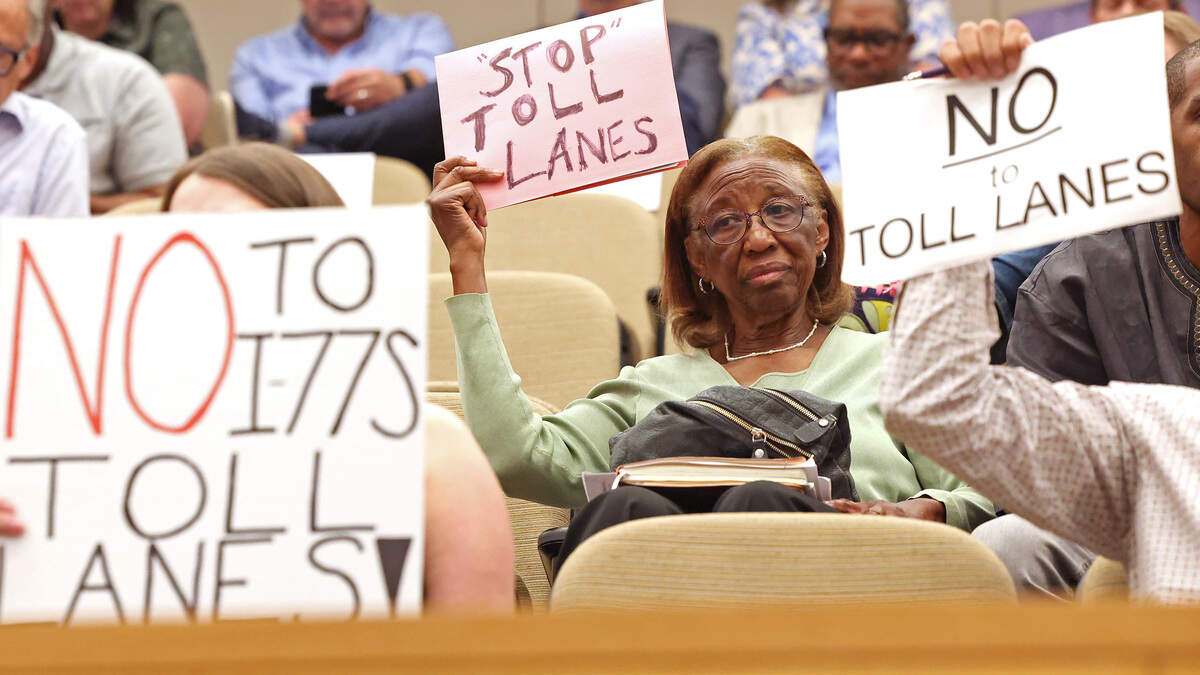
It may not be a popular decision. The litany of speakers who signed up to speak at Monday’s meeting largely opposed the project. That doesn’t necessarily mean that a majority of voters oppose the project, but it does suggest that those who don’t support it are more vocal and politically motivated than those who do.
Which raises the question: will this vote have political consequences, and what will those consequences be?
With Graham changing his vote to support the project, a majority of council members who are believed to be considering a 2027 mayoral run now fall on the same side of the I-77 issue: Graham, Dimple Ajmera, Dante Anderson and James “Smuggie” Mitchell. The lone potential mayoral candidate to oppose the project in Monday’s vote was Victoria Watlington.
The influential Black Political Caucus remains opposed to the toll lanes, however, and it has previously vowed to campaign against any council member who supports them. On the other hand, Charlotte’s business community also wields significant political influence, and it has pushed for the toll lanes from the start.
The inclusion of a new $300 million community benefits package changed the political calculus for some council members. The package, which the state guaranteed through a binding agreement, is intended to mitigate the impact the project could have on communities along the I-77 corridor. It could include things like bike lanes, sidewalks, green space, relocation assistance and grocery stores — a significant opportunity that could improve quality of life for communities that have long sought this kind of investment.
Read more Presley Gerber’s Ex Breaks Silence on His Death in Heartbreaking Tribute
The package was also enough to win over some community advocates who were influential in the council’s original decision to rescind support for the project, including Corine Mack, president of the Charlotte-Mecklenburg NAACP, and some neighborhood leaders in west Charlotte. It makes the amount of public backlash that council members receive for supporting the project less than it would’ve been back in May.
It’s important to note that this dilemma would not have happened if Republican lawmakers had not waged a financial pressure campaign intended to punish Charlotte and other municipalities for yanking their support for the project — and force them into reviving it. A Republican-led provision in the state budget requires Charlotte to reimburse the N.C. Department of Transportation for costs that the project has already incurred. That, too, may not have happened if Charlotte had not so abruptly withdrawn its support, but it happened nonetheless, and it put council members in an uncomfortable position. Some believe that the provision is illegal, but fighting it would have been a costly battle that council members simply weren’t willing to undertake.
City officials, including the city attorney, gave council members some political cover for changing their vote. Continuing to block the toll lanes would have required Charlotte to pay back roughly $65 million to the state, which city officials said would mean raising property taxes or even sacrificing affordable housing in order to pay. WFAE’s Steve Harrison pointed out that may have been misleading — the city could have, in theory, used money from the recently passed transit tax to cover the cost of repayment. But the city attorney told council members that would’ve been illegal.
In the end, this vote came down to pragmatism. It was much more complicated than folks on either side of the issue acknowledged it to be, because neither outcome was a great one. Supporting the toll lanes is unpopular with many voters and gives the green light to something that could ultimately do more harm than good. Continuing to oppose the project would have meant significant financial penalties, the wrath of the Republican-led legislature and passing up on an investment that could be life-changing for underserved communities.
But what is pragmatic is not always popular. The I-77 saga has been proof of this. Council members chose the more popular route the first time around, and it created a mess, so they chose a different route. It may have been the right decision, but there are a lot of people who aren’t going to see it that way, and it will be tough to convince them otherwise.
This was illustrated as Graham tried to make his case at Monday’s meeting, laying out the reasons why he believed supporting the toll lanes was the right decision. As he did so, someone from the crowd yelled out, “You’ll never be mayor, Graham!”
Read more An NC school is the best regional college in the South, according to U.S. News
Graham responded: “I’d rather be honest.”
He, and others, may have to settle for that.