Charlotte is now home to massive LGBTQ+ archive about The South
Boxes of everyday items are carefully stacked inside a closet in a west Charlotte office building. Cups and T-shirts. Photo albums and planners. A 30-year-old paper KFC bucket.
Read more Week 3 is complete. How did the ACC’s ranked football teams perform?
But it’s not just any old fried chicken container. This one was fashioned into a makeshift purse by an Athens, Georgia, drag queen to collect donations for HIV research.
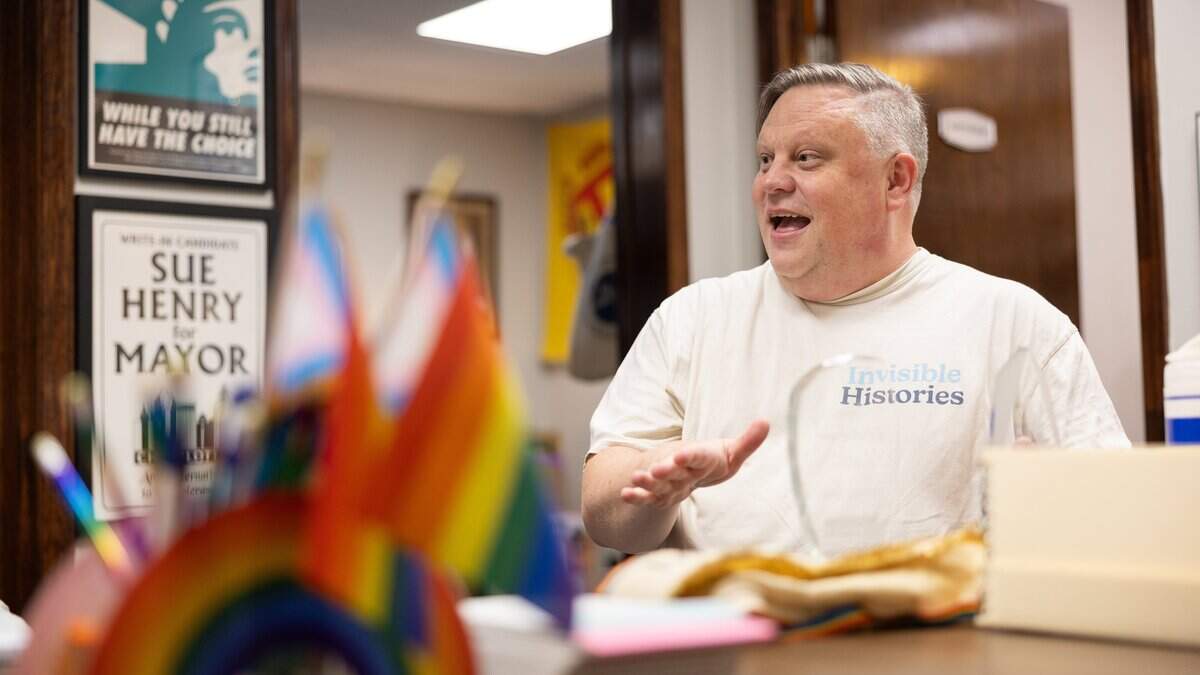
“If you didn’t know the story, if we didn’t have it written down or we didn’t tell you, you would think, ‘Oh they’re saving garbage. Bless their hearts,’” said Maigen Sullivan, co-founder of the nonprofit Invisible Histories. “Sometimes it’s not about the traditional, historical value. It’s about the story behind it.”
Those hidden stories are exactly what Invisible Histories set out to preserve when it launched in 2018. It’s since grown into what is likely the largest archive devoted to southern LGBTQ+ history.
And after years of donating items to partner institutions such as libraries or universities, Sullivan and co-founder Josh Burford are preparing to open their first independent archive building in Charlotte. They fled their former home base in Alabama amid rising political hostility toward their cause.
They hope researchers and the public alike will take advantage of their extensive collection when the space officially opens Nov. 14.
“The difference between archiving and hoarding is who sees your boxes,” Burford said.
The South hosts the largest population of LGBTQ+ people in the country, yet southern queer identity is complicated by a certain “double down” of shame unlike other places, Sullivan said.
There is the shame for one’s sexuality, a universal feeling among queer people around the globe. But southerners experience an added layer of shame concerning where they are from, Sullivan said.
Southerners spend years trying to cover up their identifiable drawl or make it less pronounced. The region draws hordes of tourists while simultaneously serving as the nation’s punchline.
“Complaining about us and then consuming our culture, our food, our people at a rate they can’t get enough of, while at the same time going, ‘Well, I don’t know why anybody would live in the south,’” Burford said.
“If you say that, you don’t get our barbecue, you don’t get sweet tea, you don’t get no biscuits,” Sullivan chimed in. “You don’t get nothin’.”
“No Waffle Houses, either,” Burford added.
The mission is personal for Burford and Sullivan because they’ve both lived it. The two queer historians are from Alabama, where Invisible Histories got its start. Their work quickly expanded to encompass the entire region, and they’re actively collecting in Mississippi, Alabama, Georgia, Florida and the Carolinas.
For most of its lifespan, Invisible Histories served as an intermediary between donors and other institutions. It paused its work in 2023 after state lawmakers “got their panties in a twist” over a talk Sullivan gave at the Alabama Department of Archives and History, she said.
Read more Joanna Garcia Swisher Addresses ‘Sweet Magnolias’ Shocking Cancellation
Sullivan discussed the state’s history of LGBTQ+ people and organizations and how much of that history has been intentionally erased, according to The Alabama Reflector. Lawmakers threatened to defund the state archive in response.
“I never thought in my library career that I would live long enough to be considered a terrorist by government officials because we do queer and trans stuff,” Burford said. “That’s wild.”
Sullivan and Burford determined the safest way to continue their work was to go independent, where state leaders couldn’t hold collections hostage. They landed in Charlotte because Burford, who formerly taught at UNC Charlotte, already had connections in the city. Plus, the city has a strong queer community and is easily accessible by flight.
Invisible Histories is constantly receiving new items to add to the collection even as it prepares to open.
“It sounds really sexy, and then you’re like, oh, I’m cleaning some awards that have been in a house with a chain smoker for the last 50 years,” Burford said. “And they’re gross.”
Some items are flashy, like the disco ball from Tuscaloosa, Alabama’s longest-running gay bar before it closed in the early 2000s. Burford danced under its reflections on his 21st birthday.
Sullivan recalled the perilous expedition to retrieve the artifact, with its many mirrors shooting light in every direction as they drove down the highway.
“We were in Josh’s car, and we have this disco ball, and it’s the brightest day that has ever happened. I think the sun was closer to us that day,” Sullivan said. “We didn’t have anything to cover it up. Did not know we were getting it. It’s a dangerous field is what we’re saying.”
The oldest item is a World War II-era journal kept by Robert Aycock, a veteran from Montgomery, Alabama. In it, Aycock details a little bit of everything about his time stationed abroad. He reacts to films he watched. He describes his feelings through good days and bad. And Aycock shares some more intimate details, too.
“He writes about all the hot French guys he was hooking up with,” Burford said.
Invisible Histories invites anybody who has lived as a queer person in the South to consider donating, no matter how seemingly innocuous their items might be.
Everybody is producing archival material all the time, Burford said. You don’t have to be a celebrity to be a part of history.
“Somebody might bring us in a plastic cup that was just like, maybe some old gay just sat at the bar and drank out of this cup,” Sullivan said. “A traditional archive might be like, that’s not really historic. But that story is what we want because it connects to people now, so we would take that cup, and you would come, and I would literally show you that cup like it was made of gold.”
Read more Duke football dominates Stanford. Observations from an ACC opening win