NC legislature’s I-77 toll project penalty may force Charlotte to flip — again
Charlotte is primed to revive the controversial Interstate 77 South toll lane project, but a couple of pivotal swing voters on the City Council remain undecided.
Read more Fact Check: Where Michael Whatley and Roy Cooper stand on data centers
Municipalities across the region have reconsidered their stance on the toll lanes after state legislators threatened to make them repay tens of millions of dollars if they didn’t reverse course. Charlotte leaders on Monday lambasted the state as a bad faith partner but indicated the financial pressure campaign might be an insurmountable obstacle.
Repaying the money could mean raising property taxes, reducing the city’s affordable housing bond package or both.
“It very much seems like we’re going to rescind our “rescission,” said District 5 Councilman JD Mazuera Arias, a leading voice against the project on council. “It’s just unfortunate that we’re here, and I wish we weren’t. I wish we had a good faith conversation with Raleigh and with folks who want this project to be done.”
Charlotte set off a domino effect in May when the council, by a thin margin of 6-5, voted to rescind support for the project’s public-private partnership funding agreement. The Charlotte Regional Transportation Planning Organization holds the ultimate authority on whether the project can advance and followed suit one week later, voting to kill it.
The CRTPO consists of 27 voting members representing jurisdictions across the region. Representatives of Charlotte, Mecklenburg County, Davidson, Monroe, Cornelius, Matthews, Mint Hill and Huntersville supported the rescission at the time. Votes are weighted based on population, so Charlotte’s vote holds 41% of the power.
Charlotte leaders were concerned about the project’s impact on neighborhoods in its path with large minority populations. Other jurisdictions were against the concept of toll lanes altogether. Those who voted to rescind support wanted the state to slow down and consider possible alternatives.
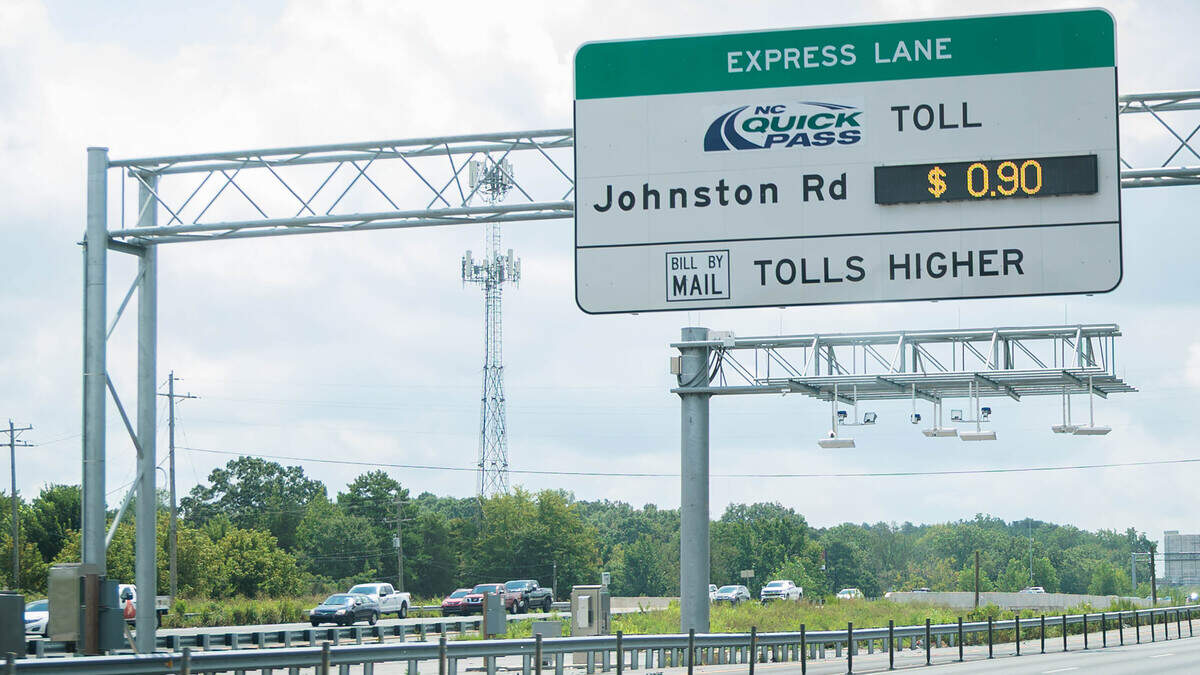
But legislators included a provision in the state budget in July that threatened to penalize any jurisdiction that voted against the project. Unless they revive the project, Charlotte and other local governments will be on the hook to repay $69 million the state already spent according to their weighted vote on the CRTPO. And NCDOT would withhold state aid from local governments and refrain from starting new transportation projects until they repaid.
Jurisdictions that vote to revive the project will not have to pay, and their share will be shouldered by the others. Charlotte’s portion could be anywhere from $59 million to $69 million, according to Matt Hastedt, Charlotte chief financial officer.
City Attorney Andera Leslie-Fite said the city is pursuing “all available legal remedies to address the legislation.” But some council members weren’t convinced that’s the right path to take because it could risk further aggressions from the General Assembly.
“I believe the state budget provision requiring repayment is both unconstitutional and an affront to due process. It punishes an elected body for exercising its democracy and its authority on behalf of constituents. That is damn wrong,” said District 2 Councilman Malcolm Graham. “However, suing the state makes no sense, either.”
Graham and Councilwoman Joi Mayo, whose west Charlotte district would include 8 of 11 miles of the interstate project, both said they were undecided but spoke at length about the risk of passing on this opportunity. They previously voted to rescind support.
Mayo pointed to potential investments in grocery stores and multimodal benefits like pedestrian bridges or rapid bus transit that could be a part of the project.
The North Carolina Department of Transportation said in an August letter it would contribute “up to” $300 million in community investments if the project moves forward. That’s in addition to the $600 million that the North Carolina Department of Transportation already allocated for the project and an additional $100 million planned for other transportation projects of the city’s choosing.
Read more Vote for The Observer’s high school football offensive player of the week
Council members weren’t pleased with the ambiguous phrasing of the community benefit commitment, however. They want a binding legal agreement with specific pledges outlining exactly how the money would be spent.
“It makes me want to shoehorn in as many additional elements of certainty as we can into what is now a contract process with a partner whose intentions seem cloudy at best,” said District 6 Councilwoman Kimberly Owens. “But still, I believe in staying at the table.”
The General Assembly gave local governments until Oct. 5 to change their votes if they want to avoid repaying. The CRTPO will vote on Sept. 23 on whether to revive the project.
Charlotte will hold a public hearing on Sept. 21 where residents can weigh in on the issue. The City Council will then take a vote.
If Charlotte reverses course, it would easily put the I-77 project over the threshold needed to resume. Charlotte holds 31 of 74 votes. It takes a simple majority of 38.
But if the council can’t muster the support, then most other jurisdictions would have to flip. Several already have.
Cornelius, Monroe and Huntersville have either voted or indicated they will change their stance due to the financial risk.
Matthews has remained a “no” thus far but issued a statement last week urging Charlotte to pay the penalties for small towns that hold strong against the toll lanes, WFAE reported. Matthews has two votes.
“Just like a regressive tax, those penalties hit the bottom lines of small towns far harder than they hit Charlotte,” Matthews Mayor John Higdon said in the statement. “If Charlotte is truly committed to stopping this project in its current form, it should step up and offer to absorb those fines.”
Leslie-Fite, Charlotte’s city attorney, rejected that possibility, saying it’s not allowed under the state constitution.
Mecklenburg County remains against the project with three votes. It’s unclear where Mint Hill’s two votes will fall.
Davidson is on the fence with one vote and expects to vote on its position at its Sept. 22 meeting.
Read more Vote for The Observer’s high school athlete of the week (Sept. 18)
This story was originally published September 14, 2026 at 8:20 PM.