Inside the journey that brought Terrence Brown to UNC basketball
AI-generated summary reviewed by our newsroom.
When Terrence Brown was a kid, he hitched rides across the country to attend club basketball tournaments he wasn’t playing in.
Read more Flies, ‘foodborne illness risk factors:’ Charlotte-area restaurant earns ‘B’
He just loved basketball, and wanted to catch a glimpse of emerging players whom he idolized.
Much of Brown’s early years were spent on or around a basketball court — somewhere, anywhere — and he gained a reputation as a “gym rat” in Minnesota. Local players knew they’d might run into him at the community center, day or night.
But his path to Division-I basketball included one obstacle after another.
Brown grew up with a mother who worked multiple jobs to support his basketball journey. He dealt with loss in his family. And he didn’t get his first college offer until a year after he finished high school.
“Terrence is someone that really got it out of the mud,” said Gabriel Hostetler, a friend of Brown’s who is working on a documentary about that journey. “He really didn’t have anything handed to him.”
Brown channeled his hurdles into motivation. He always wanted to prove the haters wrong.
Now entering his fourth year of college, Brown’s tenacity is paying off, and the UNC transfer is readying to suit up in Tar Heel blue. He’ll don the same colors as the likes of Michael Jordan, Phil Ford and Kenny Smith when he takes the floor at the Smith Center for the start of the regular season in November.
Brown, once a skinny, undersized guard, now has a chef who prepares him protein-rich meals, Hostetler said, to help him reach his fitness goals — though he’s also already a regular at Chapel Hill’s McDonald’s, a go-to spot for his late-night caramel frappé and apple pies.
Amid all of his accomplishments, he hasn’t forgotten his day ones, his friends and former coaches say.
“(Brown) worked so hard to get to this position,” Hostetler said. “It feels right. It feels like, yeah, we’re right where we’re supposed to be, doing exactly what we’re supposed to be doing.”
When Hostetler trained at the Maple Grove Community Center in Maple Grove, Minnesota, he knew Brown as the “tiny kid” who was always finessing his way into the gym.
Brown, then around 10 years old, often begged the trainer to join workouts that included college players. Sometimes he got his shot.
When Brown wasn’t on the basketball court, Hostetler said he saw Brown every time he went to the neighboring LifeTime Fitness, morning or night.
“I swear that kid would be at that gym like 12 hours a day,” Hostetler said. “I just knew him as this kid that was just a gym rat, but he was super small. … But he always had that dog in him. He always wanted to play you one-on-one. He wanted to beat you. He wanted to prove that he was good at this game.”
Hostetler, who now lives in Los Angeles while pursuing his behind-the-camera dreams, has documented Brown’s journey for a feature-length documentary since 2022.
Hostetler started with the idea of telling Minnesota basketball’s story, and Brown quickly became a focal point. Hostetler thought Brown embodied what it meant to be a basketball player from the North Star State by conjuring a basketball career after being overlooked his entire life.
In Minnesota’s frigid winters, the gym is a natural place for basketball players to spend lots of time. But so is the ice hockey rink.
Therefore, Hostetler said, many basketball players from the state go unnoticed compared to other places, and have to build resilience.
“(Brown) just kind of carries that grit with him,” Hostetler said, “that underdog mentality, just that feeling of always wanting to prove ourselves.”
Willie Braziel, who coached Brown at Columbia Heights High School, got to know Brown while coaching on the Nike EYBL circuit.
He used to call Brown “everywhere,” because he followed the team for many of its games, no matter where they were. One summer, he said he saw Brown in Milwaukee, St. Louis and Las Vegas.
Brown wasn’t playing; he was too young. But he somehow secured rides to the tournaments and found his way onto team buses to get home.
“During that time,” Braziel said, “(Brown) looked at me and said, I’m going to play for you.”
Brown ended up playing for Braziel when he transferred to Columbia Heights ahead of his sophomore year of high school.
Braziel said Brown was initially skinny and short and complained about people being “against him.” His senior year, MaxPreps listed Brown as 6-foot-1 and 155 pounds.
Brown was also “lackadaisical” about his studies, Braziel said. The coach required players to maintain a 2.5 grade point average while playing for him, he added, and Brown risked not meeting the standard.
“I said to Terrence,” Braziel said, “’if you get a scholarship, will you qualify for a scholarship?’”
Braziel said he tried to instill a different mentality in Brown, who responded to the messaging resoundingly.
By the end of high school, Brown graduated with over a 3.5 GPA, according to Fairleigh Dickinson University.
On the court, he worked with Columbia Heights assistant coach Dedrick Jenkins to develop his game. Jenkins, who once played at Ohio University, was also once an undersized guard at 5-foot-10, and took Brown under his wing.
Jenkins taught Brown how to focus on various facets of offense, not just shooting and scoring, to overcome physical limitations.
Braziel said he used to run a drill called “adversity,” in which he took his team’s most talented player and paired him with the players on the end of the bench for a scrimmage against other starters and top substitutes.
Brown played alongside the team’s worst players regularly, but Braziel said he never lost. Not once.
That was because Brown uplifted his teammates, Braziel said, knowing he’d be better off winning a game with 10 points and numerous assists, steals, etc., than losing while dropping a 30-piece.
“What that told me is he understood basketball,” Braziel said. “He understood that, ‘Yeah, I know I can shoot every time I touch it,’ but he would elevate the other four players that really weren’t good.”
By Brown’s senior year, he was averaging 22.8 points, 5.1 assists and three steals a game, becoming his conference’s player of the year. That season, Braziel said practically every one of the Hylanders’ opponents double-teamed Brown, who thrived on the attention and went hard every game.
Brown led the team to a 24-1 record, falling to Totino-Grace in a 48-44 defeat in the Section 4AAA final to just miss the state tournament.
Brown had suffered one of the “worst ankle injuries” Braziel said he had ever seen before the game. Otherwise, Braziel is confident they would have made a longer run.
Read more 10 CMS schools get new principals this year. Who are district’s new leaders?
“Terrence did not ever want to lose a game,” Braziel said, “and I think that that’s what drove that team. His mentality was no one should beat us. We’re not just going to refuse to lose. I don’t believe anybody can beat us.”
Perhaps a state championship would have helped Brown’s recruitment, but even with all of his senior-year success, he didn’t have any stars or a Division-I college offer by graduation. So he went to Golden State Prep in Napa, California, to chase the next level.
And even then, it took until near the season’s end for him to finally start receiving low-end Division-I offers.
Fairleigh Dickinson University brought Brown in for a visit while he was visiting family in New Jersey. Assistant coach Tom Kiely had scouted Brown when Kiely was director of basketball operations at Chattanooga, and informed coach Jack Castleberry about the potential recruit.
Brown played with some of the returning players from the 2022-23 team that had knocked off No. 1-seed Purdue in the NCAA Tournament the previous season, and he held his own.
Interestingly, Brown was outgoing during the run, encouraging others as he confidently knocked down shots. Typically, Castleberry said players are quiet as they survey the scene during such runs, but Brown was willing to express emotion to lift his teammates.
“By the time he finished working out,” Castleberry said, “we were pretty sure that he was the guy that we wanted.”
The next day, Brown officially toured the school alongside his mother and aunt, while Castleberry rushed to contact folks in Minnesota to do his due diligence on the player. He reached six people.
Soon after, Brown committed.
“It was one of the quickest recruiting processes I’ve ever been involved with,” Castleberry said.
Castleberry doesn’t know why Brown was overlooked as a prospect. While he was a bit slender and inefficient in high school, there weren’t many glaring flaws. Castleberry emphasized that what occurred with Brown’s recruitment is kind of what happens now, with an increasing emphasis on the transfer portal pushing college basketball rosters older.
What Castleberry does know is that Brown arrived in Hackensack, New Jersey, ready to work. He’s the type of player you want to be around, he said, and had enthusiasm for the direction of FDU’s program.
Kiely used to joke with Castleberry that he’d be in bed, ready to sleep, before Brown often dragged him to the court to work on his game.
“That kid is going to outwork everybody,” Castleberry said. “It’s not hyperbole when I say he’ll be in the gym at 5:30 in the morning and again at 10:30 at night. That’s just how he’s built.”
As a freshman, Brown was just getting his feet wet. He appeared in 32 games and was named to the Northeast Conference All-Rookie Team with 7.8 points, 2.9 rebounds and 1.4 steals per game.
Brown wasn’t a high-usage player that year, and didn’t have to take much of a leadership role, but his personality was still evident.
But in his second season, Brown blossomed into one of the country’s top scorers as the Northeast Conference’s Most Improved Player. He scored 20.6 points per game in 32 appearances.
Castleberry credited the team’s assistant coaches for their work with Brown, but the players’ devotion to the craft allowed him to excel.
“The reality is he works in a manner that most people aren’t willing to work,” Castleberry said, “and that’s why he’s made something of himself when really there was nobody putting a whole lot of belief in him prior to that.”
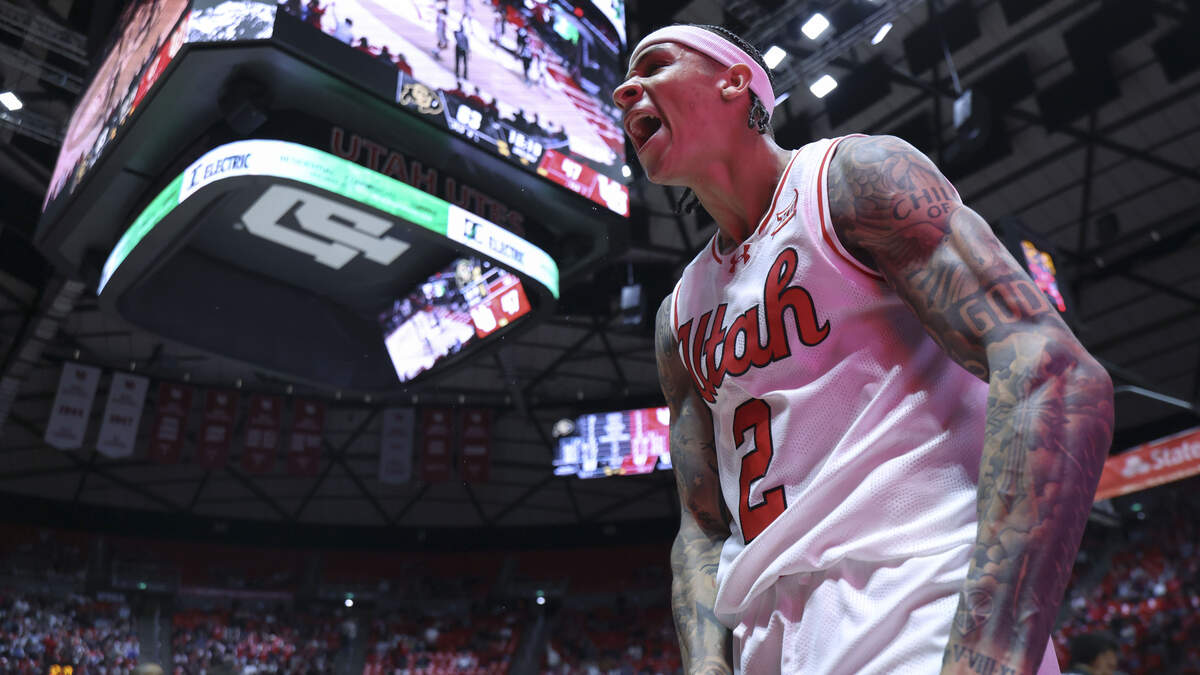
Brown’s second-year jump at FDU helped him make the power conference leap — to Utah, where he led the Utes in scoring (19.9 points per game), assists per game (3.8), and total steals (44), earning honorable mention for the All-Big 12 teams.
After one game, a kid came up to Brown wearing his jersey, saying he wanted to be just like him, Hostetler said.
“Those are the moments that are just surreal to me because it wasn’t that long ago that Terrence was that kid,” Hostetler said, “that little kid in the gym, waiting for Tyus (Jones) to finish his game, or at the Timberwolves game, just looking at these pros, and now he’s on the other side of it.”
But Brown’s Utes only managed 10 wins, finishing conference play with a 2-16 record. So, Brown transferred to UNC, with NBA dreams in mind.
Brown told On3 that with NBA championship-winning coach Michael Malone arriving in Chapel Hill, he felt like the Tar Heels would be a great fit.
“I had a great individual season at Utah, but the team didn’t,” Brown said. “I wanted another opportunity to go somewhere and win.”
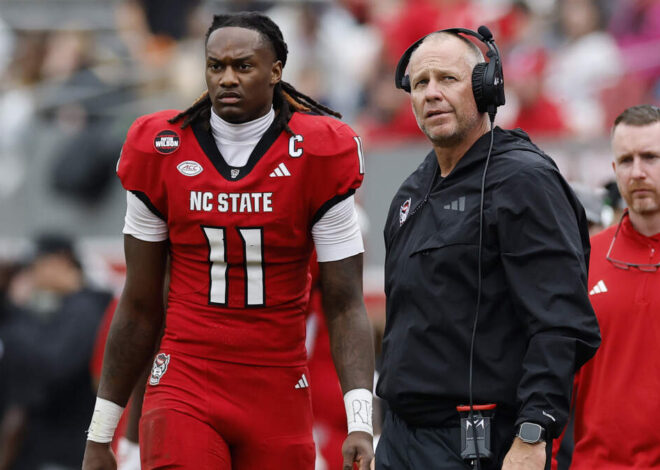
Brown joins a UNC roster quickly assembled after Malone arrived just in time for the transfer portal window in April. Brown projects to be a key piece alongside Virginia Tech transfer Neoklis Avdalas and N.C. State transfer Matt Able in what seems will be a backcourt-driven team.
Brown is the type of player who can excite an audience: a ball-dominant guard who uses his athleticism to drive to the bucket.
“He’s never played with a crowd like UNC’s,” Hostetler said, “and he’s someone that feeds off the crowd. And so I think it’s gonna be pure cinema, as they say.”
Brown’s trainer Terez VanPelt, a former Division-II player who initially met Brown at the community center, said Brown is focused on winning games by galvanizing his teammates at UNC, instead of reaching individual goals.
Brown wants to make better reads in transition and the pick-and-roll as a playmaker while remaining a constant pest on defense, VanPelt added. Brown also wants to raise his 3-point shooting percentage from the low 30s to the high 30s or even 40s.
“The job is not finished,” VanPelt said. “He’s got things he’s gonna accomplish.”
Brown is planning to wear the No. 1 at UNC, in honor of his late aunt, who last saw him in UNC’s No. 1 jersey on his recruiting visit before she died, he told On3.
Hostetler will be making weekly trips to Chapel Hill to document Brown’s season, and he expects greatness. He’s hoping to finish the documentary when Brown shakes NBA commissioner Adam Silver’s hand as a draft pick.
Brown will never forget feeling overlooked all his life. Just recently at the Rico Hines Runs — a series of summer pickup games in Los Angeles — Hostetler said they put Brown on a side court, away from NBA players and top draft picks. He “took it personally,” and “obliterated” the competition, scoring 40 points, Hostetler estimated.
“You just see that passion,” Hostetler said, “and that desire boiling in him of he’s so close, and he just wants to continue to prove people wrong.”
Brown looks at NBA mock drafts, Hostetler said, and gets frustrated when he doesn’t see his name. As he scrolls through lists of players he believes he can beat, Hostetler said Brown’s drive is evident on his face.
He won’t quit until he silences his critics.
“(Brown) always says, ‘I still remember what it felt like when I had nothing, and nobody cared about me,’” Hostetler said. “He still carries that with him, that feeling of just wanting to prove something always.”
This story was originally published August 21, 2026 at 5:30 AM with the headline “Inside the journey that brought Terrence Brown to UNC basketball.”
Read more Fantasy Football draft advice. What to know ahead of the season