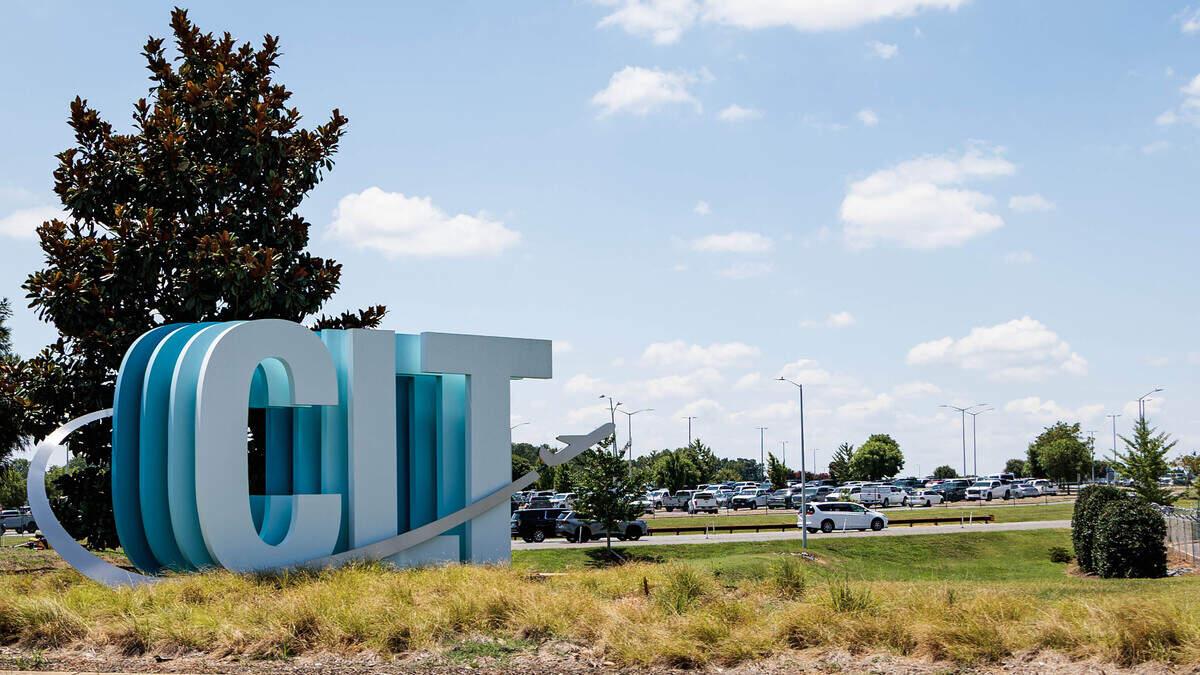
Could shifting politics ‘kill the golden goose’ with CLT airport lease? Some fear so.
When Charlotte’s business leaders talk about the Queen City’s crown jewel, they often point to one thing: Charlotte Douglas International Airport.
Read more Young, Legette make big plays as offense bounces back in Panthers training camp
As Charlotte has seen unparalleled growth over the past decade — last year’s population increase exceeded every other U.S. city — the cornerstone of that rise is the airport.
But with the city now negotiating a new airport lease agreement with the airlines, the current political temperature has brought, to many stakeholders, a bit of turbulence.
The airport’s current lease agreement has been in place since 2016. It was set to expire this summer prior to an extension that gives both sides an extra year to reach a new deal. And since then, some scales have shifted. Depending on who you ask, the concerns surrounding the ongoing lease negotiations may be blown out of proportion.
What’s at stake, though, is understood by everyone.
“The main reason we have the growth that we have and the amount of businesses that are coming in here and such is the airport,” said Rob Nanfelt, executive director of the Real Estate and Building Industry Coalition. “You can chalk it up to the tax policy at the state level that’s made a more friendly environment for businesses and that’s true, but the airport and the ability to travel anywhere in the world direct for Charlotte is a huge deal.”
[Extension signed: CLT extends airline lease for 1 year]
Charlotte’s new mayor, Rob Harrington, told the Observer that the city is not at risk of losing American Airlines, the major player in the lease negotiations that accounts for around 90% of the flights at the airport.
“The airport and the function of the airport are and have been for a couple of generations a jewel in what we do,” Harrington said. “It’s important to everybody who lives here.
“Making all of that work is key.”
The fear stems in part from the belief that anything that rocks the boat during this crucial period of negotiations could “kill the golden goose,” some business leaders say. There’s also national political headwinds to consider.
American Airlines recently said it could face an adjusted loss in the current quarter due to the latest surge in jet fuel prices. In a conference call Thursday, an executive noted the airline had “done some trimming” and “reallocated capacity” at Charlotte’s airport for optimization. They later added the airport remains a “connecting monster” in comparison to hubs with large local demand.
Charlotte’s airport did not respond to a request for comment for this story.
Nanfelt said some have misread any concern of unexpected decisions this year as pointing to a fraying relationship between city leadership and the business community.
“It’s been purported that the business community is afraid of losing its leverage,” he said. “I don’t think that’s the case. It’s not a case of leverage. I think the concern is that things have changed a little bit, and we’re trying to figure out how and why.”
Charlotte’s airport contributes nearly $40 billion annually to the economies of North and South Carolina, according to the city. It also supports more than 184,000 jobs.
In recent years, the Service Employees International Union 32BJ has pushed for better working conditions for workers at the airport, such as wheelchair agents and cabin cleaners, who work for contractors of American Airlines.
Chris Baumann, the SEIU Workers United South Region director, said improving conditions is a crucial part of improving passenger safety and reducing employee turnover.
“When these issues are brought up, the ‘Charlotte Way’ is cited and that we’re going to destroy the city,” Baumann said. “And that’s not what we’re trying to do here. We’re trying to help the city.”
The union’s increasing involvement in the city’s politics has given pause to some in the business community. Several business leaders who spoke to the Observer pointed to the most recent City Council elections as a prime example. Seven of the eight candidates backed by SEIU won their elections last year.
Since then, several unexpected moves have also rocked the city.
First, the city’s second-longest serving mayor decided to retire less than halfway through her term. Around the same time, the city rescinded support for the Interstate 77 South toll lane project.
The unexpected changes have sparked some anxieties. And while some business leaders who spoke with the Observer said they were sympathetic to the union’s concerns, they questioned their approach.
But Baumann sees the union’s work as an additive.
“We truly believe in the can-do attitude that makes the city great, and we want to be a part of that, and we want to figure out a win-win solution,” he said.
The city council is expected to vote on any new lease agreement, but it’s unclear how long negotiations will take.
Charlotte’s airport is American Airlines’ second-largest hub after Dallas-Fort Worth International Airport and the third-busiest single airline connecting hub in the U.S. It’s also the only large hub airport in the Carolinas. Under the 2016 lease, American supported $4 billion in investments at CLT, according to the airline.
“American’s commitment in Charlotte over more than four decades has positioned Charlotte Douglas International Airport (CLT) as a leading global gateway and a catalyst for tourism, business investment and economic prosperity across the region,” the airline said in a statement.
Read more Whitney Leavitt Teases Broadway Return After ‘Mormon Wives’ Exit
“We continue to invest in Charlotte’s future as we plan the next evolution of the airport to ensure CLT carries that momentum forward. Together, we are shaping the next generation at CLT, enabling us to grow responsibly, strengthen operations, deliver a better experience for customers and continue elevating Charlotte’s global position for years to come. We appreciate our partners at CLT Airport and those across the region for their continued collaboration and shared vision.”
The airport’s incredible economic impact is why there’s often a feeling of high stakes in any period of uncertainty, said Bryan Holladay, public policy chair for the Charlotte Area Chamber of Commerce.
“Any conversation that’s taking place around the airport will always be considered important because of the importance it plays in the city,” he said.
It serves as a critical part of the Charlotte ecosystem through tourism and economic development, in addition to being a transportation hub, he said. And all ecosystems are intricately connected webs. Meaning, a change to one component can drastically change the entire environment.
“The Charlotte airport is an example of something that people should protect as an important entity to the city that it helped create,” Holladay said.
The city says state law prevents it from setting wages for private companies such as airlines, and a new provision in the state budget further restricts what local officials can do for contract workers.
The new law states that any contract between a unit of local government and a business cannot require the business to “set levels for wages, benefits or other terms and conditions of work.” It also bars local governments from requiring businesses to participate in task forces, committees or similar arrangements designed to set wages, benefits or other conditions of work.
In a statement, SEIU called the bill “undemocratic” with far-reaching consequences.
“This goes far beyond airport lease-term negotiations,” the statement said. “This has effectively muzzled constituents and their locally elected representatives from taking action on issues of critical importance to their community”
Mohammad Jenatian, president and CEO of Greater Charlotte Hospitality & Tourism Alliance, said the change eased some concerns for those in the business community about undue influence on the city’s airport during a critical time.
“We are proud of our airport,” he said. “It is the most important economic development catalyst, not only for our city, but for our region and beyond.”
Unforeseen challenges come with growth, and with those challenges also come opportunities, he added. But the one constant in the city’s success story is its airport, he said.
“I always tell people that if they want to know how we are continuing to grow, all you have to do is look at the airport,” Jenatian said. “If our airport is prosperous and growing, so is our community.”
He said the number one priority of the city now should be ensuring a new lease is signed and to keep the airport operations humming. “I know that we have other issues that we have to deal with, but hopefully we can chew gum and walk at the same time,” he said.
Many of the fears surrounding the airport come from recent history. North Carolina lawmakers attempted to wrest control of the facility from Charlotte last decade due to concerns of meddling by the city.
And while the ongoing lease negotiation is under entirely different circumstances, the move from the General Assembly has colored some of the conversations now.
Robert McCutcheon, president and CEO of Charlotte Regional Business Alliance, said he chooses to stay optimistic. He doesn’t see recent local decisions factoring into any conversation around the city’s airport, he said.
He added stumbling points around individual projects can sometimes happen, but it shouldn’t affect the city’s crowning achievement.
“You can’t separate our growth from the investment in that airport that’s happened over the last 10 years,” McCutcheon said. “That’s why it’s important the city and the airlines get to a deal so that we can focus on that growth.”
NC Reality Check reflects the Charlotte Observer’s commitment to holding those in power to account, shining a light on public issues that affect our local readers and illuminating the stories that set the Charlotte area and North Carolina apart. Have a suggestion for a future story? Email [email protected]
Read more Heather Rae El Moussa Reveals Real Reason She Came Back to ‘Selling Sunset’