Michael Whatley is shunning some media. It’s a risky strategy | Opinion
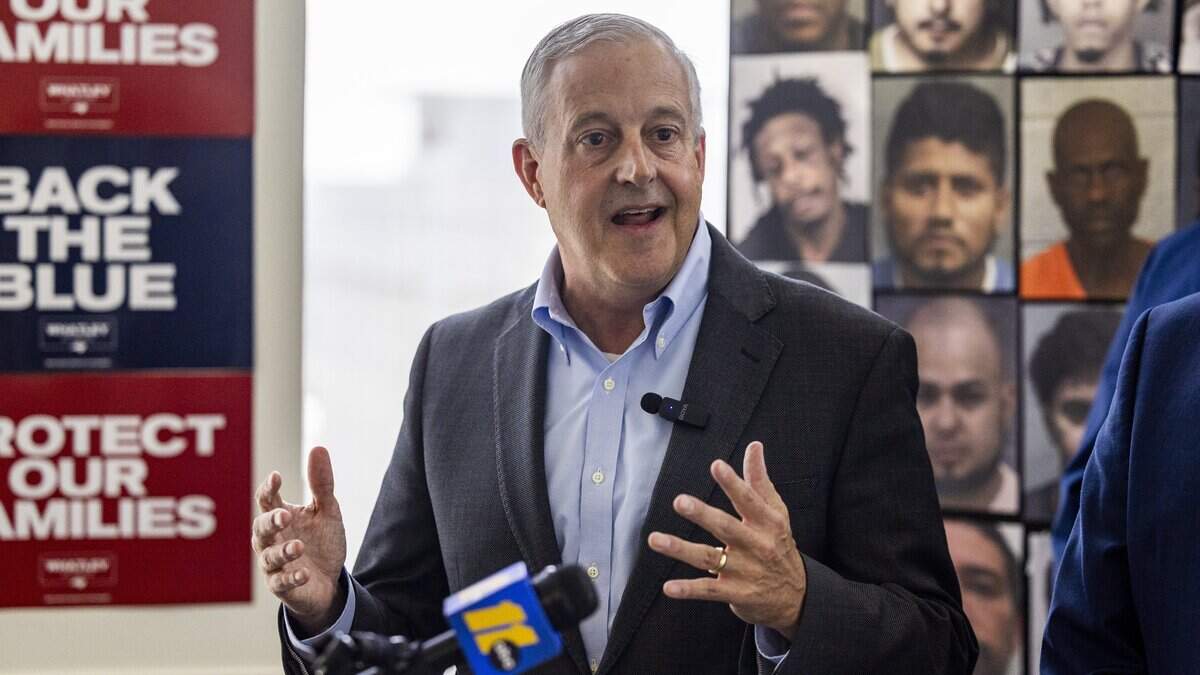
Michael Whatley, the Republican running for U.S. Senate in North Carolina, faces a big problem: a year after announcing his candidacy, many voters still don’t know who he is.
Read more CNN’s Kaitlan Collins Seemingly Responds to Donald Trump Insult at WHCD
Which is why the decision to bar some members of the media from covering his campaign events is so perplexing.
So far, Whatley’s campaign has reportedly denied entry to reporters from three different outlets: The Assembly, NC Newsline and the Asheville Citizen-Times. Two of the reporters say police were called when they showed up to a campaign event.
There’s no mystery as to why Whatley would choose to stonewall these outlets in particular. All three have published unflattering — albeit true — stories about Whatley. The Assembly’s Bryan Anderson was the reporter who questioned Whatley about the Carolina Hurricanes. The Asheville Citizen-Times reporter writes about Hurricane Helene recovery and has rightfully scrutinized Whatley’s role in overseeing the process. NC Newsline has reported that Whatley was subject to arrest orders in 2015 after failing to appear in court for traffic violations.
What is confounding, however, is why Whatley’s campaign thinks that stonewalling the press is a good idea.
While Whatley does grant access to some mainstream media outlets, he seems to prefer to get most of his media exposure elsewhere, often from outlets with conservative ties. He has frequently appeared on Fox News, Newsmax and conservative radio, which gives him a platform free from potentially hostile questioning and unwanted scrutiny.
To be clear, that’s not a strategy unique to Whatley. Plenty of politicians, both Democratic and Republican, gravitate toward certain media outlets over others and occasionally spar with those they believe to be inaccurate or unfair. Plenty of candidates, including Whatley’s opponent, Roy Cooper, are particular about which reporters and outlets they grant access to, whose questions they answer and how often they appear before the media at all. Right or wrong, that’s their prerogative.
But in this case, it seems like a curious strategy for a struggling candidate in a swing state who isn’t really in a position to be turning down media exposure. Whatley seems to think that he should spend more time energizing his base than trying to win over anyone else. Polls suggest that’s not working. Whatley trails most polls by double digits, and Cooper leads with nearly every demographic, including valuable independent and moderate voters who could determine the outcome of the race. Shutting out local media cuts off avenues that could introduce Whatley — and his agenda — to those voters.
Read more ‘Jeopardy!’ Champion Courtney Shah Dead at 52 After Brain Cancer Battle
Of course, it can be risky for candidates to make themselves more available to the media. It could lead to a slip-up or gaffe. Reporters may ask uncomfortable — or unexpected — questions that the candidate doesn’t want to answer. But at this point, what does Whatley have to lose? If name recognition is his biggest obstacle, why not invite every media outlet in the state to cover his events?
Besides, wading into less friendly media territory can be a strategy of its own. More and more Democrats have started appearing on Fox News, including Pete Buttigieg, who has been doing it for years. (Perhaps not coincidentally, Buttigieg polls better than other Democrats with moderate and independent voters.) California Gov. Gavin Newsom appeared on Charlie Kirk’s podcast last year. Not only does it allow them to speak directly to audiences they may not otherwise reach, but it also makes them look willing to respectfully engage with those who disagree with them.
The same could be true for Whatley. While appearances on Fox News and the like may drum up enthusiasm with the Republican base, those aren’t the only voters Whatley needs to reach right now. Not all persuadable voters are frequent viewers of cable news or users of social media. Some of them, however, may read NC Newsline, or The Assembly, or the Asheville Citizen-Times. It’s about meeting voters where they are.
Of course, Whatley’s hostility toward certain media outlets is still creating headlines and making the rounds on social media, so in a way, maybe he is getting the media exposure he needs. But is that really the kind of attention he wants? Is it really how he wants to be introduced to voters? Whatley’s approach has only given Democrats more things to hammer him about, as if he didn’t have enough baggage already.
Perhaps Whatley is banking on the fact that the average voter doesn’t care about his relationship with the media. That’s probably true. But then again, the average voter also doesn’t seem to know who Michael Whatley is. Which is precisely why he may be better off utilizing the media as a tool, not treating them as an enemy.
Deputy Opinion Editor Paige Masten covers politics and the 2026 elections for The Charlotte Observer and The News & Observer.
Read more Pamela Anderson Reveals Whether She Will Return for ‘Baywatch’ Reboot