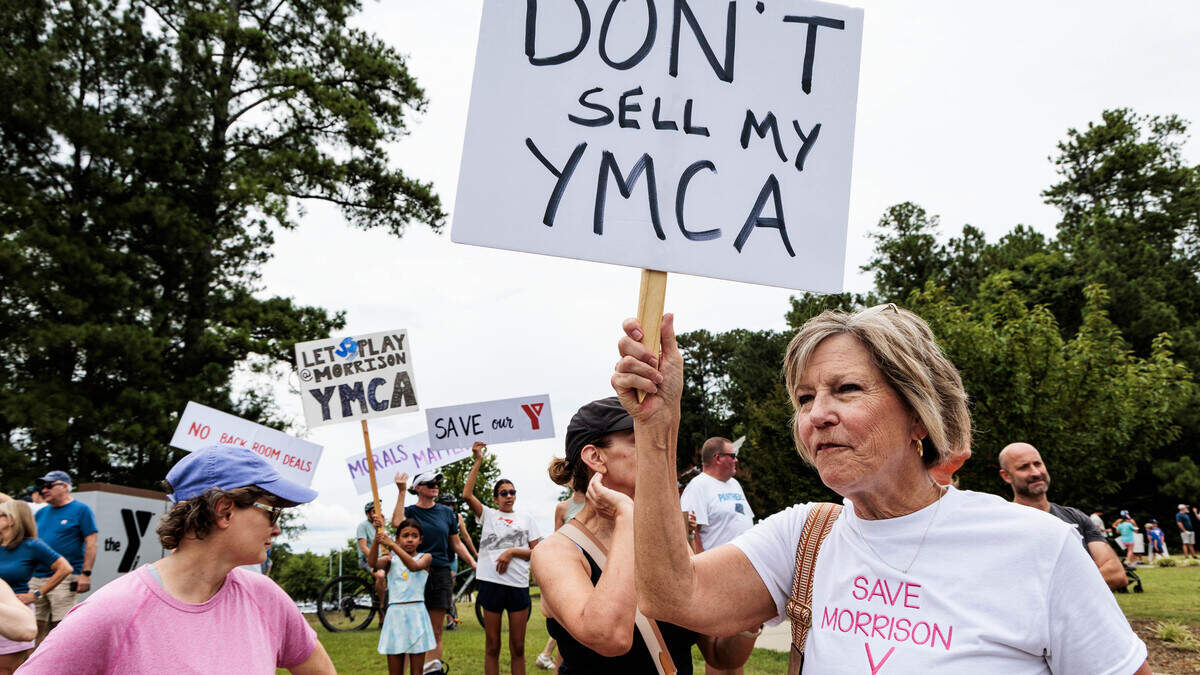
The Morrison YMCA sale is a hard choice, not a betrayal | Opinion
Even in a less skeptical age, the case against selling the Morrison Family YMCA would be pretty darn compelling.
Read more Duke Energy ends wind lease off NC coast. Lawmaker calls it a Trump ‘pattern’
A busy, well-loved branch in a booming area of town. Land provided by Mecklenburg County for recreation poised to produce a major windfall. Families who thought the YMCA was a permanent part of their community learning otherwise with little warning.
My first reaction was not far from that. I saw the pending sale as a misguided application of “equity,” cashing out a valuable property in affluent Ballantyne and using the proceeds elsewhere. If a neighborhood had to lose its Y, the Ballantyne crowd was perhaps the least sympathetic constituency in the county.
But the deeper I went into the organization’s finances, and the more I spoke with people in and around it, the less the decision resembled simple betrayal. It began to look instead like the painful exercise of stewardship.
In its heyday, few places in Charlotte could offer what the YMCA did. It opened the city’s first public swimming pool, gymnasium, auditorium and library, housed young workers and gave generations of children a place to swim, play sports and go to camp.
By the early 2000s, the YMCA of Greater Charlotte had settled into a relatively stable financial model: a regional network of branches supported primarily by memberships and program fees. It usually finished the year with a modest surplus, but it was keeping pace with an increasingly expensive system, not building a vast reserve. In 2019, it brought in just over $100 million and spent about $95 million.
Then came COVID. Federal relief and extraordinary philanthropy helped the organization survive, but they did not restore the old model. Habits changed, and competition intensified.
Planet Fitness offers a cheaper gym membership. Life Time offers a more luxurious one. Private swim schools, sports leagues and summer camps compete for families. Local governments operate recreation centers, and churches build athletic facilities of their own.
The YMCA remains important, but it is no longer singular.
Since the pandemic, revenue has fluctuated while expenses have steadily increased. In more years than not, the YMCA has lost money. Its 2024 Form 990, the most recent public financial return, shows $74.1 million in revenue against $85.5 million in expenses, a deficit of roughly $11.4 million.
The YMCA is not on the verge of collapse. But even balancing the annual budget would solve only part of the problem. The organization owns nearly $265 million in land, buildings and equipment accumulated during decades of expansion, and it estimates that those aging facilities will require roughly $100 million in capital work in the coming years.
It has already tried to shrink its footprint, closing University City in 2015 and Steele Creek in 2024. A deal to sell the Johnston YMCA later fell through.
Read more Are ‘not responsible for broken windshield’ signs legal in NC?
Against that backdrop, the unsolicited offer for Morrison looks very different.
In real estate, a “make me move” offer is one so generous that an owner who had no plans to sell suddenly has to consider it. Moments of Hope Church’s $42.5 million proposal fits that description. It is well above what a routine market transaction would likely produce and would cover more than 40% of the YMCA’s identified capital needs.
As a pure real estate deal, it is extraordinarily difficult to pass up.
Then there is the part of the calculation that matters enormously but is harder to discuss in public.
Morrison is one of the YMCA’s largest and most expensive branches, roughly comparable to Dowd and Harris in square footage. But the three are not remotely comparable in membership.
Dowd serves between 12,000 and 13,000 member households. Harris serves roughly 10,000. Morrison serves just 4,000.
Rejecting the offer would preserve Morrison, but not for free. The YMCA would give up a sum equal to nearly half of its anticipated capital needs and still have to find that money somehow—or face even harder choices later.
Families have shared deeply personal stories about what Morrison has meant to them. I understand that reaction. My own family’s life is deeply intertwined with the Harris YMCA.
But the YMCA’s job today is not to preserve every building it inherited. It is to ensure that an institution founded in 1874 is still serving Charlotte decades from now. Usually, those goals align. Occasionally, they do not.
That is the difficult position facing many of the institutions that once held communities together. Churches combine congregations and sell buildings. Scout councils unload camps they can no longer afford. Local newspapers reduce print schedules or disappear.
The YMCA is no exception.
After looking at the numbers, I no longer see villains in the Morrison sale. I see a board confronting a painful choice about what it must give up to preserve the larger institution.
That is what stewardship sometimes looks like.
Contributing columnist Andrew Dunn is the publisher of the Longleaf Politics newsletter, which offers thoughtful analysis of North Carolina politics and policy from a conservative perspective. He can be reached at [email protected].
Read more Man had bags of drugs, rolling paper, matches stuck in his body, NC sheriff says
