NC has a strict, decades-old ban on coastal seawalls. Will lawmakers repeal it?
AI-generated summary reviewed by our newsroom.
North Carolina’s strict rules on what can be built on its coast, including a long-standing ban on permanent hardened erosion control structures like seawalls, could soon be repealed.
Read more Two juveniles and an adult hit by gunfire in uptown Charlotte, CMPD says
A bill moving through the state Senate, intending to protect beaches and coastal infrastructure, would remove that ban. It would require the Coastal Resources Commission, which sits under the North Carolina Department of Environmental Quality, to adopt rules that will regulate the permitting and construction to mitigate impacts on private property or the beaches.
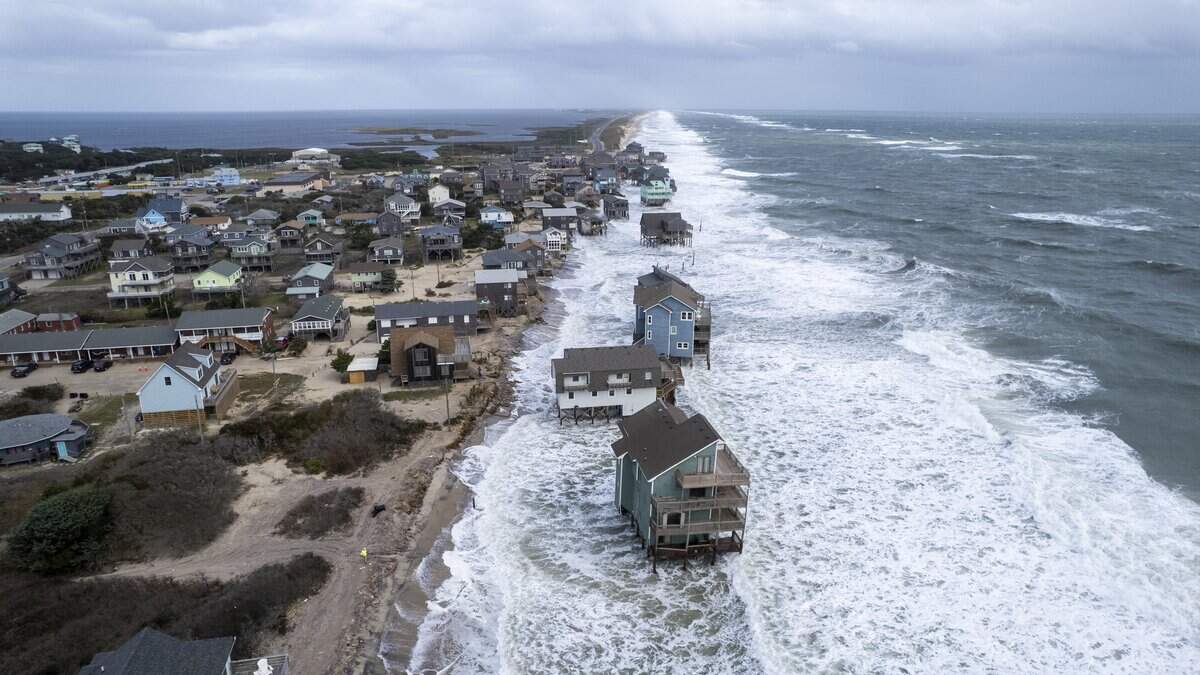
The National Weather Service reported that 32 privately-owned houses in North Carolina have collapsed into the sea since 2020 — more than 20 have collapsed since September 2025.
Sen. Bob Brinson, a Craven Republican and a primary co-sponsor of SB 1009, said in committee on Wednesday that the ban went into effect 40 years ago, and “erosion rates have increased. The number of threatened structures has grown. Technology and our understanding of engineered stabilization have advanced.”
“It’s not a proposal to let every property owner build a seawall. It’s not a fast track for widespread construction. It’s not a proposal to ignore environmental impacts. And it’s not a proposal to abandon nourishment, dune restoration or relocation,” he said. “ … I, for one, am ready to stop telling our constituents what they can’t do.”
Those opposed to the bill are concerned about negative environmental impacts caused by these structures. While seawalls protect resources and infrastructure behind them, permanent shoreline structures can worsen erosion in front of the wall and stop beaches in higher elevations from growing, according to the National Park Service.
Brinson last week introduced SB 1009 and another bill, SB 1008, together in committee. He said the two go hand in hand.
SB 1008 would create a limited pilot program that would “authorize a small number of shoreline stabilization projects where oceanfront homes face imminent loss to the ocean,” Brinson said. The bill would create monitoring systems for the structures to determine if they are successful and include removal assurances.
Besides seawalls, other structures with similar purposes include terminal groins, jetties and breakwaters.
Brinson said the state “has already made limited exceptions for terminal groins, several of which have been successful.”
Brinson also mentioned that the Coastal Resources Commission will soon come out with its Science Panel, which evaluates shoreline stabilization efforts.
Senate leader Phil Berger, a Republican, told The News & Observer that the ban needs to be repealed.
Read more NC man whose charity supported Nepali orphans is accused of sex with a minor in Nepal
“We’ve just seen too many examples of the ocean taking fairly large structures, and there’s a solution to that,” he said. “I think we’ve got to make sure that we’re looking at some of the environmental concerns that are out there. I think just a complete ban on any hardened structures is something that we need to get beyond.”
Sen. Julie Mayfield, an Asheville Democrat, said last week that repealing the ban on hardened structures will create issues on other parts of the coastline. She said for every seawall, jetty and groin constructed, “there is an adjacent impact that is negative.”
She said she was also concerned about approving the provisions in the two bills before the commission’s study comes out.
“What if the study says hardened structures, additional hardened structures on the coast, are not the answer and that’s not where our policy should be going?” Mayfield said. “And yet, we would have just passed a bill saying that we should be doing some pilot studies on hardened structures.”
Brinson said he “appreciates the hypothetical,” and the study will “be part of the conversation” once it comes out.
Berger told The N&O if the bills are passed, “whether or not something that we do … would be impacted by something that comes out from that study, and if it’s substantial enough, obviously folks can introduce bills to change things.”
“I can assure you that even if we authorize hardened structures this week, they wouldn’t be built before that study comes out, or even before the next session concludes,” he said.
Brinson added that the terminal groin on the Bodie Island side of the Marc Basnight Bridge was a successful example of a hardened structure on the state’s coast.
In committee on Wednesday, Sen. Jay Chaudhuri, a Wake County Democrat, asked Brinson if other methods like beach nourishment, which consists of adding more sand to beaches, or a buyout program for at-risk homeowners were considered before settling on hardened structures.
Brinson said the bill “is not just about the homes.”
“It has to do with [NC 12]. It has to do with transportation infrastructure, all of that,” he said. “So, a buyout program … that’s more taxpayer funds, whereas this bill doesn’t address any state funds at all.”
This story was originally published June 18, 2026 at 5:00 AM with the headline “NC has a strict, decades-old ban on coastal seawalls. Will lawmakers repeal it?.”
Read more Coyotes are all over NC, including downtown Charlotte. How to scare them off