Palm-sized spiders are making their way to NC — but don’t panic
AI-generated summary reviewed by our newsroom.
Arachnophobes beware, an invasive spider is making its way up the coast from Georgia, and experts expect to see a large number in North Carolina in coming years.
Read more Lake Norman lawmaker questions Carolina Water ruling after 40% rate hike approved
For those with no outsized fear of spiders, the invasive Jorō spider poses no real risk. The Jorō spider is a transplant from Japan that made its way to Georgia in the 2010s and has since begun an expansion into surrounding areas, including the Carolinas.
The spider will likely be in Charlotte within a couple years in extremely high numbers, Sarah Stellwagen, a spider biologist at UNC Charlotte said.
“Charlotteans … will be seeing these spiders in their backyards soon, if not already,” Stellwagen said. “They are just like our native ones that are down on the coast. They’re not especially harmful. They are big and showy.”
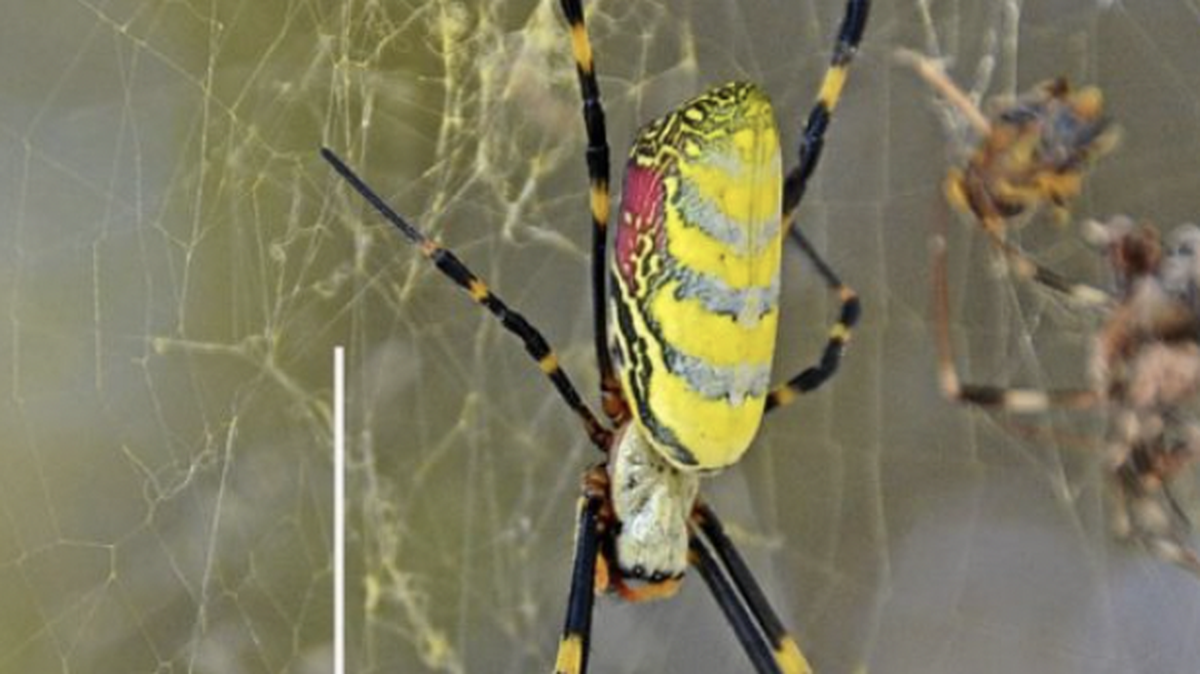
The spiders can grow to be the size of a hand, but their fangs are too small to break human skin. Female Jorō spiders are significantly larger than male spiders, with a leg-span akin to a human hand. The spider is easily mixed up with two native North Carolinian arachnids, meaning many people misidentify native spiders as Jorō.
The spider was first identified in Georgia in 2013, and in Western North Carolina in 2021.
Stellwagen said North Carolinians are likely not seeing as many as South Carolina is. She grew up in upstate South Carolina, and in 2022, she wasn’t seeing Joro spiders near her family home – by 2024 they were everywhere.
While Jorō spiders are in South Carolina, The State reported in 2025 that the spider poses a lower risk than other invasive species in the state. Similarly, the North Carolina State Extension said in 2022 the spider is “certainly not a menacing threat.”
There is plenty of misinformation about the spiders, possibly due to the larger size or dramatic appearance, Stellwagen said.
Read more Outside Charlotte, a family-run furniture store is closing after nearly 80 years
“People are going to see them, and they’re big, and there are lots of articles that they are flying,” Stellwagen said. “There are really silly things out there. No (they don’t fly), they’re just regular spiders, but spiderlings, when they hatch, they can release silk and balloon.”
Other spider babies balloon with silk too – the trait isn’t unique to Jorō spiders.
The News and Observer previously covered how to identify Jorō spiders. In all likelihood, if you think you see one, it is actually a golden silk spider or a black and yellow garden spider. Both are native to North Carolina.
The Jorō has a blue-gray and yellow uniformly striped abdomen with a pointed tip. The legs are black with a couple thin yellow bands. The female can have a 4-inch leg span.
A black and yellow garden spider has a wider abdomen that is only yellow and black with a pattern that is not as distinctly banded as a Jorō. They have legs with orange bases, but no yellow bands. Golden silk spiders have a more reddish yellow abdomen with circular patterns as well as tufts of hair on the legs.
Stellwagen said spiders are sometimes identified on iNaturalist, an organization that helps track and identify flora and fauna using community images. In 2025, the NC State Extension also encouraged people to snap pictures of suspected Jorō spiders to help ID them on iNaturalist.
Questions about life in North Carolina? Or have a tip or story idea you’d like to share? The service journalism teams at The News & Observer and The Charlotte Observer want to hear from you.
Read more Plaza Midwood shop sells flavorful, house-made ice cream that’s ‘worth the drive’
You can submit your question by filling out this form.